


- The Mistake of Fact defense is a critical legal tool in Florida that negates the specific intent or mens rea required for a burglary conviction by showing the defendant made an honest error during an accidental entry.
- Under Florida law, a Mistake of Fact defense for specific intent crimes like burglary only requires the defendant's belief to be honestly held, regardless of whether that belief is deemed reasonable.
- Although Florida Statute § 775.051 makes voluntary intoxication inadmissible to negate intent, defense attorneys can use objective evidence such as identical building designs or similar vehicles to prove a genuine mistake of fact.
- By challenging the state’s ability to prove the "intent to commit an offense," a successful Mistake of Fact defense can reduce a felony burglary charge to misdemeanor trespassing or lead to a total dismissal.
Criminal law generally requires a guilty mind, or mens rea, for a conviction. The Mistake of Fact defense arises when a defendant makes an honest mistake about a specific circumstance, thereby negating the required criminal intent for the alleged crime. This defense is powerful because if there isn't any intent, there often isn't a crime.
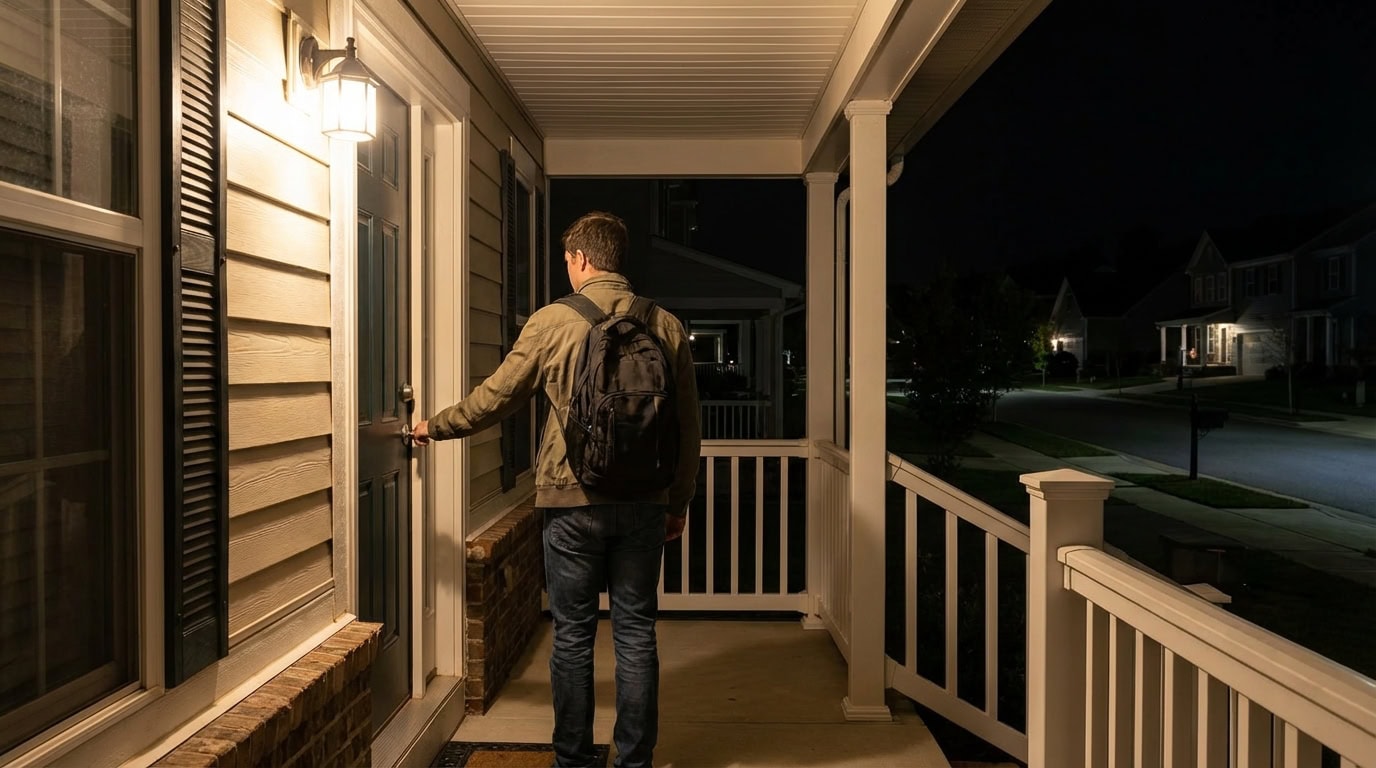
This defense is uniquely relevant in cases of accidental entry, especially those involving burglary or trespass charges. A common scenario involves a person mistakenly entering a neighbor's dwelling or vehicle, believing it to be their own. Keep reading to learn more about the legal requirements for this defense in Florida, how it targets specific intent crimes, and why skilled legal representation is key to its success.
The Foundation of the Mistake of Fact Defense in Florida Law
Mens rea, meaning “guilty mind,” is a foundational principle of Florida criminal law. This concept holds that an individual generally must possess criminal intent to be held criminally liable for an act. When the element of mens rea isn’t explicitly removed by statute, legislative intent requires that a guilty mind remain an element of the crime.
A successful Mistake of Fact defense directly challenges the prosecution’s ability to prove this required mens rea. When a defendant acts under a genuine, mistaken belief about a relevant fact, their actions lack the necessary criminal intent.
This defense is generally not applicable to strict liability offenses, such as certain traffic violations, where a defendant's state of mind is irrelevant to guilt. For instance, a mistake of fact won't excuse liability for statutory rape, even if the belief was honest and reasonable.
Distinguishing Specific Intent from General Intent Crimes
Specific intent crimes require the prosecution to prove that the defendant had the deliberate purpose to commit a subsequent offense at the precise moment of entry. For instance, in burglary, it means proving the intent was not just to enter unlawfully, but to commit a separate felony or offense once inside. If this specific, underlying purpose is lacking, the crime can’t be proven.
General intent crimes, conversely, only require the intent to commit the physical act itself, regardless of the ultimate result. The defendant’s state of mind regarding the physical act is sufficient in these cases. The Mistake of Fact defense is particularly effective against specific intent crimes because it allows the defense to argue that the required mental state, or specific purpose, was never formed due to the defendant's error.
For general intent crimes, such as certain theft offenses, a mistake of fact must typically be both honest and reasonable to negate the mental state required for the crime.
Florida’s Specific Intent Requirement for Burglary
Florida Statute § 810.02 defines burglary using three core elements that the state must prove beyond a reasonable doubt. The prosecution must show that the defendant entered or remained in a dwelling, structure, or conveyance, that this entry was unauthorized, and that the defendant had the intent to commit an offense therein. Burglary is firmly established as a specific-intent crime because the prosecution must prove fully formed criminal intent at the time of entry.
This critical “intent to commit an offense” element is exactly what the Mistake of Fact defense is designed to dismantle. An accidental entry scenario, where the defendant genuinely mistakes the property for their own, directly negates this specific intent requirement. If someone believes they’re entering their own home, their intent is benign, like retrieving keys or going to bed, not committing an unlawful act.
Under Florida Statute § 810.07, proof of entering a structure or conveyance stealthily and without consent is considered prima facie evidence of entering with intent to commit an offense. This statutory presumption makes challenging the state’s presumed intent especially important in accidental entry cases.
The Standard for an “Honest” Mistake
When dealing with specific-intent crimes like burglary, Florida law sets a lower standard for the required mistake. The mistake of fact needs only to be honestly held by the defendant to negate the required criminal intent. This means that even if the defendant’s belief was deemed unreasonable or foolish by others, the defense can still apply if the jury finds the belief was genuine.
This standard contrasts sharply with general intent crimes. For a general intent crime, the mistake must be proven to be both honest and reasonable to successfully negate the necessary mental state. Therefore, the applicability of an unreasonable mistake depends heavily on the crime's classification.
Accidental Entry Scenarios: When Mistake of Fact Applies
The success of the Mistake of Fact defense hinges entirely on the specific evidence supporting the defendant’s mental state at the time of entry. Defense attorneys must focus on the facts that prove the defendant’s honest belief that they had a right to enter. Common accidental entry examples include entering the wrong apartment door, climbing into a vehicle that looks identical to one's own, or mistaking a recently vacated home for their property.
Mistaken Dwelling Entry
Mistaken dwelling entry often occurs in environments where units look similar, such as apartment complexes, duplexes, or residential areas with identical builder models. In high-density areas where condos and apartments share similar designs, mistaken entry to dwellings is a frequently encountered issue. A defendant might confuse a neighbor's door or simply miscount the doors in a hall.
Under Florida Statute § 810.011(2), a “dwelling” means a building or conveyance of any kind, including any attached porch, whether temporary or permanent, which has a roof over it and is designed to be occupied by people lodging therein at night. The Mistake of Fact defense works here by showing the defendant’s intent was benign and lawful. If a defendant believed they were entering their own home to retrieve a belonging, the state can’t prove the specific intent required for a burglary conviction.
Mistaken Conveyance Entry
Burglary charges in Florida can extend to a conveyance, which includes vehicles such as cars and trucks, as well as vessels. A mistaken conveyance entry typically happens in large parking lots where numerous similar makes and models are parked closely together. A defendant might own a common sedan and mistakenly use their key fob to attempt to open an identical vehicle parked beside theirs.
In this scenario, the defense argues that the defendant’s only intent was to operate their own mode of transport. The genuine belief that they were entering their own car negates the specific intent required to commit an offense within the conveyance, such as Grand Theft Auto or petit theft. While the act of unlawful entry still occurred, the purpose behind the entry wasn't criminal.
The Intoxication Nuance: A Critical Florida Distinction
Florida law maintains a rigorous and highly unique stance regarding intoxication, which significantly complicates the deployment of the Mistake of Fact defense. Navigating these nuances requires a meticulous, experienced attorney, as the rules strictly limit the admissible evidence regarding a defendant’s state of mind.
Voluntary Intoxication's Inadmissibility in Florida
The legal reality in Florida is very strict: voluntary intoxication is not a defense to any crime. Under Florida Statute § 775.051, evidence that the defendant voluntarily consumed alcohol or a controlled substance is explicitly inadmissible to prove that the defendant lacked the specific intent to commit an offense. This legislative position strongly reinforces the state’s preference for accountability.
This rule means a defense lawyer can’t successfully argue that a client was too impaired to realize they were entering the wrong house when defending a specific intent crime, such as burglary. Instead, the legal focus must shift away from the cause of the confusion and focus entirely on objective, external facts. The defense must emphasize factors that support the mistake of fact itself, such as similar keys, identical complex layouts, or poor lighting.
The Involuntary Intoxication Exception
Florida law does provide a limited exception for involuntary intoxication, which can be used to negate specific intent. This exception applies when a defendant was lawfully prescribed a controlled substance by a practitioner, used it as directed, and became so intoxicated as a result that they couldn't form the requisite intent to commit an offense. This unexpected physical reaction must directly contribute to the inability to form criminal intent.
It's important to draw a clear line between willful consumption and non-willful impairment. For specific intent crimes like burglary, a mistake of fact need only be honestly held by the defendant to negate the required criminal intent. If the intoxication was self-induced, the defense must rely purely on the mistake of external circumstances, not the resulting cognitive impairment.
Building the Evidentiary Case for Mistake of Fact
Since the Mistake of Fact defense relies on proving the defendant’s subjective state of mind, skilled attorneys must use objective evidence to corroborate that claim. Merely stating “I thought it was my house” is rarely sufficient to convince a prosecutor or a jury, especially in high-stakes felony cases.
The Importance of Objective Evidence
To successfully argue an honest mistake, defense counsel must gather external evidence that supports the defendant's claim of confusion. This includes obtaining building layout plans, photographs of similar units or vehicles, and security camera footage that shows confused or non-criminal behavior. For instance, fumbling with the wrong key in a lock or attempting to use a garage door opener that fails to connect suggests confusion, not criminal stealth.
Eyewitness testimony regarding the defendant’s appearance or actions immediately preceding the entry is also highly valuable. If witnesses describe the defendant as stumbling but acting routinely, or as pausing in confusion before entering, these details corroborate the defense. Furthermore, if the defendant's actual residence is structurally identical and only a few feet away from the mistaken entry point, that physical context bolsters the credibility of the honest mistake claim.
Client History and Context
The defendant’s background and history play a significant role in lending credibility to the defense. A lack of a prior criminal record, especially for property crimes, helps establish that the alleged actions were an anomaly rather than a pattern of criminal behavior. When presenting a defense, an attorney uses this context to paint a picture of a law-abiding citizen who simply made an understandable error.
The presence of personal items, such as the defendant’s own keys, mail, or identification matching the address of the intended location, can further support the narrative of a genuine mistake. The defense must demonstrate that the client had no logical reason or specific criminal intent to enter the wrong property. This is particularly important when negotiating criminal defense outcomes with prosecutors in Broward County.
Related Defenses That May Apply in Accidental Entry Cases
While the Mistake of Fact is the central defense in accidental entry cases, a complete legal strategy often involves combining multiple arguments. A comprehensive defense seeks to dismantle every element of the burglary charge. This may involve arguing for lesser charges or presenting alternative defenses alongside the primary argument.
Defense of Consent or Invited Entry
A person who enters a property with the explicit or implied consent of the owner can’t be charged with burglary because the entry isn't deemed “unlawful.” Consent is a complete defense to burglary charges in Florida because it directly eliminates the element of unauthorized entry. If a defendant had the owner’s permission, or a reasonable belief of such permission, the foundation of the charge may be negated.
An honest, mistaken belief that one had permission to enter is a powerful form of the Mistake of Fact defense. For example, if a defendant genuinely believed they were entering a friend's house, where they had a key and standing permission, this mistaken belief negates the required criminal intent. Actual consent or a reasonable belief of consent can prevent the state from securing a conviction.
Reduction to Misdemeanor Trespassing
The primary legal difference between felony burglary and misdemeanor trespassing in Florida lies entirely in the required intent. Trespassing involves unlawful entry into or remaining on property without the intent to commit a crime there. Burglary, conversely, requires the unlawful entry to be accompanied by the specific intent to commit a subsequent crime.
A highly successful Mistake of Fact defense often results in the original charge being drastically reduced. By negating the specific intent element, which is the cornerstone of the felony burglary charge, the defense removes the crime’s elevated status. This leaves the state with only the unlawful entry, typically resulting in a misdemeanor trespassing charge or complete dismissal.
Protecting Your Rights Against Accidental Entry Charges
The Mistake of Fact defense offers a strong basis for individuals facing burglary charges arising from accidental entry in Florida. This defense focuses on negating the state’s burden to prove specific intent, which is absolutely required for a burglary conviction. Successfully executing this defense is highly complex, however, especially when attempting to overcome Florida’s stringent laws regarding voluntary intoxication.
Proving an honest mistake demands a dedicated legal team to thoroughly investigate the objective circumstances that support the defendant's genuine belief. Our expertise enables us to conduct a thorough investigation, uncovering the crucial facts that demonstrate a genuine mistake rather than criminal intent.
If you're facing serious felony charges related to accidental entry in Florida, you need immediate, aggressive representation. Call Weinstein Legal Team 24/7 at 888.626.1108 to speak with a defense lawyer about your case, or click here to schedule your free case review today.