


- Florida law classifies bicycles as vehicles with the same rights as motor vehicles, requiring cyclists to obey all traffic regulations while mandating that motorists provide at least three feet of space when passing.
- Under Florida’s modified comparative negligence rule, an injured cyclist is legally barred from recovering any damages if they are found to be more than 50 percent responsible for the accident.
- Common scenarios where motorists are typically found negligent include "right hook" collisions, "left cross" accidents at intersections, and dooring incidents that violate Florida Statute 316.2005.
- Victims of bicycle accidents can utilize Personal Injury Protection (PIP) coverage for medical expenses and may pursue non-economic damages if their injuries result in significant and permanent loss of bodily function.
Florida's year-round sunshine and flat terrain make it a premier destination for cycling enthusiasts and daily commuters alike. While many residents enjoy the health and environmental benefits of riding, the state presents significant dangers for those on two wheels. Recent data highlights that Florida remains the most dangerous state in the country for bicyclists, with thousands of injuries reported every year.
Determining legal responsibility after a collision is a complex process that depends on traffic laws and the specific evidence from the crash site. Victims must understand how liability is calculated to protect their right to recover compensation for their losses. Keep reading to learn more about the legal framework surrounding bicycle accident liability in Florida.
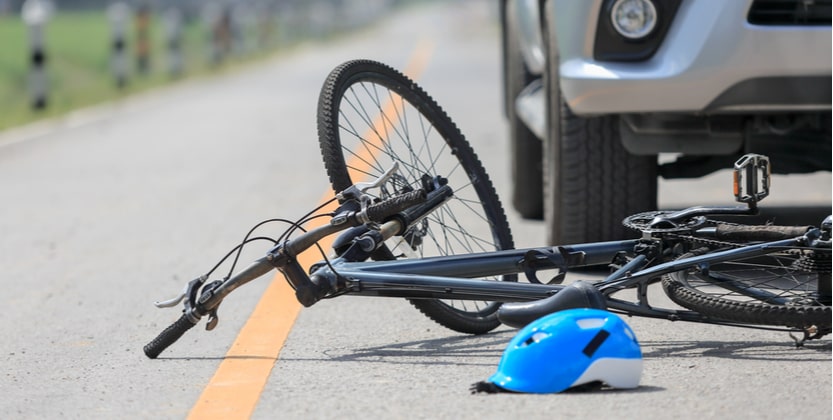
Determining Liability in a Florida Bicycle Accident
Establishing who is at fault in a personal injury case depends on the legal concept of negligence. This process requires proving four specific elements to hold another person responsible for your injuries. A plaintiff must demonstrate that the defendant owed a duty of care and then breached that duty through a specific action or omission. They must also show that this breach directly caused the accident and resulted in actual financial or physical damages.
Motorists owe cyclists a duty of care when sharing public roadways. Both motorists and cyclists are expected to operate their vehicles safely while adhering to all state traffic regulations. When a driver fails to watch for a cyclist or a rider ignores a stop sign, they've breached their duty to others. It's often difficult to determine exactly where the breakdown in safety occurred without a professional review.
Fault isn't always a simple matter of one person being entirely wrong and the other being entirely right. A thorough investigation is often necessary to uncover the truth behind a collision. Legal professionals examine police reports, witness statements, and physical evidence to piece together the moments leading up to the impact. You shouldn't assume you're at fault until a complete legal analysis of the situation is finished.
Common Injuries Sustained in Car vs. Bicycle Crashes
The physical toll of a bicycle accident is often life-altering due to the significant size difference between a car and a bike. A cyclist has almost no protection beyond a helmet, leaving their body exposed to direct impact. Even at low speeds, the energy transferred from a vehicle can cause internal organs to fail or bones to shatter. The secondary impact on the pavement often causes additional trauma and severe skin damage.
Traumatic brain injuries are among the most common and serious consequences of these collisions. Reports suggest that head injuries occur in 70 to 80 percent of all fatal bicycle crashes in the country. Even riders who wear helmets are at risk for concussions, brain bleeds, and permanent cognitive impairment. These injuries can change a person's personality and their ability to care for themselves for the rest of their life.
Other frequent injuries include spinal cord damage, which can lead to partial or total paralysis. Fractures of the legs, arms, and pelvis are also very common when a cyclist is thrown from their bike. Road rash, the severe scraping of skin against asphalt, can lead to permanent scarring and a high risk of infection. These physical impacts require long-term medical treatment and often result in significant emotional distress for the victim.
Internal injuries are another major concern because they aren't always visible immediately after the crash. Blunt force trauma can cause a ruptured spleen, punctured lungs, or internal bleeding that requires emergency surgery. Cyclists should always seek a medical evaluation regardless of how they feel at the scene. These injuries can be fatal if they aren't diagnosed and treated by medical professionals within hours of the incident.
The Legal Status of Bicycles and E-Bikes in Florida
Florida Statute 316.003 defines a bicycle as a vehicle with many of the same rights as a car. Because a bicycle is propelled by human power and has two tandem wheels, it's governed by standard traffic regulations. This classification means that a cyclist is legally considered a driver while they're on the road. They're entitled to use the roadway just like a motorist, but they must also follow the same rules.
Cyclists are required to obey all traffic control devices, including stop signs and red lights. They must also signal their intentions to turn or stop so that other drivers can react accordingly. Since they're treated as vehicle operators, cyclists can be cited for traffic violations or held liable for crashes they cause. Understanding this legal status is important for anyone who regularly rides on Florida's public streets.
The Rise of E-Bikes and New Regulations
Electric bicycles have become increasingly common on Florida roads, leading to specific regulatory changes. The state classifies e-bikes into three distinct categories based on their top speeds and whether they require pedaling. Most e-bikes are permitted in bike lanes and on certain paths, but they must follow strict motor and speed limits. Riders must understand that higher speeds increase the severity of potential impacts with motor vehicles.
Standard bicycle laws apply to e-bike operators in most scenarios. However, some local municipalities have specific restrictions on where e-bikes can be used, particularly on crowded sidewalks or park trails. These regulations are designed to protect pedestrians from the increased weight and speed of electric models. Violating these local ordinances can complicate a liability claim if an accident occurs on a restricted path.
Insurance coverage for e-bikes can be more complex than for traditional bicycles. Some homeowner policies may exclude motorized vehicles, leaving riders without a safety net if they cause an accident. Riders should check their specific policy language to ensure they're protected while operating an electric model. This clarity is necessary as e-bike usage continues to grow in urban centers like Fort Lauderdale.
The Standard of Care for Motorists
Motorists bear a heightened responsibility because they operate heavy machinery that can cause devastating harm to vulnerable road users. Florida law requires drivers to exercise due care to avoid colliding with any pedestrian or person propelled by human power. This means drivers should anticipate cyclists, especially in areas with designated bike lanes or heavy foot traffic. Failing to pay attention to the surrounding environment is a common way drivers breach this legal duty.
Drivers must maintain a safe distance when passing a cyclist to prevent accidental contact or near-misses. Florida Statute 316.083 explicitly requires motorists to provide at least three feet of space when overtaking a bicycle. If a driver cannot provide this space, they must remain behind the cyclist until it's safe to pass. Despite this clear law, only 130 motorists were cited for violating the three-foot passing rule in 2024.
A driver's failure to yield the right of way is a frequent cause of bicycle accidents in urban intersections. Motorists often overlook smaller vehicles when preparing to turn across traffic or pull out from driveways. This lack of visibility doesn't excuse the driver's duty to clear the intersection safely before proceeding. When a driver strikes a rider who has the right of way, the motorist is typically found negligent.
Florida's Modified Comparative Negligence Rule
The legal landscape for personal injury claims in Florida changed significantly on March 24, 2023. Under House Bill 837, the state moved from a pure comparative negligence system to a modified comparative negligence system. This shift introduced a strict 51% bar rule for plaintiffs seeking compensation after an accident. This means your ability to recover money depends heavily on how much of the accident was actually your fault.
If a jury determines that a cyclist is more than 50 percent responsible for a crash, they're legally barred from recovering any damages from the other party. Even if the driver was 49 percent at fault, the cyclist receives nothing under this new system. This change makes it much harder for injured riders to secure the funds they need for medical bills and lost wages. It places a heavy burden on the victim to prove the motorist was the primary cause of the incident.
When a cyclist is found to be partially at fault but below the 51 percent threshold, their total compensation is reduced by their percentage of blame. For example, if you're awarded $100,000 but are found 20 percent at fault, you'd only receive $80,000. This system highlights why the specific details of a crash are so important during settlement negotiations. Every percentage point of fault attributed to the cyclist directly takes money out of their pocket.
Common Scenarios Where the Driver Is Usually at Fault
Every bicycle accident involves a unique set of circumstances, but certain patterns emerge in Florida traffic. Motorists often cause collisions because they fail to notice a cyclist or misjudge a cyclist's speed. These errors frequently lead to specific types of crashes where the driver is found to be the negligent party. When a bicyclist hit by a vehicle suffers catastrophic injuries, the legal focus shifts immediately to the driver's failure to maintain a proper lookout.
The Right Hook Collision
A right-hook collision occurs when a motorist passes a cyclist on the left and then immediately attempts to turn right. This maneuver often cuts directly across the cyclist's path, leaving the rider with no time to react. The cyclist may slam into the side of the car or be crushed as the vehicle completes the turn. These accidents are particularly dangerous because they often happen at intersections where the cyclist has the right of way.
Drivers are usually at fault in these cases because they failed to check their blind spots before turning. Florida law requires drivers to ensure they can make a turn safely before beginning the turn. If a driver overtakes a cyclist, they should remain aware of the cyclist's position until the pass is complete. Cutting off a cyclist to make a quick turn is a clear violation of the duty to drive safely.
Checking mirrors and looking over the shoulder are basic requirements for any driver making a turn across a bike lane. Motorists must yield to any cyclist who is already in the intersection or approaching so closely that a turn would be hazardous. When a driver ignores these safety steps, they're responsible for the resulting injuries and vehicle damage. Proving a right hook often involves examining the points of impact on the car and the bicycle.
The Left Cross Accident
The left cross is another common type of accident in which a driver turning left at an intersection strikes an oncoming cyclist. This usually occurs because the motorist didn't see the cyclist or thought they could clear the turn before the bike arrived. Drivers often focus on larger vehicles, such as trucks or cars, and overlook smaller objects, such as bicycles. This cognitive bias can lead to catastrophic head-on or side-impact collisions.
Drivers have a legal obligation to yield to all oncoming traffic that is close enough to constitute an immediate hazard. This obligation includes bicycles traveling in the opposite direction. Since bicycles are smaller, it's much harder for a driver to judge their speed and distance accurately. However, a miscalculation by the driver doesn't excuse them from the responsibility to yield the right of way.
Failures to Yield at Intersections
Intersections are high-risk areas where confusion about the right-of-way often leads to crashes. Accidents frequently happen at four-way stops when a driver fails to yield to a cyclist who reached the limit line first. Some drivers assume they always have priority over a bicycle, regardless of who arrived at the intersection first. This incorrect assumption leads to dangerous collisions when both parties try to move through the space simultaneously.
The law is clear that the vehicle on the right has the right of way if two vehicles arrive at an uncontrolled intersection simultaneously. This rule applies to bicycles just as it applies to motorized vehicles. When a driver ignores this priority, they're typically found liable for the ensuing accident. Claiming they didn't see the cyclist is rarely an acceptable legal defense to a failure-to-yield charge.
How to Prove a Driver Was Distracted in a Fort Lauderdale Bicycle Crash
Distracted driving is a major contributor to bicycle collisions in Broward County. Proving that a driver was using their phone or otherwise distracted requires a detailed legal strategy. Attorneys can subpoena cell phone records to show if a driver was texting or browsing the internet at the exact moment of the crash. This technical evidence is difficult for a defense team to refute during settlement negotiations.
Social media activity can also serve as powerful proof of a driver's negligence. If a motorist posted a photo or a status update around the time of the accident, it suggests they weren't focused on the road. Investigating these digital footprints is a standard part of modern personal injury litigation. This information helps build a timeline that clearly establishes the driver's breach of duty.
In Fort Lauderdale, traffic camera data and business surveillance can provide additional context regarding a driver's behavior. A lawyer might identify that a driver looked down at their lap for several seconds before the impact. These visual records are essential for overcoming the 51 percent fault bar under the new modified comparative negligence rules. Witness statements from other drivers who saw the defendant's erratic behavior also strengthen the claim.
Rear-End Collisions and the Presumption of Fault
Rear-end crashes are among the most devastating types of accidents for bicyclists. Unlike a car, a bicycle offers no rear protection, meaning the cyclist absorbs the full force of the impact. These accidents often happen because a driver is following too closely or isn't paying attention to the road ahead. In Florida, there's a general legal presumption that the driver who hits someone from behind is the one at fault.
This presumption exists because every driver is expected to maintain a safe following distance to stop in time. If a motorist strikes a cyclist from the rear, it usually indicates that the motorist was either speeding or distracted. However, this isn't an absolute rule; it's a rebuttable presumption. This means the driver can try to provide evidence that shifts the blame back to the cyclist.
A driver might argue that the cyclist made an abrupt and illegal stop or a sudden lane change without signaling. Mechanical failures, such as a sudden brake failure in the car, might also be used to challenge the presumption of fault. If a cyclist is riding at night without reflectors, the driver might claim they couldn't see the bike in time to stop. These complexities show why it's important to have a clear record of the accident details.
Dooring Accidents and Florida Statute 316.2005
Dooring accidents occur when a driver or passenger opens a vehicle door into the path of an approaching cyclist. These incidents are common in urban areas where cars are parked parallel to bike lanes or narrow streets. A cyclist often has no time to swerve, resulting in a high-speed collision with the metal door or being thrown into traffic. The injuries from these accidents are often severe due to the suddenness of the impact.
Florida Statute 316.2005 provides specific protections for cyclists against this dangerous behavior. The law states that no person shall open the door of a motor vehicle unless it's reasonably safe to do so. It also prohibits leaving a door open for longer than necessary to load or unload passengers. This statute places the legal burden on the person inside the car to check for oncoming traffic before they act.
Under this law, the person who opened the door is almost always held liable for the accident. Drivers and passengers are expected to use their mirrors and look back before pushing a door into the roadway. A violation of this statute is considered a noncriminal traffic infraction and serves as strong evidence of negligence in a civil case. It's difficult for a driver to argue that a cyclist was at fault for hitting a door that was suddenly placed in their path.
When Can a Bicyclist Be Found at Fault?
While drivers are often responsible for crashes, cyclists can also be found negligent if they ignore the rules of the road. A rider's actions can contribute to a collision just as easily as a driver's mistakes. When a cyclist breaches their duty of care, it can have serious consequences for their legal claim. Under the modified comparative negligence rule, a finding of cyclist negligence can significantly reduce or even eliminate a potential settlement.
Riding on Sidewalks vs. Bike Lanes
The rules for cyclists change depending on whether they are on the road or a sidewalk. When a cyclist rides on a sidewalk or in a crosswalk, they have the same rights and duties as a pedestrian. However, they must yield the right-of-way to pedestrians and provide an audible signal before passing. If a cyclist suddenly darts off a sidewalk and into a crosswalk, a driver may not have time to react.
Many accidents occur when a cyclist transitions from a sidewalk into the street without checking for turning vehicles. Drivers often look for pedestrians walking slowly and may misjudge the speed of a bicycle as it comes off the curb. If the cyclist enters the street illegally or against a signal, they could be found partially at fault. Understanding these distinctions is necessary to determine who had the legal right-of-way at the moment of impact.
In contrast, a cyclist in a designated bike lane is treated as a vehicle operator. Motorists must respect the lane and avoid entering it except when preparing for a turn. If a cyclist stays within the lane and is struck, the driver is almost always the negligent party. Deviating from the lane without a clear reason can lead to allegations that the cyclist contributed to the accident.
Riding Against the Flow of Traffic
One of the most dangerous behaviors a cyclist can engage in is riding against the flow of traffic. This practice, often called salmoning, is illegal under Florida law. Cyclists are required to ride in the same direction as motor vehicles at all times. Riding against traffic significantly increases the risk of a head-on collision and makes the rider unpredictable to other road users.
When a cyclist rides against traffic, they're much less visible to drivers who are turning at intersections or pulling out of driveways. A driver turning right usually looks to their left for oncoming cars and won't expect a bicycle coming from the opposite direction. If an accident occurs while a cyclist is riding the wrong way, they'll likely be found at fault. This behavior clearly violates traffic statutes and is often cited as a primary cause of crashes.
Failure to Use Proper Lighting at Night
Visibility is a major factor in bicycle safety, especially during the hours between sunset and sunrise. Florida law requires every bicycle in use at night to be equipped with specific lighting and reflectors. A rider must have a front lamp that emits a white light visible from at least 500 feet. Additionally, the rear of the bike must have both a red reflector and a red lamp visible from 600 feet.
Failing to use these lights makes a cyclist virtually invisible to motorists on dark or poorly lit roads. If a crash happens because a driver couldn't see the bike, the lack of lighting provides a very strong defense for the motorist. The insurance company will likely argue that the cyclist's own negligence was the reason the driver couldn't avoid the impact. This argument is often effective in shifting a large portion of the fault onto the rider.
Accident Scene Guide: What to Do and Documentation Tips
The steps you take immediately following a crash are vital for your future physical and financial recovery. You should first ensure your own safety and call 911 to report the incident to law enforcement. Do not attempt to negotiate with the driver or accept a cash offer at the scene. These informal agreements often fail to account for the full extent of your injuries and property damage.
Taking specific photos can provide unique value for your legal team and accident reconstruction experts. You should photograph the damage to your bicycle's spokes, gears, and frame from multiple angles. These details help experts determine the angle of impact and the vehicle's speed. Capturing the final resting position of your bike and the car also provides objective proof of how the crash unfolded.
Gather the names and contact details of any witnesses who saw the collision occur. Their statements can refute a driver's false claim that you swerved or failed to stop at a traffic signal. You should also take photos of any nearby surveillance cameras that might have recorded the incident. An attorney can use this information to secure footage before the camera's owner overwrites it.
Utilizing Digital Evidence from GPS and Cycling Apps
Digital evidence from apps like Strava or Garmin can provide a highly accurate account of your ride. These tools record your speed, path of travel, and the exact moment you stopped during the accident. This data can refute claims that you were speeding or that you ran a stop sign before the impact. It acts as an unbiased witness, unaffected by the stress of the event.
Your attorney can use this telemetry data to corroborate your version of events during settlement talks. If the driver claims you were riding recklessly, your GPS logs can prove your actual behavior on the road. This level of technical evidence is often needed to resolve disputes over liability. Be sure to save your ride data immediately and avoid deleting any logs from the day of the crash.
This information is also helpful for determining the exact time of the accident. This timing can be compared with the driver's cell phone records to determine whether the driver was distracted at that moment. Combining digital ride data with cell phone subpoenas creates a powerful argument for the driver's negligence. It provides a level of detail that traditional witness testimony often lacks.
How Florida's No-Fault Insurance Applies to Cyclists
Florida operates under a no-fault insurance system, which includes Personal Injury Protection (PIP) coverage. This insurance is designed to provide quick access to medical benefits regardless of who caused the accident. PIP insurance covers medical expenses for eligible riders who own a motor vehicle. This coverage applies even though the cyclist was on a bike rather than in their car at the time of the crash.
PIP insurance in Florida generally covers 80 percent of necessary and reasonable medical expenses. It also covers 60 percent of lost wages if the injuries prevent the cyclist from returning to work. The standard limit for these benefits is $10,000, which can be exhausted very quickly in a serious accident. If the cyclist doesn't own a vehicle or have PIP, they may be covered under the driver's PIP policy who hit them.
To recover non-economic damages, such as pain and suffering, the cyclist must meet the threshold for serious injury. Florida Statute 627.737 requires the injury to involve a significant and permanent loss of a bodily function or permanent scarring. For example, a cyclist with a permanent limp or severe facial scarring would likely meet this legal standard. If the injury isn't considered permanent, the victim is generally limited to recovering only their out-of-pocket economic losses.
Pursuing Compensation: What Damages Can You Recover?
Victims of bicycle accidents have the right to pursue compensation for both economic and non-economic losses. Economic damages are the quantifiable financial costs associated with the accident, such as medical bills and lost income. This includes the cost of emergency room visits, surgeries, physical therapy, and any future medical care needed.
Non-economic damages are meant to compensate the victim for the intangible ways the accident has affected their life. This category includes pain and suffering, emotional distress, and the loss of enjoyment of life. These impacts are more difficult to quantify because they don't have a specific price tag or receipt. An attorney will often use the severity of the physical injuries and the length of the recovery to estimate a fair value for these losses.
Property damage claims are also an important part of your financial recovery after a crash. High-end road bikes and specialized cycling gear can cost several thousand dollars to replace. Your attorney can help you secure the funds needed to repair or replace your bicycle, helmet, and clothing. Documentation of the original purchase price and the extent of the damage is necessary for a successful property claim.
Calculating the true value of a claim requires a comprehensive look at how the accident has changed the victim's daily routine. It's important to document everything, from the physical pain felt each day to the mental health struggles that follow the trauma. Keeping a journal and maintaining thorough records of all medical appointments can help build a stronger case for a full settlement. Having an experienced legal professional helps ensure that no potential damages are overlooked during the process.
Speak To A Florida Injury Lawyer About Your Bicycle Accident
Determining fault after a car hits a cyclist involves a deep dive into traffic statutes and a review of available evidence. Florida's modified comparative negligence laws have made this process more difficult for injured riders than ever before. If you're found to be mostly responsible for the crash, you could lose your right to any financial recovery. Florida remains the most dangerous state for bicyclists, making high-quality legal help a necessity for victims.
The personal injury lawyers at Weinstein Legal Team understand the challenges you face after a serious collision between a bicycle and a car. We're dedicated to investigating every detail of your accident to build the strongest possible case for your recovery. You don't have to face the legal system alone while you're trying to heal from your injuries.
Our attorneys work on a contingency fee basis, which means there are no upfront costs and you only pay if we win. Call us today at 888.626.1108 for a free, no-obligation case review to discuss the specifics of your bicycle accident claim, or click here to schedule your case review online.