
In Florida, weapon laws and age restrictions regulate the purchase and possession of lethal and non-lethal self-defense tools. The state maintains specific age requirements for different weapons. Firearms require purchasers to be 21 or older. Non-lethal options such as pepper spray and stun guns run on a different and looser set of rules, and the limits on them come from restrictions on furnishing weapons to minors rather than from any flat purchase age.
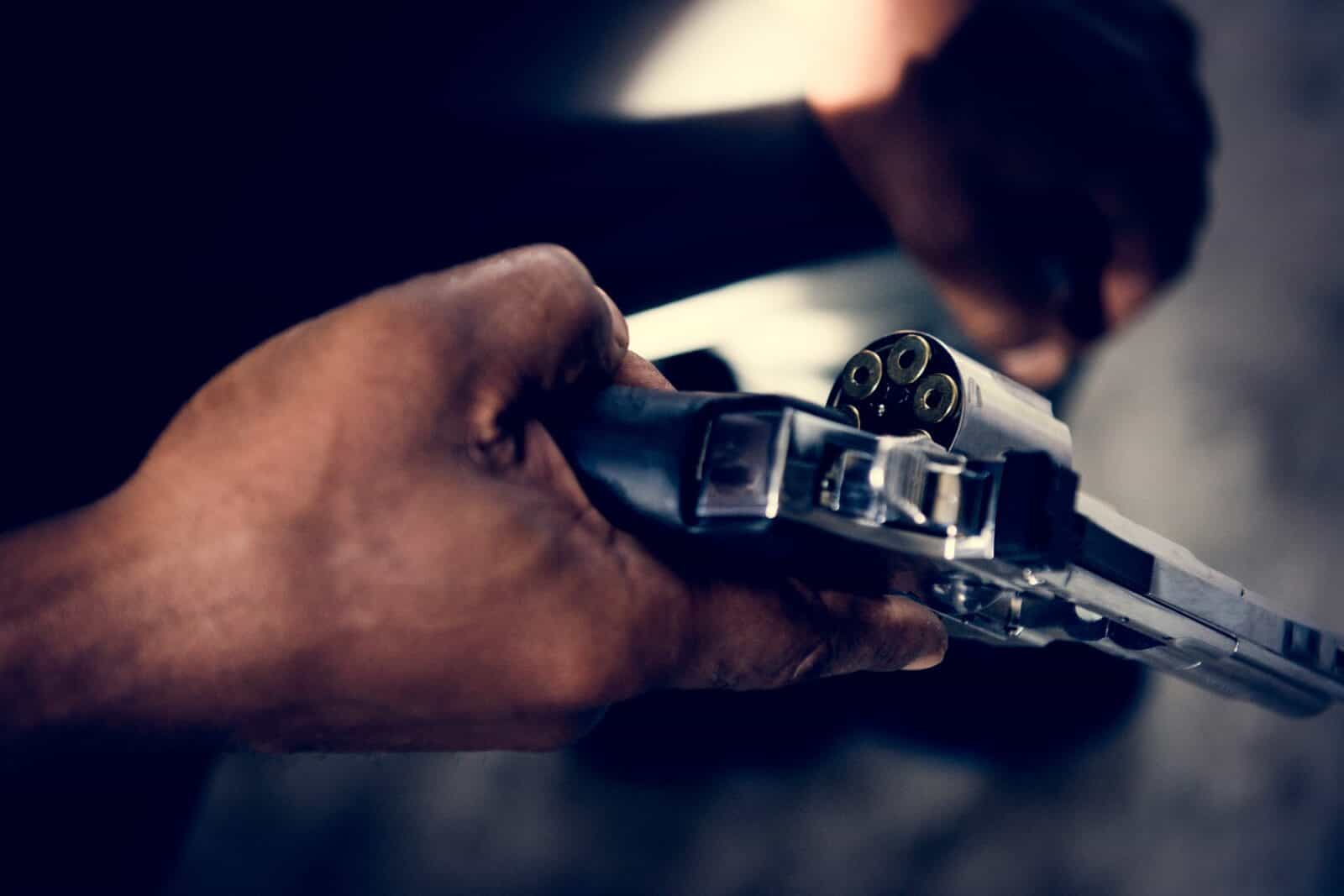
Overview of Florida Weapon Laws
Florida governs weapon purchases and possession through a combination of state statutes and federal baseline requirements. The state maintains distinct categories for different types of weapons, including firearms, electronic weapons, and chemical sprays. Each operates under specific regulatory frameworks with varying age restrictions.
Federal vs. State Age Requirements
Federal law establishes baseline requirements for firearms purchases and possession, particularly through licensed dealers. These regulations work in conjunction with Florida state laws, creating a comprehensive system of age restrictions that dealers and private sellers must follow.
Florida's rules are stricter than the federal baseline in a specific and important way. Under the federal Gun Control Act, federally licensed dealers cannot sell handguns to anyone under 21 or long guns to anyone under 18, but federal law sets no minimum age for private long gun sales. Florida's Marjory Stoneman Douglas High School Public Safety Act closed that gap: under Florida Statute 790.065, all buyers, including those purchasing from private sellers, must be at least 21 to purchase any firearm, regardless of type.
Impact of Recent Legislation
The Marjory Stoneman Douglas High School tragedy in 2018 led to significant changes in Florida's weapon laws. The most notable change was raising the minimum age for purchasing firearms from 18 to 21, with some exceptions for specific circumstances.
These legislative updates also introduced a mandatory three-day waiting period (or until a background check is completed, whichever is later) for all firearm purchases from licensed dealers.
In National Rifle Association of America, Inc. v. Bondi, the full Eleventh Circuit, sitting en banc, held on March 14, 2025, by a vote of 8 to 4, that Florida's minimum purchase age does not violate the Second Amendment. That en banc decision is the one that now controls. It replaced a 2023 three-judge panel ruling that reached the same result but was vacated when the court agreed to rehear the case. The most recent update was Florida's constitutional carry law, effective July 1, 2023, which modified carrying requirements while maintaining age restrictions.
Firearms Age Restrictions
Florida law establishes uniform age requirements for all firearms, with specific provisions for purchase and possession. The regulations apply to both dealer and private sales throughout the state.
Under Florida Statute 790.065, both handguns and long guns operate under a strict 21-and-up purchasing requirement, though possession exceptions exist for younger adults.
| Weapon Type | Minimum Age to Purchase | Minimum Age to Possess |
|---|---|---|
| Handguns | 21 (From licensed dealers and private sellers) | 18 (Limited to specific activities like target shooting or hunting) |
| Long Guns (Rifles/Shotguns) | 21 (Exceptions for active military and law enforcement) | 18 (With adult supervision for hunting and sporting) |
Concealed Carry Requirements
Florida's permitless carry law, chapter 2023-18, took effect July 1, 2023 and covers concealed weapons as well as concealed firearms. It did not create a new class of carrier. Section 790.01(1)(b) lets you carry without a license only if you still satisfy the license criteria in Section 790.06(2), and the second of those, Section 790.06(2)(b), is being 21 or older. A 19-year-old gains nothing from the law.
The law maintains strict location restrictions (such as schools and courthouses). Under Florida Statute 790.013(1), anyone carrying without a license must have valid identification on them whenever they are in actual possession of the concealed weapon or firearm, and must show it when a law enforcement officer asks. Failing to do so is a noncriminal violation carrying a $25 fine payable to the clerk of court, not a crime. Florida does not legally require individuals to proactively disclose firearm possession to law enforcement unless directly asked by an officer.
Non-Lethal Weapons Age Restrictions
Stun Guns and Tasers
Chapter 790 was renumbered by chapter 2023-18, so an "electric weapon or device" is now defined at Florida Statute 790.001(7) rather than 790.001(3)(a). The rules that follow are not the ones people expect. Chapter 790 sets no flat minimum age to buy a stun gun the way Section 790.065 does for firearms, and parental consent is central rather than irrelevant. Section 790.22(1) bars a minor under 16 from using an electric weapon at all unless an adult acting with the parent's consent is supervising, and Section 790.22(2) makes it a second-degree misdemeanor for that responsible adult to allow it anyway. Section 790.17(1) makes it a first-degree misdemeanor to sell or give a minor under 18 an electric weapon without the parent's permission. Where a retailer refuses to sell to anyone under 18 or 21, that is store policy, not the statute.
Chemical Sprays and Pepper Spray
Florida Statute 790.001(4)(b) defines a self-defense chemical spray as a compact device carried solely for lawful self-defense holding no more than two ounces of chemical, and it pulls that device out of the "chemical weapon or device" category. That exclusion is what makes it legal to carry concealed. Section 790.01(5)(b) says the same thing directly for both a self-defense chemical spray and a nonlethal stun gun carried for lawful self-defense. Chapter 790 does not set a minimum age for a self-defense chemical spray, and because the definitions exclude it, the rules in Sections 790.17 and 790.22 on furnishing weapons to minors do not reach it either. Retailers still set their own counter policies.
Special Circumstances and Exceptions
Military and Law Enforcement Exceptions
This exception is narrower than most people assume. Section 790.065(13) lifts the under-21 bar only for the purchase of a rifle or shotgun, and only for a law enforcement or correctional officer as defined in Section 943.10 or a servicemember as defined in Section 250.01. There is no handgun exception, and nothing in the statute ties the purchase to official duties or to producing paperwork.
Hunting and Sports Shooting Exceptions
Florida permits supervised hunting by minors; however, anyone born on or after June 1, 1975, must complete a state-approved hunter safety course to obtain a hunting license. Minors under 16 can hunt with adult supervision without the certification, but cannot independently carry firearms. Similarly, organized shooting sports allow supervised firearm use by those under 21 at approved facilities with qualified instruction.
Legal Consequences of Violations
Penalties for Underage Possession
Under Florida Statute 790.22(3), a minor under 18 may not possess a firearm apart from an unloaded one at home and a short list of hunting, marksmanship, and transport exceptions. The penalty sits in Section 790.22(5)(a), and it is not a felony the first time. A first offense is a first-degree misdemeanor and brings up to five days in secure detention plus 100 hours of community service or paid work. A second or later offense is a third-degree felony. Either way the court can revoke or withhold the minor's driver license for up to a year on a first offense and up to two years after that. Section 790.22(4)(a) is the felony most parents miss: knowingly and willfully letting a minor possess a firearm in violation of the statute is a third-degree felony for the adult.
Penalties for Illegal Sales to Minors
Under Florida Statute 790.17(2), knowingly or willfully selling or transferring a firearm to a minor under 18 is a third-degree felony, punishable by up to five years in prison and a fine of up to $5,000. The statute leaves one route open: a parent or guardian may transfer ownership of a firearm to their own minor child, and the parent then has to keep possession of it except as Section 790.22 allows. Section 790.17(1) handles everything that is not a firearm, including electric weapons, and makes giving one to a minor without the parent's permission a first-degree misdemeanor. Licensed federal firearms dealers who violate this prohibition also face potential revocation of their Federal Firearms License under 18 U.S.C. 922 and civil liability to injured third parties.
Speak To A Criminal Defense Attorney Today
The criminal defense attorneys at Weinstein Legal Team are available 24/7 to discuss your case and protect your rights. Call us at 888.626.1108 to speak to an attorney now, or click here to schedule a free case review with an experienced defense lawyer.