


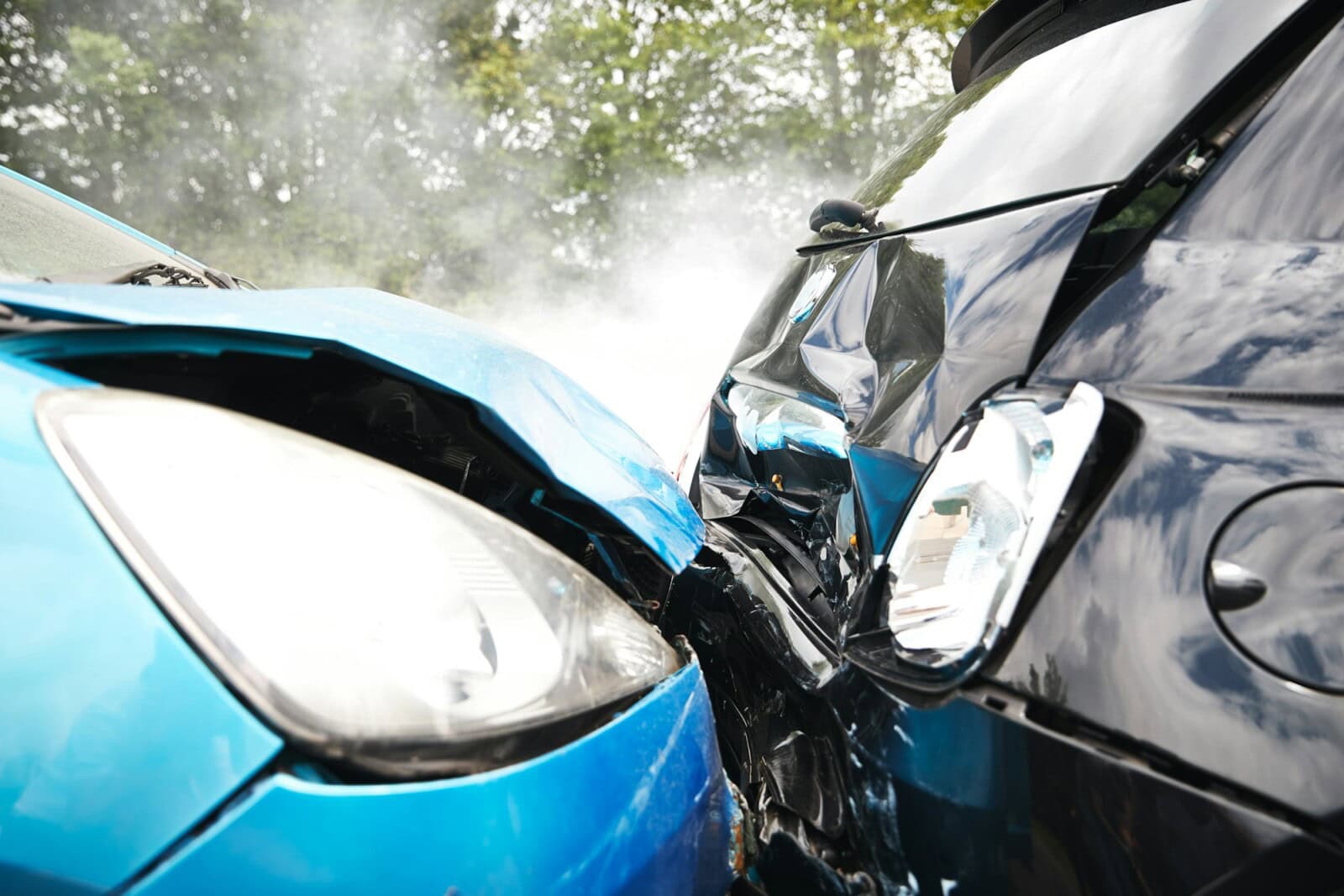
Intersection collisions are among the most dangerous accidents, frequently leading to severe injuries. Approximately 2.5 million intersection accidents occur annually in the United States, representing 40 percent of all crashes, with 50 percent of serious injuries occurring at these locations.
When a collision happens, both drivers often insist they entered the intersection legally because they had the green light, immediately creating a difficult "he-said, she-said" scenario for those assigning liability. Proving a green light claim requires immediate and strategic action to secure this critical, often-overlooked digital evidence. Keep reading to learn how this proof is secured and successfully used in Florida personal injury claims.
The Race Against Time: Why Video Evidence is "Ephemeral"
Securing electronic evidence after an accident is highly time-sensitive. Unlike physical evidence like skid marks or debris, video footage and digital logs aren't preserved indefinitely. These systems are designed to automatically overwrite old data, making immediate legal action essential to ensure a successful liability claim.
The Short Retention Period for Traffic and Surveillance Video
The window for obtaining intersection footage is surprisingly brief, and it varies depending on the camera type and the entity that owns it. Most government-operated traffic cameras and standard business surveillance systems typically retain footage for 30 to 90 days before footage is automatically deleted or overwritten. This limited retention period demands swift intervention from a legal team.
For certain operational feeds or simple municipal surveillance, retention periods can be even shorter, sometimes purging data within 24 to 72 hours. Red-light camera footage, while important, often follows similar rules. While routine feeds may be accessible for only approximately 30 days, administrative copies maintained by vendors may be retained for months or even up to two years, depending on specific municipal policy.
This brief retention window directly determines the success or failure of a liability claim, especially in cases where injuries are serious but the decision to pursue a lawsuit is delayed. Waiting even a few weeks can mean that the sole piece of objective evidence that proves liability is permanently erased. An attorney must move quickly to identify the sources, determine retention schedules, and halt the destruction of this electronic proof.
The Power of a Preservation Letter and Subpoena
Following an accident, one of the most important legal steps an attorney takes is issuing a formal notice called a spoliation or preservation letter. This letter is sent immediately to relevant parties, including government agencies or nearby businesses known to have surveillance cameras. Its legal purpose is to compel the recipient to stop the automatic destruction or overwriting of the potentially relevant electronic evidence.
A preservation letter creates a legal obligation on the recipient to maintain the evidence. If the evidence is destroyed after receiving this notice, it can trigger sanctions or allow a jury to draw an adverse inference, suggesting the destroyed evidence would have been harmful to the party that destroyed it. This letter is a powerful initial tool to freeze the footage where it is.
When a party refuses to comply with a simple preservation request, an attorney uses the more powerful, court-ordered subpoena. A subpoena is a formal demand for the disclosure of evidence that carries the weight of the court. An attorney must often use a subpoena to compel government entities or reluctant private businesses to hand over the footage and signal timing data needed for the personal injury case.
Beyond the Red Light Camera: Sources of Crucial Intersection Footage
When considering using video evidence in a car accident case, many people think only of the obvious red-light enforcement cameras. However, the term "traffic camera footage" is much broader, encompassing several different systems that capture crucial perspectives. A comprehensive personal injury attorney will investigate multiple categories of footage to definitively validate a client's green light claim.
Government-Owned Traffic and Red Light Cameras
In Florida, government cameras are operated by various entities, most notably the Florida Department of Transportation (FDOT), for traffic flow monitoring. Many local municipalities, particularly in high-density areas such as Fort Lauderdale and Miami, also operate red-light enforcement cameras to cite drivers who run red lights. These cameras are specifically designed to capture violations and can often provide the most direct evidence of fault.
Obtaining footage from these government sources isn't as simple as making an informal request. It often requires specific, formal requests, such as those filed under Florida's Public Records Act. An experienced legal team knows precisely which agencies to contact, whether it's a local police department, city engineering office, or FDOT, and understands the necessary protocol to secure the evidence without administrative delay.
Business and Private Security Surveillance Systems
Surveillance cameras owned by private commercial properties are frequently overlooked but can often be invaluable. Businesses located near busy intersections, such as gas stations, banks, pharmacies, or shopping centers, usually maintain high-quality security systems that capture street-view angles. These systems can sometimes offer a clearer, closer-range view of the accident than distant government-operated traffic cams.
The private nature of these systems presents unique challenges for collection. Because private security systems are primarily focused on site protection, the camera angles may be poor, often aimed at the parking lot rather than the street. Furthermore, while the video is critical, security systems rarely capture admissible audio, limiting the scope of the evidence. Immediate action is vital, since private systems typically retain footage for only 7 to 30 days before it is overwritten.
Securing this private footage can sometimes start less formally, perhaps with a direct request from an investigator or attorney to the business owner. However, many business owners are hesitant to release security footage without legal compulsion, citing privacy concerns or internal policy. In these instances, a lawyer's formal involvement, backed by the threat of a subpoena, is often necessary to convince the business to release the video quickly before it's overwritten.
Dashcam Footage and Body-Worn Cameras
The increasing use of civilian dashcams provides another potent source of unbiased evidence. Dashcam footage from a third-party vehicle traveling nearby acts as an objective, independent witness to the collision. If a lawyer can identify and quickly contact the owner of a vehicle whose dashcam may have captured the event, it can help resolve the liability dispute much faster.
Furthermore, law enforcement body-worn cameras can capture important evidence, even if they didn't record the moment of impact. The footage from a responding officer’s body cam can capture crucial on-scene statements made by the drivers, which may contradict later, more polished accounts given to insurance companies. This footage may also document the responding officer's initial, preliminary determination of fault, which is valuable, even if a formal citation wasn't issued at the scene.
Gathering this variety of video evidence ensures that the legal team has multiple angles and perspectives, minimizing the chance that a single grainy or obscured camera feed might weaken the case. The combination of government, private, and civilian footage creates a highly compelling, irrefutable picture of the incident.
Proving Your Case with Traffic Signal Timing Data
While video footage shows the visual collision, traffic signal timing data provides the highly technical, objective proof of why the collision occurred. This digital data, also referred to as signal sequences or control records, is separate from the video but is often the most determinative piece of evidence in contested intersection cases. This log records the exact light phase sequence and duration, minute by minute, confirming exactly when the lights changed for all directions of travel.
What is Traffic Signal Timing Data and How Is It Used?
Traffic signal timing data consists of log files stored within the traffic light controller box, typically maintained by the city or county engineering department. These logs meticulously record the specific sequence and length of every light phase, including the exact seconds of green, yellow, and red. This data is the definitive record of the signal's operation leading up to the crash.
Working alongside an attorney, a traffic engineer, or an accident reconstruction expert uses this data to build a scientific timeline of the accident. This timeline precisely records the milliseconds each light was active in all directions of travel, allowing experts to determine which driver entered the intersection during their allowed phase and which driver ran a red light.
Increasing yellow light intervals by small fractions of a second can significantly reduce red-light running violations, demonstrating that signal timing directly impacts driver behavior and accident causation.
Identifying Signal Malfunctions or Errors
In some unusual cases, the signal timing data reveals that a traffic light itself was faulty, rather than a driver being completely at fault. This could include a rare scenario where the system displayed a "double green" light, directing traffic from two intersecting streets to proceed simultaneously. It can also reveal an insufficient yellow-light interval that failed to meet state or federal safety standards, potentially trapping an innocent driver in the intersection.
If the signal timing data proves a malfunction occurred, liability might shift away from one of the drivers. Instead, a negligence claim could be directed toward the government entity or contractor responsible for the signal's maintenance and programming. Analyzing the logs helps an attorney identify whether the cause was driver error or a critical infrastructure failure.
The Attorney’s Role in Securing and Utilizing Digital Evidence
Most people understand that video evidence is important in a car accident case, but few grasp the legal and procedural hurdles to obtaining it. Government agencies and private businesses are often uncooperative and have bureaucratic processes that delay the release of information until it's too late. A law firm specializing in personal injury has the established resources and legal standing necessary to navigate these complex processes swiftly and effectively.
Securing FDOT Traffic Footage: Navigating Public Records Requests in Florida
Obtaining traffic footage from state and local agencies in Florida often requires submitting a formal request under Florida’s Public Records Act. These requests must be meticulously prepared, requiring the claimant to know the specific agency that controls the light, the exact date, the precise time of the accident, and the exact physical location. Failure to include specific, required details can lead to an administrative denial or significant delays, potentially pushing the request past the automatic data destruction date.
An experienced Florida car accident attorney knows the specific traffic engineering departments to contact in Fort Lauderdale and across the state. They understand the proper legal protocol and the necessary level of detail to satisfy the requirements of a Public Records Request. This expertise ensures the request is fulfilled quickly, retrieving the footage before the automatic overwrite mechanisms erase the evidence forever.
Ensuring Admissibility: Authentication and Chain of Custody
Simply possessing the traffic camera footage isn't enough for a successful legal claim. The evidence must also meet strict legal standards to be admissible in court. If the footage can't be properly authenticated, a defense attorney can argue that it should be excluded from the trial, effectively wiping out the strongest piece of evidence.
The legal concept of authentication requires proving that the video accurately represents the event and hasn't been altered or tampered with since it was recorded. This usually involves testimony from the system custodian. Furthermore, the attorney must establish a chain of custody, which is a documented history proving that access to the video was controlled and that every transfer of the evidence was logged.
A failure in the chain of custody could suggest the evidence was altered, rendering it legally useless, which is why proper legal procedure must be followed.
Corroborating Evidence: Building a Comprehensive Liability Case
Traffic camera footage and signal timing data often serve as the cornerstone of an intersection liability case. However, a strong personal injury case is never built on a single piece of evidence. A comprehensive claim requires a collection of supporting evidence that corroborates the video and digital data, leaving the defense with no reasonable argument against the claim of negligence.
Eyewitness Corroboration and Sworn Statements
If the video footage is grainy or captures the collision from a distant angle, the testimony of neutral eyewitnesses becomes even more important. A lawyer acts quickly to locate and interview any witnesses who were present at the scene, whose personal accounts can powerfully corroborate the sequence of events seen on the video footage. This ensures that the evidence is supported by human testimony.
Once a witness’s account is secured, an attorney may seek a sworn statement or deposition. A sworn statement formalizes the witness's memory under oath, giving their account significant legal weight that works seamlessly alongside the objective proof provided by video and data. Eyewitness testimony can explain context or driver behavior that might not be fully clear on video.
Speak To A Fort Lauderdale Car Accident Injury Lawyer Today
In contested intersection accidents where both drivers claim they had the green light, objective digital evidence, including video footage and traffic signal timing data, is critical for proving fault. Because electronic evidence is overwritten quickly, often within a few weeks, the urgency of securing it can't be overstated. Swift legal action is necessary to issue preservation letters and ensure this critical evidence is retained before it's permanently destroyed.
If you or a loved one has been injured in a complicated intersection collision, don't delay. We have the technical knowledge and legal resources required to swiftly secure complex digital evidence from FDOT and private sources throughout Fort Lauderdale and the entire State of Florida. Our expertise cuts through the conflicting claims to secure the compensation you deserve.
Call us today to speak with an attorney or click here to schedule a free case review to discuss how we can begin fighting tirelessly for you.