
On Florida's high-speed highways, maintaining a safe following distance is a fundamental aspect of preventing accidents and ensuring road safety. Tailgating, the practice of following too closely behind another vehicle, significantly increases the risk of rear-end collisions and multi-vehicle pile-ups.
Keep reading to learn about the risks of tailgating, legal implications, and effective strategies for maintaining safe distances on Florida's roads.
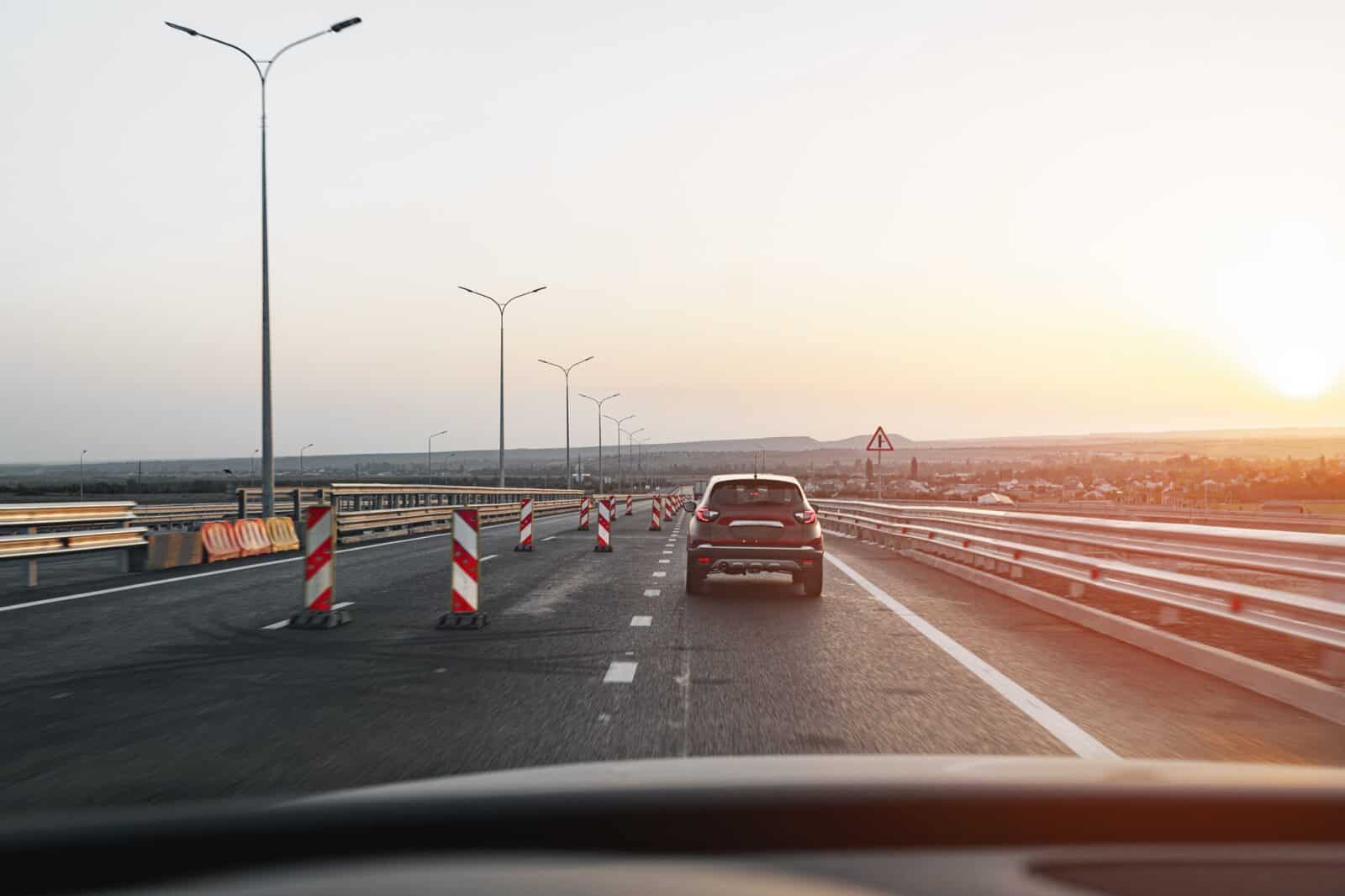
Understanding Tailgating and Its Risks
Tailgating occurs when a driver follows another vehicle too closely, leaving insufficient space to react and stop safely if the lead vehicle suddenly brakes or encounters an obstacle. This dangerous practice is a common form of aggressive driving that significantly increases the risk of accidents on Florida's highways.
Florida keeps its own count. Officers recorded following too closely as the first driver action in 69,126 crashes in 2024, including 10 fatal crashes and 268 crashes with incapacitating injuries, according to the Florida Department of Highway Safety and Motor Vehicles 2024 Traffic Crash Facts annual report.
The dangers of tailgating stem from its impact on a driver's ability to react to sudden changes in traffic conditions. When following too closely, drivers have less time to perceive and respond to hazards, reducing their overall reaction time. This decreased reaction window can mean the difference between a near-miss and a severe collision, especially at high speeds common on Florida's highways.
Tailgating also spreads backwards through the traffic behind it. When one driver follows too closely, it often leads to a chain reaction of sudden braking and potential collisions involving multiple vehicles. This domino effect can turn a minor incident into a major traffic disaster, putting numerous lives at risk.
Legal Implications of Tailgating in Florida
Florida's tailgating rules matter both for avoiding a rear-end crash and for the legal recourse available after one. The state has specific laws and regulations in place to address this dangerous driving behavior and its consequences.
Florida Traffic Laws Regarding Following Distances
Fla. Stat. s. 316.0895 is Florida's following-too-closely law. It says that "the driver of a motor vehicle shall not follow another vehicle more closely than is reasonable and prudent, having due regard for the speed of such vehicles and the traffic upon, and the condition of, the highway."
While the statute doesn't specify an exact distance, it requires drivers to maintain a safe following distance based on current conditions. This flexible approach allows for consideration of various factors, such as speed, weather, and road conditions.
A violation is a noncriminal traffic infraction under s. 316.0895(4), punishable as a moving violation. The base civil penalty is $60 under Fla. Stat. s. 318.18(3)(a), before court costs and county surcharges, and the violation adds 3 points to the license under Fla. Stat. s. 322.27(3)(d)8., or 4 points under s. 322.27(3)(d)9. if it results in a crash. Twelve points in 12 months suspends the license for up to 30 days. Following too closely is not itself a crime, but the same driving can support a separate criminal charge, such as reckless driving under Fla. Stat. s. 316.192 or vehicular homicide under Fla. Stat. s. 782.071.
Liability in Tailgating-Related Accidents
In tailgating-related accidents, liability is often attributed to the driver who was following too closely. This is because tailgating is generally considered a form of negligent driving. In legal terms, negligence refers to a failure to exercise reasonable care that results in harm or damage to another party.
When determining liability in these cases, factors such as following distance, speed, road conditions, and the actions of both drivers are taken into account. If the tailgating driver is found to be at fault, they may be held responsible for damages, including medical expenses, property damage, lost wages, and pain and suffering of the injured parties.
One more rule shapes these cases. Florida applies a rebuttable presumption that the rear driver's negligence was the sole proximate cause of a rear-end collision, and in Cevallos v. Rideout, 107 So. 3d 348 (Fla. 2012) the Florida Supreme Court held that the presumption is rebutted once there is evidence from which a jury could find the front driver negligent, or find that the rear driver was not the sole cause. A personal injury attorney works that question: gathering the crash report and any dashcam or scene evidence, and dealing with the insurer on the fault split.
The Three-Second Rule: A Guideline for Safe Following Distances
The three-second rule is a practical and widely recommended guideline for maintaining safe following distances on the road. It provides drivers with a simple method for ensuring they leave enough space between their vehicle and the one in front of them.
To apply the three-second rule, a driver should choose a fixed point ahead, such as a road sign or tree. When the vehicle in front passes this point, the driver should count "one-thousand-one, one-thousand-two, one-thousand-three." If they reach the fixed point before finishing the count, they're following too closely and should increase their distance.
This rule is effective because it automatically adjusts for speed. As vehicles move faster, the distance covered in three seconds increases, providing more space for reaction and braking at higher speeds. Three seconds is a floor, not a target, and some conditions call for more.
Adjusting the Three-Second Rule for Different Conditions
While the three-second rule provides a solid baseline for safe following distances, it's important to recognize that this guideline may need to be adjusted based on various factors. Road conditions, weather, vehicle type, and other variables can all impact the appropriate following distance.
Weather Conditions
Adverse weather conditions significantly affect safe following distances and require drivers to exercise extra caution. In situations of reduced visibility or compromised road traction, the three-second rule should be extended to account for these challenges.
During rain, for example, the road surface becomes slippery, increasing stopping distances and the risk of hydroplaning. In these conditions, drivers should aim for a four to five-second following distance. In cases of heavy rain, fog, or snow, where visibility is severely reduced, it's advisable to increase the following distance to six seconds or more.
Extreme weather conditions, such as tropical storms or hurricanes common in Florida, may require even greater following distances. In such cases, if driving is absolutely necessary, drivers should maintain as much distance as possible from other vehicles and reduce speed significantly.
Vehicle Type and Size
Vehicle size changes the distance you need. Larger vehicles, such as trucks and buses, require more time and distance to stop due to their increased mass. Similarly, vehicles towing trailers or carrying heavy loads will have longer stopping distances.
When driving a larger vehicle or following one, it's advisable to increase the following distance to at least four to five seconds. This extra space allows for the increased stopping distance these vehicles require and provides more time for other drivers to react to sudden changes in traffic flow.
Motorcycles, while smaller and potentially more maneuverable, also require special consideration. Due to their size, they can be harder to see and may stop more quickly than larger vehicles. When following a motorcycle, drivers should maintain a four-second following distance to ensure they have adequate time to react to the motorcycle's movements.
Road Conditions and Traffic Flow
Road conditions and traffic flow are dynamic factors that can significantly impact safe following distances. Construction zones, poorly maintained roads with potholes or uneven surfaces, and areas with frequent merging or lane changes all require increased vigilance and greater following distances.
In heavy traffic, where speeds may be lower, but sudden stops are more frequent, drivers should aim to maintain a three to four-second following distance. This extra space provides a buffer for the frequent speed changes typical in congested traffic.
On highways with higher speed limits, such as Florida's interstate system, following distances should be increased. At speeds of 70 mph or higher, a four to five-second following distance is more appropriate to account for the increased stopping distance required at these speeds.
Brake Reaction Time and Its Impact on Following Distances
Brake reaction time is a critical factor in maintaining safe following distances and preventing rear-end collisions. It is the time it takes to perceive a hazard, decide to brake and move your foot to the pedal. It is not instantaneous, and whatever your own reaction time is, the vehicle keeps traveling at full speed for the whole of it.
Several factors can affect brake reaction time. Distraction is a significant issue, with activities such as texting while driving, adjusting the radio, or eating while driving dramatically increasing reaction times. Fatigue is another major concern, as tired drivers may have slower cognitive processing and physical responses. Age also affects reaction time, with older drivers generally taking slightly longer to react.
To improve brake reaction time, drivers should prioritize alertness and minimize distractions. This includes getting adequate rest before driving, avoiding the use of electronic devices while behind the wheel, and maintaining focus on the road and surrounding traffic. Regular eye exams can also help ensure that drivers can quickly perceive potential hazards.
Even a fast reaction does not shorten the braking distance that follows it. The space between vehicles must account for both the reaction time and the actual braking distance required to bring the vehicle to a stop. This underscores the importance of maintaining and often extending beyond the three-second rule, especially at higher speeds or in adverse conditions.
Florida Highway Speed Limits and Their Relationship to Following Distances
Safe following distance scales with Florida's highway speed limits. On most Florida interstate highways, the speed limit is 70 mph, with some urban areas reducing this to 65 mph. These high speeds necessitate greater following distances to ensure safety.
At higher speeds a vehicle covers more ground before the brakes are even touched. At 70 mph a vehicle travels about 103 feet every second, so a full second of reaction time is more than 100 feet of road gone. Braking distance then adds to that, and it grows faster than speed does, because the energy the brakes have to shed rises with the square of the speed.
Given these factors, it's clear that the three-second rule should be considered a minimum at highway speeds. On Florida's high-speed highways, drivers should aim for a four to five-second following distance under ideal conditions, and even more when conditions are less than perfect.
Strategies for Preventing Rear-End Collisions
Preventing rear-end collisions requires a proactive approach to driving. By implementing effective strategies and maintaining awareness, drivers can significantly reduce the risk of these common and often severe accidents.
Defensive Driving Techniques
Defensive driving is a set of skills and attitudes that help drivers anticipate potential hazards and make safe decisions on the road. Several defensive-driving techniques are particularly effective at preventing rear-end collisions.
Situational awareness comes first. Drivers should constantly scan their surroundings, including checking mirrors frequently and being aware of vehicles in adjacent lanes. This awareness allows drivers to anticipate potential problems and react more quickly to changing traffic conditions.
Proper signaling is another important aspect of defensive driving. Using turn signals well in advance of lane changes or turns helps other drivers anticipate your movements and adjust their own driving accordingly. This is especially important in preventing rear-end collisions when slowing down to turn.
Gradual braking is a key technique for reducing the risk of being rear-ended. When possible, drivers should begin slowing down early and brake smoothly rather than abruptly. This gives the following drivers more time to react and adjust their speed. When sudden braking is necessary, quickly tapping the brake pedal a few times before fully applying the brakes can help alert drivers behind you.
Using Technology to Maintain Safe Distances
Modern vehicle technologies offer valuable tools for maintaining safe following distances and preventing rear-end collisions. While these systems should not replace attentive driving, they can provide an additional layer of safety.
Adaptive cruise control is a feature that automatically adjusts a vehicle's speed to maintain a safe following distance from the vehicle ahead. This technology uses sensors to detect the speed and distance of the vehicle in front and can apply the brakes or accelerate as needed to maintain the set following distance.
Forward collision warning systems alert drivers when they are approaching a vehicle ahead too quickly or when a collision is imminent. Some advanced systems can even automatically apply the brakes if the driver doesn't respond quickly enough to the warning.
Lane departure warning systems and blind spot detection can also indirectly help prevent rear-end collisions by keeping drivers aware of their position on the road and the presence of other vehicles around them.
While these technologies can be highly effective, they have limitations. They may not function optimally in all weather conditions or at very high speeds. Drivers should always remain alert and ready to take control, regardless of the technological aids available in their vehicle.
Educating Others About Safe Following Distances
Florida runs public education on this through the Department of Highway Safety and Motor Vehicles and its Safety Center, and driver behavior is where following distance is won or lost.
Community outreach programs can be an effective way to spread awareness about the importance of safe following distances. These could include presentations at schools, community centers, and local events. Interactive demonstrations, such as using simulators to show the impact of different following distances, can be particularly effective in helping drivers understand the concept.
Social media campaigns and public service announcements can reach a wide audience with important safety messages. These could include easy-to-remember slogans or visual representations of safe following distances.
Partnering with local law enforcement for educational initiatives can also be impactful. This could involve setting up information booths at community events or collaborating on targeted enforcement campaigns that focus on educating drivers about safe following distances rather than just issuing citations.
The Role of Traffic Flow Dynamics in Tailgating Prevention
Traffic doesn't simply move as individual vehicles but as a complex system with its own patterns and behaviors. One important concept in traffic flow dynamics is traffic waves. These ripple effects occur when one vehicle changes speed, causing vehicles behind it to also change speed. In heavy traffic, these waves can amplify, leading to sudden stops and starts that increase the risk of rear-end collisions.
By maintaining a consistent speed and avoiding unnecessary lane changes, drivers can help smooth out these traffic waves. This reduces the risk of tailgating and improves overall traffic flow, potentially reducing congestion and the frustration that often leads to aggressive driving behaviors like tailgating.
Another important aspect of traffic flow dynamics is the concept of traffic density. As the number of vehicles on a road increases, the space between them naturally decreases. In high-density situations, it becomes even more critical for drivers to maintain awareness of their following distance and adjust it as needed.
Two deadlines matter after a Florida crash. To qualify for PIP medical benefits, you generally must receive initial services and care within 14 days after the motor-vehicle crash under Florida Statute 627.736(1)(a). Other PIP benefit categories and coverage conditions should be reviewed separately. Separately, a negligence lawsuit against the at-fault driver must be filed within two years of the crash under Florida Statute 95.11(5)(a) for crashes on or after March 24, 2023.
Speak To A Car Accident Injury Lawyer Today
Keeping a safe following distance is how drivers prevent rear-end accidents on Florida's highways. By understanding and implementing proper following distance guidelines, using defensive driving techniques, and staying aware of road conditions, drivers can significantly reduce their risk of rear-end collisions.
A rear-end crash is decided on facts that get lost quickly: the following distance, the braking, and whether the front driver did anything that contributed. Those are worth pinning down early.
If you've been involved in a tailgating-related accident, the experienced car accident injury attorneys at Weinstein Legal Team can help protect your rights and pursue fair compensation for your injuries. Call us today at 888.626.1108 to speak with an attorney now, or click here to schedule a free case review today.