
Under Florida Statute 784.021, aggravated assault with a deadly weapon is classified as a third-degree felony that carries severe penalties. This offense occurs when a person commits an assault while using a deadly weapon without intent to kill. If convicted, defendants face up to 5 years in prison, 5 years of probation, and fines reaching $5,000 under Florida Statutes 775.082(3)(e) and 775.083(1)(c), far beyond the exposure for simple assault.
The escalation from simple assault (a misdemeanor) to aggravated assault (a felony) hinges critically on the presence of a "deadly weapon" during the commission of the offense. This element often becomes the central point of contention in many assault cases throughout Florida's criminal courts.
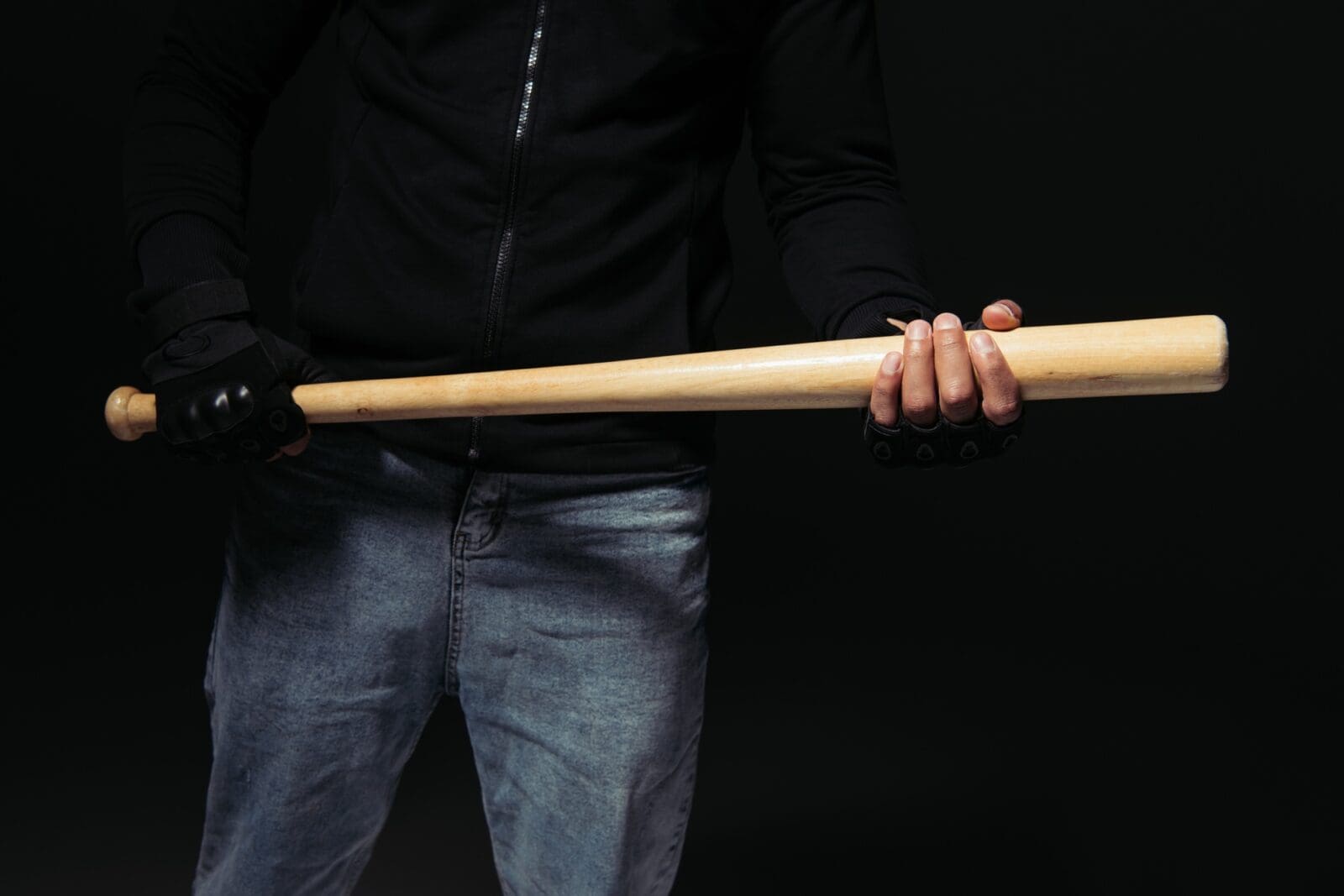
Legal Definition of "Deadly Weapon" in Florida
Florida Statute 784.021 uses the phrase "deadly weapon" and never defines it. The closest statutory definition sits in a different chapter: Florida Statute 790.001(20) defines "weapon" as any dirk, knife, metallic knuckles, slungshot, billie, tear gas gun, chemical weapon or device, or other deadly weapon except a firearm or a common pocketknife, plastic knife, or blunt-bladed table knife. That definition governs Chapter 790 weapons offenses rather than Chapter 784 assaults, so in an aggravated assault case Florida courts work from case law: a deadly weapon is an object used, or threatened to be used, in a way likely to produce death or great bodily harm. This judicial definition focuses not just on the inherent nature of the object but also critically on how it was employed during the alleged assault.
When determining whether an object qualifies as a deadly weapon, Florida courts examine multiple factors, including the physical characteristics of the object, whether it's inherently dangerous, and the manner and circumstances of its use during the incident. Courts also consider whether the object, as used, was likely to cause death or serious bodily injury, not whether it actually did cause such harm.
Traditional Weapons vs. Ordinary Objects as Deadly Weapons
Florida law distinguishes between objects that are inherently weapons by design and ordinary items that become weapons based solely on how they're used during an alleged assault. Which side of that line an object lands on is usually what separates a felony from a misdemeanor.
Traditional weapons almost invariably qualify as deadly weapons in Florida assault cases. Firearms are the clearest case, and an assault committed with one is routinely charged as aggravated assault under Florida Statute 784.021(1)(a). Brass knuckles, blackjacks, metal batons, stun guns and fixed-blade knives are the next tier. A common pocketknife is the awkward one: Florida Statute 790.001(20) expressly carves a common pocketknife out of the statutory definition of "weapon," so whether a particular pocketknife is a deadly weapon in an assault case comes back to the same case-law test, how it was used, rather than to the label on the object.
Beyond traditional weapons, Florida courts have repeatedly classified ordinary objects as deadly weapons based on how defendants used them during assaults. For instance, in multiple cases, courts have deemed automobiles deadly weapons when drivers used them to threaten or intimidate victims by driving toward them. Similarly, household objects like baseball bats, hammers, screwdrivers, broken bottles, and even chairs have been classified as deadly weapons when wielded in threatening ways.
Florida courts have extended the deadly weapon classification to items as common as pens, flashlights, and walking canes when defendants used them to threaten victims in ways that could cause serious harm. The key factor in these determinations is how the defendant employed the object during the alleged assault and whether that use created a reasonable fear of imminent serious injury.
Gray Areas and Contested Classifications
Many objects fall into legal gray areas where courts have reached inconsistent conclusions about their status as deadly weapons. Items like plastic bottles, small sticks, or even shoes have received varying classifications depending on the specific circumstances of each case. Courts have sometimes reached different conclusions about similar objects based on factors like size, weight, rigidity, and the defendant's proximity to the victim.
The classification of bodily appendages, like hands, feet, or teeth, presents a particularly contested area in Florida law. While some courts have found that body parts cannot be deadly weapons because they are not external objects, others have classified them as such when used in particularly threatening ways, especially when the defendant has specialized fighting training or unusual physical strength. This inconsistency highlights the contextual nature of deadly weapon determinations.
Chemical substances represent another challenging category for Florida courts. While caustic chemicals clearly can cause great bodily harm, courts have varied in their willingness to classify substances like household cleaners, pepper spray, or even bodily fluids as deadly weapons. These classifications often hinge on factors like concentration, quantity, delivery method, and the specific threat made by the defendant.
The "Deadly Weapon" Test
When faced with aggravated assault cases, Florida courts apply a multi-faceted analysis to determine whether an object qualifies as a deadly weapon. Rather than following a rigid checklist, judges evaluate each case by examining the totality of circumstances surrounding the alleged assault.
Object Characteristics Assessment
Courts first analyze the inherent physical characteristics of the object involved in the alleged assault. This examination includes the object's size, weight, construction materials, design features, and its ordinary purpose. Objects specifically designed as weapons, like firearms or combat knives, are almost always classified as deadly weapons regardless of how they were actually used during the incident.
For common objects not designed as weapons, courts assess their potential capacity to inflict serious harm when used aggressively. Factors like sharpness, hardness, weight, and rigidity significantly influence this determination. For example, a heavy metal flashlight might be classified as a deadly weapon more readily than a lightweight plastic one, even if both were used in identical threatening manners, because the metal version has a greater inherent capacity to cause serious injury.
Manner of Use Analysis
How a defendant actually used or threatened to use an object often proves more decisive than the object's inherent characteristics. Courts carefully examine witness testimony, surveillance footage, and other evidence to understand exactly how the defendant employed the object during the alleged assault. This includes analyzing whether the defendant made stabbing motions, swinging gestures, or other actions suggesting an intent to cause serious harm.
The defendant's proximity to the victim carries considerable weight in this analysis. Courts generally find that objects used in close range pose greater danger than those threatened from a distance. For instance, a hammer threatened from across a room might not qualify as a deadly weapon, while the same hammer held inches from a victim's head likely would.
Verbal threats accompanying the object's use significantly impact the court's determination. When defendants pair objects with explicit threats to kill or seriously injure victims, courts more readily classify those objects as deadly weapons.
Intent and Reasonable Fear Considerations
While the defendant's subjective intent to cause death isn't required for an aggravated assault conviction, their apparent intent as demonstrated through actions and words influences the deadly weapon determination. Courts evaluate whether a reasonable person would perceive the defendant's use of the object as creating a genuine risk of death or serious injury. This "reasonable person" standard helps courts distinguish between truly threatening uses of objects and situations where fear might be overblown.
The victim's perception and reaction receive consideration but aren't determinative. Courts examine whether the victim's fear was reasonable under the circumstances, including factors like the victim's physical characteristics, prior relationship with the defendant, and knowledge of the defendant's capabilities. However, even if a particular victim wasn't actually frightened, courts may still classify an object as a deadly weapon if an ordinary person in that situation would reasonably fear serious harm.
Defending Against Aggravated Assault with a Deadly Weapon Charges
When facing aggravated assault with a deadly weapon charges in Florida, developing an effective defense strategy often means challenging either the assault allegations themselves or the critical "deadly weapon" element that elevates the offense to a felony. Which of those two fights is worth having depends on the object, the witnesses and what the State can actually prove about how it was used.
Challenging the "Deadly Weapon" Classification
One of the most effective defense strategies involves contesting whether the object in question legally qualifies as a deadly weapon under Florida law. This approach typically includes analyzing the object's inherent characteristics and arguing that it lacks the capacity to cause death or serious bodily harm. Criminal defense attorneys may present evidence about the object's construction, weight, materials, or design to demonstrate that it couldn't reasonably produce the level of harm required for a deadly weapon classification.
The manner of use provides another avenue for challenging the deadly weapon classification. Defense counsel may argue that even if the object could potentially cause harm in some circumstances, the specific way the defendant used or allegedly threatened to use it didn't create a genuine risk of death or serious injury. For example, if a defendant held a hammer but made no swinging or striking motions, the defense might argue that this passive holding doesn't transform the tool into a deadly weapon regardless of the object's inherent characteristics.
Expert testimony often proves valuable in disputing deadly weapon classifications. Weapons experts, materials specialists, or medical professionals can provide testimony about an object's actual capacity to cause harm in the circumstances alleged. In cases involving unusual objects, expert witnesses can explain to judges and juries why such items don't meet Florida's deadly weapon standard despite the prosecution's claims.
Additional Defense Strategies
Beyond challenging the deadly weapon classification, self-defense claims provide a powerful defense in appropriate cases. Florida's self-defense laws, including Stand Your Ground provisions, may justify a person's use or threatened use of an object when they reasonably believed such action was necessary to prevent imminent harm to themselves or others. This defense strategy shifts the focus from whether the object was a deadly weapon to whether the defendant had a legal right to use it defensively.
Lack of intent to create fear constitutes another potential defense approach. Aggravated assault requires that the defendant intentionally created a well-founded fear in the victim. Assault defense attorneys may argue that any fear experienced by the alleged victim was either unreasonable under the circumstances or that the defendant never intended to create such fear.
This strategy often involves presenting evidence of the broader context surrounding the incident, including prior interactions between the parties or miscommunications that may have led to misunderstandings about the defendant's intentions.
Challenging witness credibility and evidence reliability provides additional defense avenues. Assault cases frequently hinge on conflicting testimony about what transpired during brief, emotionally charged encounters. Defense counsel may identify inconsistencies in witness statements, question memory reliability, or highlight potential biases affecting perception.
Similarly, physical evidence like photographs or video recordings can be analyzed for angles, lighting, or other technical factors that might create misleading impressions about the nature of the interaction or how objects were used during the alleged assault.
Penalties and Consequences of Conviction
Aggravated assault with a deadly weapon is a third-degree felony under Florida Statute 784.021(2), punishable by up to five years in state prison, up to five years of probation and a fine of up to $5,000. It also leaves a violent felony conviction on the record, which is where most of the lasting damage comes from.
Criminal Penalties
As a third-degree felony under Florida Statute 784.021, aggravated assault with a deadly weapon is punishable by up to 5 years in state prison, 5 years of probation, and fines reaching $5,000. Unlike other offenses, these penalties apply regardless of a defendant's prior criminal history. The court may impose any combination of these punishments, potentially including both incarceration and subsequent probation.
Aggravated assault no longer carries a firearm mandatory minimum in Florida. Chapter 2016-7, Laws of Florida (SB 228), struck aggravated assault from the list of qualifying offenses in Florida Statute 775.087(2)(a)1, and the current list does not include it. A judge may still weigh the use of a firearm when choosing a sentence inside the five-year statutory maximum.
Two victim-based reclassifications carry mandatory prison time. Under Florida Statute 784.07(2)(c), aggravated assault on a law enforcement officer, firefighter, emergency medical care provider or other person listed in that section, while that person is performing official duties, is reclassified from a third-degree to a second-degree felony, and anyone convicted of aggravated assault on a law enforcement officer must serve a minimum of three years. Under Florida Statute 784.08(1) and (2)(b), aggravated assault on a person 65 years of age or older is reclassified to a second-degree felony and carries a minimum of three years plus a fine of up to $10,000, whether or not the defendant knew the victim's age. Similarly, if the assault occurred during another felony or as part of domestic violence, judges typically impose sentences at the higher end of the permissible range.
Additionally, probation for aggravated assault typically includes specialized conditions like anger management programs, weapons prohibitions, and restraining orders that further restrict the defendant's freedom beyond the formal sentence.
Collateral Consequences
Beyond formal legal penalties, an aggravated assault conviction triggers numerous collateral consequences that can last a lifetime. Employment prospects become severely limited as most employers conduct background checks and are reluctant to hire individuals with violent felony records. Many professional licenses, including those in healthcare, education, security and financial services, become hard or impossible to obtain with an aggravated assault conviction on the record.
The conviction creates ripple effects throughout a person's life. Housing options narrow significantly as landlords frequently reject applicants with violent criminal histories. Immigration consequences can be severe, potentially resulting in deportation for non-citizens regardless of their legal status.
Federal law permanently prohibits firearm ownership for those convicted of felonies, including aggravated assault. Additionally, the social stigma associated with a violent crime conviction can damage personal relationships, affect child custody arrangements, and create barriers to community reintegration that persist long after formal sentences conclude.
Speak With A Criminal Defense Attorney About Your Assault Charges
The difference between simple assault and aggravated assault with a deadly weapon can mean the difference between a year in county jail versus five years in state prison, not to mention the lifelong collateral consequences that accompany a violent felony conviction.
If you or someone you know is facing aggravated assault with a deadly weapon charges in Florida, the experienced criminal defense attorneys at Weinstein Legal Team are ready to fight for your freedom.
Call us now at 888.626.1108 to speak to a lawyer immediately, or click here to start a free, no-obligation case review online.