


- Florida's modified comparative negligence law bars victims from recovering compensation if they are determined to be more than 50% at fault for a semi-truck accident.
- The statute of limitations for filing a personal injury claim after a truck crash in Florida has been reduced to two years from the date of the incident.
- Multiple parties can be held liable in a commercial trucking lawsuit, including the truck driver, the trucking company under vicarious liability, and even third-party cargo loaders.
- Federal hours-of-service violations and driver fatigue are leading causes of catastrophic 18-wheeler collisions on busy corridors like I-95 and the Florida Turnpike.
- Crucial evidence such as Event Data Recorder records and driver logs must be secured quickly to prevent the trucking company from destroying vital information about the crash.
- Victims of high-impact truck accidents may recover both economic damages for medical expenses and non-economic damages for pain and suffering through a Florida truck accident lawsuit.
Collisions involving 18-wheelers often cause life-altering injuries and significant financial strain for victims. Many people find themselves overwhelmed by the medical bills and property damage that follow a high-velocity impact resulting in structural vehicle failure. Knowing your legal options helps you manage medical expenses and lost income after a crash.
You have the legal right to pursue compensation through a Florida truck accident lawsuit if negligence caused the collision. The process is often more complex than a standard car accident because it involves various federal regulations and multiple liable parties. Navigating the specific rules in Florida requires a focused approach to ensure you receive a fair recovery. Proving liability and securing documentation is the first step toward hardening your defense against insurance company tactics.
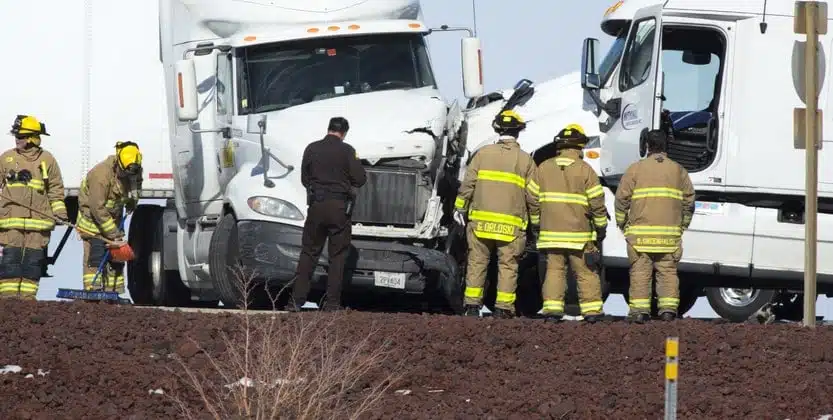
Common Causes of Semi-Truck Collisions in Florida
Florida highways see a high volume of commercial traffic every day. These busy corridors facilitate the movement of goods, but they also increase the risk of catastrophic interactions between passenger cars and large rigs. Florida ranks third in the nation for fatal truck accidents, which highlights the inherent dangers on these busy roads.
Federal Hours-of-Service Violations and Driver Fatigue
Many collisions are caused by driver fatigue as operators struggle to meet tight delivery schedules across long distances. The Federal Motor Carrier Safety Administration (FMCSA) regulates commercial trucking safety to prevent these incidents. Drivers are strictly limited in the number of hours they can spend behind the wheel without taking mandatory rest breaks.
Violating these federal hours-of-service regulations is a frequent cause of a semi-truck accident on motorways. Fatigue slows reaction times and impairs judgment, much like driving under the influence of alcohol. When a driver ignores rest requirements to finish a route faster, they place everyone on the road at significant risk.
The FMCSA regulates commercial trucking safety by allowing drivers to work up to 11 hours after 10 hours off duty.
Speeding and Improper Lane Changes
Speeding is another frequent cause of accidents as drivers try to cover miles quickly to meet their quotas. Because of their massive size, 18-wheelers require much longer distances to come to a complete stop. When a truck is traveling too fast, the driver cannot react in time to sudden changes in traffic flow.
Truckers also cause crashes when they make improper lane changes because they didn't check their blind spots. These areas around the truck are known as No-Zones. These zones are large enough for a passenger vehicle to disappear entirely from the driver's view.
Lack of Proper Vehicle Maintenance
Lack of proper vehicle maintenance is a leading factor in equipment malfunctions, such as brake and tire failures. Commercial vehicles weighing up to 80,000 pounds exert immense pressure on their mechanical systems during daily use. Regular inspections are required by law to identify worn parts before they fail on the highway. Many of the incidents involving mechanical issues could have been prevented with regular repairs. Defective brake systems cause mechanical failures that prevent a driver from avoiding a collision.
Key Differences Between Semi-Truck and Passenger Car Accidents
A fully loaded semi-truck can weigh up to 80,000 pounds, which is much heavier than a standard four-door car. The massive difference in weight means that collisions involving 18-wheelers are almost always more destructive than typical passenger-car accidents. The force of impact often results in total vehicle loss and complex fractures requiring internal fixation in occupants of smaller cars.
Gross Vehicle Weight and Impact Force
The physics of a truck accident are much different than those of a standard passenger vehicle crash. Because a truck's mass is so great, it carries significantly more kinetic energy at highway speeds. The resulting kinetic energy is transferred to the smaller vehicle during impact, causing crushed frames or severe structural intrusion.
Victims often suffer from cognitive impairment from traumatic brain injuries due to the violent shaking of the skull. Even if a vehicle has high safety ratings, it's not designed to withstand a direct hit from an 80,000-pound rig. Such a significant difference in size and weight explains why truck accidents frequently result in permanent mobility impairment requiring home modifications.
Complexity of Commercial Insurance Policies
Commercial trucking entities carry insurance policies with much higher limits than standard motorists. These policies often provide millions of dollars in coverage to address the severe damage trucks can cause. Because so much money is at stake, insurance companies will employ aggressive legal teams to fight the claim from the beginning.
These legal teams specialize in defending against trucking accident claims and protecting the insurance company's profits. They may send investigators to the crash site within hours to gather evidence that supports their side. Victims need representation that's equally aggressive to protect their interests during these intense legal battles.
Who Can Be Held Liable in a Florida Trucking Accident?
Standard car crashes usually involve two drivers who share the primary responsibility for the collision. Semi-truck accidents are different because a network of professionals manages the vehicle's operation. Identifying every potential defendant is the first step in building a case that covers the full extent of your losses.
Suing the Truck Driver
The truck driver is often the most visible person blamed after a crash. Drivers might be held personally liable if they were operating the vehicle while under the influence of drugs or alcohol. They may also face liability for distracted driving or failing to follow speed limits on busy Florida highways.
A driver must complete a daily Driver Vehicle Inspection Report (DVIR) to confirm the rig is mechanically sound before entering the highway. If they noticed a mechanical issue and chose to drive anyway, they've shown a reckless disregard for safety.
Suing the Trucking Company and Vicarious Liability
Trucking companies are often responsible for the actions of their drivers through a legal concept called vicarious liability. Under the doctrine of respondeat superior, liability applies if the driver was performing job duties at the time of the crash. It ensures that the employer remains accountable for the conduct of its staff while they're on the clock.
Investigations often examine the company's hiring practices to determine whether it ignored a driver's poor safety record. A company might be negligent if it failed to provide proper training or pushed its employees to ignore safety protocols. If they encouraged drivers to bypass federal laws to meet delivery deadlines, they bear significant blame for the resulting 18-wheeler accident.
Negligent Hiring and Supervision
Trucking companies have a duty to hire competent drivers who do not pose a risk to the public. If a carrier ignores a history of reckless driving or failed drug tests during the hiring process, they may be liable for negligent hiring. Ongoing supervision is also required to ensure drivers remain compliant with safety standards throughout their employment. Proving that a company failed to vet or monitor its staff adds a critical layer of liability to your claim.
Independent Contractors vs. Employees
In Florida, whether a driver is an employee or an independent contractor significantly impacts respondeat superior claims. Trucking companies often try to classify drivers as contractors to avoid liability for accidents. The distinction between employee and contractor demonstrates why you need a legal team with high-level expertise to investigate these contracts.
If the company maintains significant control over the driver's schedule, equipment, and methods, the law may treat the driver as an employee. Proving an employment relationship is often necessary to access the trucking company's larger insurance policies. Our team looks at the actual working relationship rather than just the label used in a contract.
Third-Party Liability: Manufacturers and Cargo Loaders
Parties other than the driver or the carrier can also play a role in a semi-truck accident. A maintenance facility might be liable if it performed a faulty repair that led to a mechanical failure. In other cases, a shipping company could be responsible if they loaded the trailer improperly, causing a jackknife or rollover accident.
Product liability claims are another path for seeking compensation from manufacturers. Defective parts, like tires that blow out or brakes that fail, can lead to catastrophic results on the road. If a design flaw or manufacturing error caused the crash, the company that built the part could be held responsible for the damages.
Specific Types of Dangerous Truck Accidents
The manner in which a truck collides with a passenger vehicle often dictates the type and severity of injuries. Certain accident types are unique to commercial vehicles due to their articulated frames and high ground clearance. Understanding these specific scenarios helps your legal team identify the exact cause of the crash and the responsible parties.
Underride Accidents
Underride accidents occur when a smaller passenger vehicle slides underneath the trailer of a semi-truck. These incidents are incredibly dangerous because the trailer bed often enters the passenger compartment at head level. Most modern trailers are required to have underride guards, but these can fail during a high-speed impact.
If a guard was missing or poorly maintained, the trucking company or the manufacturer could face additional liability. These accidents almost always result in fatal injuries or severe traumatic brain damage for the occupants of the car. Proving that the safety equipment was insufficient is a key part of these specific lawsuits.
Jackknife Collisions
A jackknife accident happens when a truck's drive wheels lock up, causing the trailer to swing out at an angle. This movement resembles the folding of a pocketknife and can sweep across multiple lanes of traffic. These collisions are often caused by improper braking on slick roads or mechanical failures in the coupling system.
One of the most important pieces of evidence in a truck accident lawsuit in Florida for a jackknife crash is the driver's braking inputs. We can use electronic data to determine if the driver reacted appropriately to the road conditions. If the trailer was improperly loaded, the shipping company might also share responsibility for the loss of control.
Liability in Multi-Vehicle Truck Pileups
Multi-vehicle pileups are common on highways when a large truck fails to stop in time for traffic. The rig's massive weight can trigger a chain reaction that damages dozens of vehicles in a single event. Determining liability in these cases is difficult because multiple drivers may have contributed to the chaos.
We work to untangle these complex scenes to identify the primary cause of the initial impact. A driver who was tailgating or distracted often triggers the entire sequence of events. Holding the right parties accountable ensures that you aren't unfairly blamed for a pileup you couldn't avoid.
How Florida's Modified Comparative Negligence Laws Affect Your Claim
Florida recently updated its legal standards for personal injury cases by moving to a modified comparative negligence system. The modification of negligence standards is codified in Fla. Stat. § 768.81 and significantly alters how victims recover money. It creates a stricter environment for those seeking compensation after a serious road collision.
Understanding the 50% Bar Rule
The most important part of the new law is the 50% bar rule. If a jury finds you are more than 50% at fault for the accident, you're barred from recovering any damages from other parties. The 50% threshold prevents victims from collecting a settlement if they are found to be the primary cause of the wreck.
Insurance companies often use this rule to shift blame onto the victim during negotiations. They may argue that your actions contributed significantly to the crash to avoid paying high-value settlements in semi-truck accident cases. Having strong evidence is necessary to counter these claims and prove that our level of fault was minimal.
The Burden of Proof Under Florida Statute 768.81
To overcome the 50% bar, you must provide clear evidence of the other party's negligence. The burden of proof rests on the plaintiff to show that the truck driver or company was the majority cause of the injuries. Meeting the burden of proof requires showing that the defendant breached a duty of care and that the breach directly caused your losses.
If you're 50% or less at fault, your recovery is reduced by your percentage of responsibility. For example, if you have $100,000 in damages but are 30% at fault, you would recover $70,000. Our team works to minimize your assigned fault to ensure you receive the highest possible award under the current law.
Serious and Catastrophic Injuries Associated with 18-Wheeler Crashes
The massive force generated by an 18-wheeler crash means that injuries are rarely minor. Most victims suffer from trauma that requires emergency medical intervention and long-term rehabilitation. These injuries often change the course of a person's life within seconds of impact.
Traumatic Brain Injuries and Spinal Cord Damage
Traumatic brain injuries (TBIs) are among the most severe and life-altering consequences of a semi-truck accident. These injuries can lead to permanent cognitive impairment, memory loss, and personality changes. Victims with TBIs often require lifelong medical care and specialized equipment to manage their daily routines at home.
Spinal cord damage is another common catastrophic injury that can lead to partial or total paralysis. The cost of home modifications and ongoing physical therapy can be overwhelming for a victim's family. These injuries take a heavy psychological toll as victims adjust to a new reality of permanent disability and loss of independence.
Internal Organ Damage and Crush Injuries
The sheer weight of a truck can cause devastating crush injuries to occupants of smaller vehicles. These incidents often lead to internal bleeding and organ failure that require multiple emergency surgeries. In some cases, the damage to a limb is so severe that doctors must perform an amputation to save the patient's life.
Broken bones and fractures are frequent in high-impact collisions with large trucks. These are typically complex fractures, often requiring multiple surgeries involving plates and screws to heal properly. The rehabilitation timeline for these conditions can stretch for months or even years of difficult and painful recovery.
What to Do Immediately After Being Hit by an 18-Wheeler?
The minutes and hours following a truck accident are critical for both your health and your legal claim. Because the evidence in a semi-truck accident can be easily lost or destroyed, immediate legal intervention is necessary. Taking the right steps at the scene can significantly strengthen your position when it's time to file a lawsuit.
Immediate Safety and Medical Care
Your priority should always be the physical safety of yourself and your passengers. If you can move, get to a safe location away from traffic and call 911 immediately. You should never refuse medical evaluation at the scene, as adrenaline can mask the symptoms of serious internal injuries.
Medical documentation created right after the crash serves as a primary link between the accident and your injuries. If you wait days to see a doctor, the insurance company will claim that something else caused your pain. Early treatment protects your health and prevents the defense from devaluing your legitimate medical needs.
Truck Accident Evidence Checklist
If you're physically able, you should begin gathering evidence while still at the scene of the crash. Take photos of the position of the vehicles, the damage to your car, and any visible skid marks on the pavement. You should also obtain the contact information for any witnesses who saw the collision.
Ask for the driver's license number, insurance details, and the name of the trucking company they work for. If possible, you should secure dashcam footage from the accident as soon as possible. Dashcam footage from the truck often provides a definitive record of the driver's actions immediately before the impact.
Determining the Value of a Semi-Truck Accident Settlement
Every truck accident case is unique, so there's no single formula for determining a settlement amount. Lawyers and insurance adjusters look at both tangible financial losses and intangible personal impacts. Calculating the true value of a claim requires a deep look at how the accident affected your overall quality of life.
Economic Damages: Medical Bills and Lost Wages
Economic damages cover the specific financial costs that you can prove with bills and receipts. This includes all current medical expenses, such as hospital stays, emergency room visits, and prescriptions. It also covers the cost of future medical care that you'll need as you continue to recover from your injuries.
If you're unable to return to work, you can seek compensation for lost wages and a loss of earning capacity. Expert witnesses are often brought in to project these costs over the rest of your working life. They help establish the exact amount of money you would've earned if the accident hadn't occurred.
Non-Economic Damages: Pain and Suffering
Non-economic damages address the subjective human cost of being hit by a truck. These include physical pain, emotional distress, and a loss of enjoyment of life. While these losses don't have a specific price tag, Florida law allows victims to recover money for them during a settlement.
Loss of consortium is another type of non-economic damage that compensates family members for the loss of companionship. The emotional strain of a serious accident can damage relationships and lead to long-term mental health struggles. These damages help acknowledge the non-financial ways in which a crash harms a person's life and well-being.
When Punitive Damages May Be Awarded
Punitive damages are not awarded in every case because they're meant to punish the defendant rather than compensate the victim. They go beyond simple compensation for the victim's losses. A court might award these damages to send a message that certain types of dangerous behavior won't be tolerated.
These awards are usually reserved for cases of gross negligence or intentional misconduct. An example would be a trucking company that knowingly hired a driver with a history of multiple DUIs. By allowing a dangerous person to operate a heavy vehicle, the company showed a reckless disregard for public safety.
Crucial Evidence Needed to Win a Trucking Accident Lawsuit
Winning a lawsuit against a trucking company requires a significant amount of objective evidence. This process is often called a battle of evidence because both sides will try to prove their version of events. Trucking companies often start their investigations within hours of the crash to build a defense for the carrier.
Accessing the "Electronic Control Module (ECM)" or EDR Data
Most modern semi-trucks are equipped with an Event Data Recorder (EDR), often referred to as an Electronic Control Module (ECM). The ECM device records vital data about the truck's speed, braking, and steering in the moments before a collision. It provides an objective record of events that doesn't rely on witnesses' memories.
Electronic logging data is very sensitive and can be overwritten or lost if not quickly preserved by an expert. A lawyer can send a spoliation of evidence letter to the trucking company to ensure this data isn't destroyed. A formal preservation notice legally requires the company to keep the ECM data for use in your lawsuit.
Preserving Evidence with Spoliation Letters
A spoliation letter is a formal legal notice sent to the trucking carrier immediately after a crash. It requires the company to preserve all evidence, including the truck itself, maintenance logs, and electronic data. Without this letter, companies may legally destroy or overwrite records during their normal course of business. Your legal team uses these notices to ensure that the ECM and driver communication records remain available for trial.
Driver Logs and DQF Records
Auditing a driver's logs is a key part of investigating a semi-truck accident to determine whether the driver was fatigued. Investigators look for signs of ghost logs, where a driver might have falsified their hours to hide a violation. We also review the Driver Qualification File (DQF) to check the driver's training history and safety record.
Maintenance records are also checked to determine whether the truck was in safe working condition before the trip. If the records show that inspections were skipped or repairs were delayed, the truck was essentially a rolling time bomb. Detailed maintenance records help prove that the trucking company was negligent in its duty to maintain a safe fleet.
The Process of a Florida Truck Accident Lawsuit
A lawsuit begins with an initial investigation where your legal team gathers all available evidence. After the investigation, a formal complaint is filed with the court to initiate the legal process against the driver. The formal complaint outlines the specific allegations against the driver and the trucking company involved in the crash.
Filing a truck accident lawsuit in Florida requires a deep understanding of both state statutes and federal motor carrier safety standards. You may also need to prove the trucking company knew certain risks. Our firm understands how to use the law to prove knowledge of a hazard when building your case.
Discovery and Depositions
The next phase is discovery, during which both sides exchange information and evidence. During this time, lawyers take depositions, which are recorded statements given under oath. Pre-trial discovery allows both parties to see the strength of the evidence before moving forward toward a final resolution.
You may be asked to give a deposition about how the accident happened and how your injuries have affected you. We prepare you for this process to ensure your testimony is clear and accurate. Discovery is often the longest phase of a lawsuit as both sides dig into the technical details of the crash.
Mediation vs. Trial
Many trucking cases involve a mediation phase in which a neutral third party tries to help the parties reach an agreement. Mediation is often successful because it allows for a faster resolution than a full trial in court. Most settlements for semi-truck accidents are reached during this stage to avoid further litigation.
If an agreement isn't reached, the case will go to trial, where a jury will hear the evidence. The jury will decide who's at fault and how much money should be awarded based on the facts presented. While most cases settle, being prepared for trial is necessary to ensure the best possible outcome for your claim.
Florida's Statute of Limitations for Personal Injury Claims
Florida has strict deadlines for filing a lawsuit, which are known as the statute of limitations. On March 24, 2023, Governor Ron DeSantis signed House Bill 837 into law. House Bill 837 brought sweeping changes to the state's tort laws and to the timeframe within which victims have to take legal action.
The most significant change was the reduction of the statute of limitations for personal injury claims in the state. It was shortened from four years to just two years from the date of the accident. The updated two-year limit applies to any personal injury claims filed after March 24, 2023.
If you miss the two-year filing window, you lose your legal right to sue the responsible parties forever. Potential plaintiffs should contact an attorney immediately after a semi-truck accident to avoid missing the filing window. Meeting these deadlines is the only way to protect your right to seek compensation for your injuries.
Speak To A Lawyer About Your Truck Accident Case Today
Suing a trucking company after an accident is a complex process that involves many different laws and parties. Florida's move to a modified comparative negligence standard means you're barred from recovery if you're more than 50% at fault. The current legal environment in Florida requires a dedicated legal team to protect your right to fair compensation after a high-impact collision.
Weinstein Legal Team understands the physical and financial toll these crashes take on victims and their families. We offer a free, no-obligation case evaluation to help you understand your legal options and the potential value of your claim. Our expertise can help you navigate complex federal regulations governing the trucking industry.
Call us 24/7 at 888-626-1108 for a free case review with a lawyer, or click here to schedule your case review online. Let our experience work for you while you focus on your recovery and your family's future.