
Many people believe that property owners bear no responsibility when someone gets injured while trespassing on their land. This misconception often leaves property owners and injury victims unprepared for the complex legal realities that govern these situations.
Florida law recognizes that while property owners generally have limited duties to trespassers, significant exceptions exist that can create liability even when entry was unlawful. These exceptions balance fundamental property rights with important safety considerations, particularly when children are involved or when property owners engage in especially dangerous conduct. Keep reading to learn more about when trespassers may still have valid legal claims.
The Traditional Rule: Limited Duty to Trespassers
Under Florida law, property owners typically owe minimal duty to individuals who enter their property without permission. Trespassing occurs when someone knowingly enters or remains on another person's property without authorization from the owner or a legal right to be there.
Florida Statute 768.075(3)(b) sets two standards, and which one applies turns on whether the owner knew the trespasser was there. Toward an undiscovered trespasser, the owner must only refrain from intentional misconduct and has no duty to warn of dangerous conditions at all. Toward a discovered trespasser, the owner must refrain from gross negligence and intentional misconduct, and must warn of dangerous conditions that the owner knows about but that are not readily observable by others.
Florida Statute 768.075(1) gives a property owner immunity from civil damages where the trespasser was under the influence of alcohol at a blood-alcohol level of 0.08 percent or higher, was illegally under the influence of a substance controlled under chapter 893, or was impaired by a chemical substance listed in Florida Statute 877.111. That immunity has a limit written into the same subsection: it does not apply if the owner's gross negligence or intentional misconduct was a proximate cause of the injury.
Florida Statute 768.075(4) is a separate immunity: an owner is not liable for negligence that injures or kills a person who is attempting to commit or is committing a felony on the property. It reaches negligence only, so it does not shield an owner who injures that person on purpose.
Key Exceptions That Create Liability for Trespasser Injuries
Despite the general rule limiting property owner liability, Florida law recognizes several important exceptions where landowners can face legal responsibility for trespasser injuries. These exceptions represent carefully crafted legal protections that prioritize human safety while still respecting property rights.
The Attractive Nuisance Doctrine
Florida's attractive nuisance doctrine provides special protection for children who may be drawn to dangerous conditions on someone else's property. This legal concept acknowledges that children are naturally curious and may not fully comprehend the dangers posed by certain objects or conditions on a property, lacking the judgment and experience to recognize and avoid potentially harmful situations.
Attractive nuisance is common law, not statute, and Florida Statute 768.075(3)(c) says in terms that the trespasser immunity subsection does not alter it. Florida courts apply the five-element test drawn from the Restatement (Second) of Torts section 339, which sets out when a landowner is liable for injuries to children caused by artificial conditions on the property. To establish liability under Florida's attractive nuisance doctrine, all five elements must be proven: the property owner knows or should know that children are likely to trespass, the condition poses an unreasonable risk of death or serious bodily harm to children, children do not realize the risk due to their age, the burden of eliminating the danger is slight compared to the risk to children, and the property owner fails to take reasonable steps to eliminate the danger or protect children.
Common examples of attractive nuisances include unsecured swimming pools, construction sites with exposed hazards, abandoned buildings, dangerous machinery, and playground equipment in disrepair. Property owners can often avoid liability by taking reasonable precautions such as installing proper fencing, securing dangerous areas, or posting appropriate warnings.
The key is that these precautions must be effective in preventing children from accessing the dangerous condition, not merely warning them about it. The doctrine applies specifically to artificial conditions created or maintained by the property owner rather than natural features of the land. Courts evaluate each case based on the specific circumstances, considering factors such as the child's age, the nature of the danger, and the feasibility of safety measures.
The Discovered Trespasser Exception
The test is detection, not frequency. Florida Statute 768.075(3)(a)2. defines a discovered trespasser as a person who enters real property without invitation and whose actual physical presence was detected within the 24 hours preceding the accident by the owner, or to whose presence the owner was alerted by a reliable source within that same 24 hours. Someone whose presence was not detected in that window is an undiscovered trespasser under Florida Statute 768.075(3)(a)3.
Once someone is a discovered trespasser, the owner picks up a duty to warn of dangerous conditions the owner knows about but that are not readily observable. A long history of people cutting through the property does not by itself create that duty, though it is often why the owner or a neighbor spots someone inside the 24-hour window. Florida Statute 768.075(3)(a)2. also makes clear that being discovered does not upgrade a trespasser to an invitee unless the owner issued an express invitation or manifested a clear intent to hold the property open to that use.
To avoid liability to discovered trespassers, a person or organization owning or controlling an interest in real property must refrain from gross negligence or intentional misconduct that proximately causes injury to the discovered trespasser, and must warn the trespasser of dangerous conditions that are known to the property owner but that are not readily observable by others. The frequency and knowledge requirements mean that property owners cannot simply ignore ongoing trespassing if they want to maintain their limited liability protections.
Willful and Wanton Conduct
Intentional misconduct is the one thing a Florida property owner owes every trespasser, discovered or not, under Florida Statute 768.075(3)(b). It means acting on purpose in a way the owner knows or should know is likely to injure someone, and it sits far above ordinary negligence.
Willful and wanton conduct includes action intentionally performed with disregard for others' safety, or acting with a reckless indifference to the repercussions. Examples might include setting dangerous traps for trespassers, failing to secure known deadly hazards when aware of frequent trespassing, or deliberately creating dangerous conditions intended to harm intruders.
When a person recognizes an impending danger but fails to act with reasonable care to prevent said danger from occurring, the courts may deem his or her actions or inactions as wanton and willful. This exception applies to both adult and child trespassers, though the analysis may differ based on the victim's age and capacity to understand danger. Property owners who engage in conduct that shows conscious disregard for human safety cannot claim immunity from liability simply because their victims were trespassing.
Special Considerations for Child Trespassers
Children get more protection than adult trespassers in Florida, but through the attractive nuisance doctrine, not through a different trespasser status. Florida Statute 768.075(3)(c) leaves that common law doctrine intact, and it turns on an artificial condition the owner knows children are likely to reach, not on the child's legal classification.
Courts ask whether a reasonable property owner should have anticipated that children might get onto the property and reach the dangerous condition. Florida law does not reclassify child trespassers as invitees. Florida Statute 768.075(3)(a)2. states that the status of a person who enters real property is not elevated to that of an invitee unless the owner issued an express invitation or manifested a clear intent to hold the property open to that use, and that sentence applies to children as well.
A child's age sets how well that child can recognize danger and make reasonable decisions about safety. Younger children receive greater protection because they are presumed to have less ability to recognize and avoid hazards.
The time of year often figures into these cases, as children are more likely to explore during summer months or school holidays. Property owners near schools, playgrounds, or residential areas face heightened scrutiny regarding their duties to protect trespassing children. The distinction between residential and commercial properties can also affect liability, as different safety expectations may apply based on the property's use and location.
Florida's Specific Legal Framework
Florida Statute 768.075 is the controlling statute and it does most of the work. Subsection (1) covers impaired trespassers, subsection (2) sets the general no-liability rule for discovered and undiscovered trespassers alike, subsection (3) defines both categories and the duty owed to each, and subsection (4) covers a trespasser committing a felony. Case law supplies the attractive nuisance doctrine that subsection (3)(c) preserves.
Other statutes matter because they define what reasonable care looks like. Under Florida Statute 515.27(1), a residential swimming pool must meet at least one of five safety features to pass final inspection: an enclosure meeting the barrier requirements of Florida Statute 515.29, an approved safety pool cover, exit alarms on all doors and windows with direct pool access, self-closing and self-latching devices on all doors with direct pool access, or a certified pool alarm that sounds when someone enters the water. Failing to equip a new pool with one of them is a second-degree misdemeanor under Florida Statute 515.27(2).
Florida's appellate courts have refined these principles through decades of decisions that interpret and apply trespasser liability rules to specific factual situations. These cases have established precedents regarding the scope of property owner duties, the application of comparative negligence principles, and the evaluation of reasonable safety measures.
Florida is a modified comparative negligence state, and there is a ceiling. Under Florida Statute 768.81(6), a claimant found more than 50 percent at fault for his or her own harm recovers nothing. Below that line, damages are reduced by the claimant's own percentage of fault. In a trespasser case that percentage is often the whole argument, because entering without permission is itself evidence of fault.
When Trespassers Should Seek Legal Counsel
Injured trespassers should consider consulting with an attorney when their injuries involve any of the exceptions to the general rule limiting property owner liability. These cases present complex legal questions that require careful analysis of the specific circumstances, applicable legal standards, and available evidence. Early legal evaluation can help determine whether a viable claim exists and what steps should be taken to preserve important evidence.
Factors that may strengthen potential claims include injuries involving children, known dangerous conditions, frequent trespassing patterns, or property owner conduct that rises to the level of willful or wanton misconduct. The complexity of proving these elements makes professional legal assessment valuable even when the initial entry was clearly unlawful.
Evidence matters more than usual here, because liability turns on the state of the property on one day and on what the owner knew. The deadline is short. Under Florida Statute 95.11(5)(a), a negligence claim that accrued after March 24, 2023 must be filed within two years. A wrongful death claim runs two years under Florida Statute 95.11(5)(e).
Property Owner Defense Strategies and Precautions
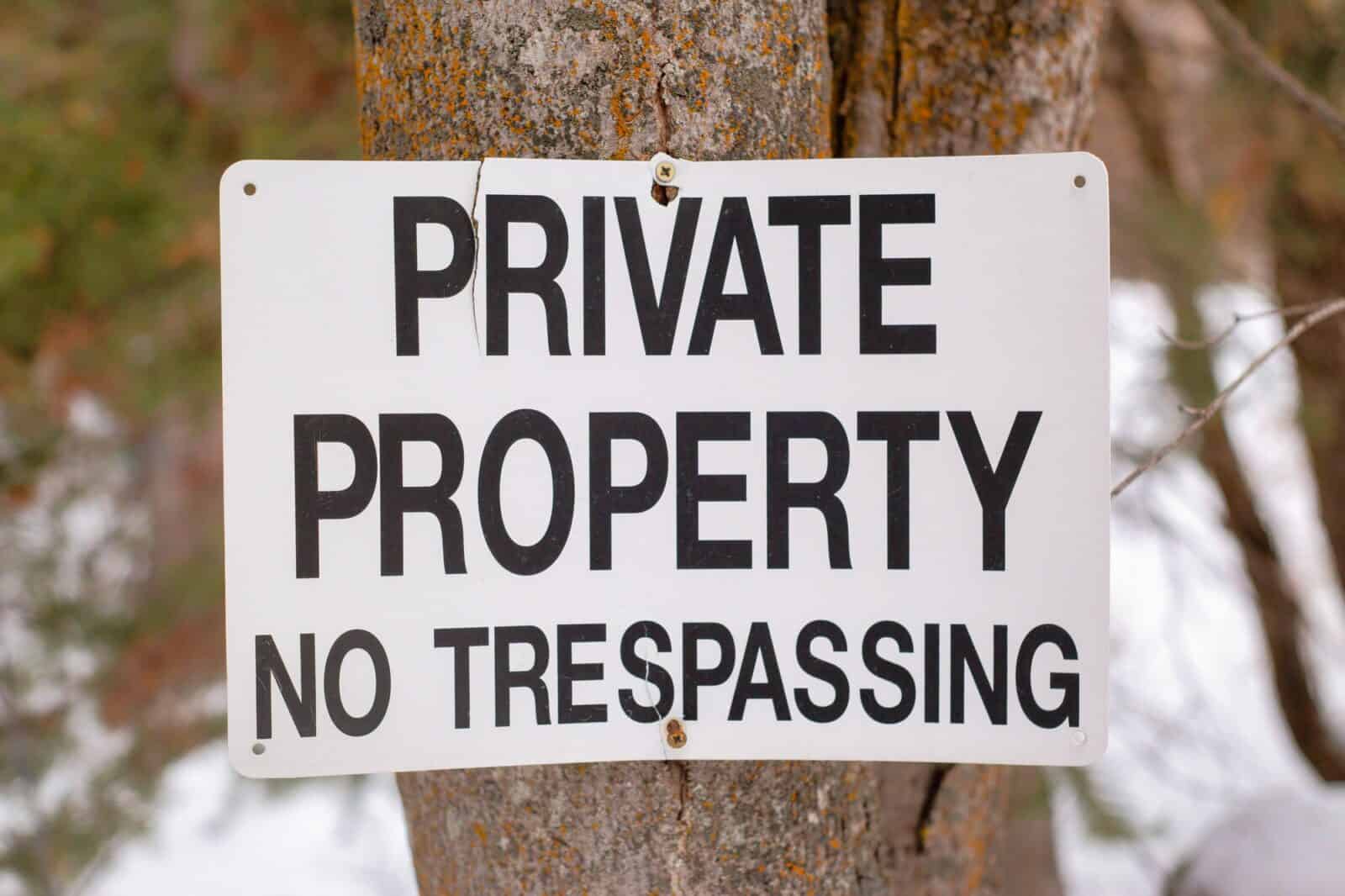
Property owners can take several steps to limit their exposure while still meeting their obligations. Posting is the most basic one, and Florida Statute 810.011(5)(a)1. sets the specification. Signs must be placed no more than 500 feet apart along the boundary and at each corner, must display the words "no trespassing" in letters at least 2 inches high together with the name of the owner, lessee or occupant, and must be positioned to be clearly noticeable from outside the boundary line. The statute sets no minimum sign size. Under Florida Statute 810.011(5)(b), enclosed land of 5 acres or less with a dwelling house on it does not have to be posted at all to get the benefit of the trespass statutes.
Fencing obligations vary depending on the type of property and potential hazards present, but effective barriers can significantly reduce liability exposure by preventing unauthorized access. For properties with swimming pools, proper enclosures that meet Florida's statutory requirements provide both safety and legal protection.
Security measures such as lighting, cameras, or patrol services can help document trespassing incidents and demonstrate reasonable efforts to protect the property. Property owners should also maintain documentation of their safety efforts, including records of inspections, repairs, and hazard identification protocols.
Regular property inspections help identify potential attractive nuisances or other dangerous conditions before they cause injuries. Property owners should address hazards promptly when discovered and maintain records of their remedial efforts. Working with experienced legal counsel can help property owners understand their specific obligations and develop appropriate risk management strategies.
Proving Liability in Trespasser Injury Cases
Trespasser liability cases present unique evidentiary challenges that require careful documentation and strategic case development. The burden of proof requires injured parties to demonstrate not only that they were harmed but also that their situation falls within one of the recognized exceptions to limited trespasser liability.
Physical evidence preservation becomes critical, as photographed proof allows the injured person to demonstrate the dangerous conditions that led to their injury on the property. Injured parties should gather or preserve any other relevant evidence, such as clothing and shoes worn when the accident happened, and refrain from washing or cleaning them.
Witness testimony is often what proves the owner knew, which is the element the case turns on under Florida Statute 768.075(3)(b). Speaking to any witnesses and getting their names and contact information can be valuable, even if they didn't see the entire incident unfold, as they can describe conditions such as the floor, lighting, or other conditions that could have played a part in the injury. Expert witnesses may be necessary in complex cases involving technical issues such as engineering defects, safety standards, or accident reconstruction.
Speak To A Lawyer About Your Injuries Today
Property owner liability for trespasser injuries involves complex legal principles with important exceptions for children, dangerous conditions, and egregious conduct. While the general rule limits property owners' duties to trespassers, significant protections exist for injured parties when these special circumstances apply.
If you have been injured while on another person's property, our experienced personal injury lawyers are available 24/7 for a free case evaluation. We handle premises liability claims in Florida and can tell you whether Florida Statute 768.075 leaves you a claim, whatever your reason for being on the property.
Call Weinstein Legal Team at 888-626-1108 to start a free case review with an experienced personal injury attorney, or click here to schedule your free case review now.