


- Prosecutors typically build a domestic violence case by compiling credible evidence such as police reports, medical records detailing physical injuries, and photographs of the crime scene.
- Digital evidence, including threatening text messages, emails, social media interactions, and voicemail recordings, plays a crucial role in establishing a pattern of abuse or harassment.
- Eyewitness testimony from family members, neighbors, or colleagues who observed the incident or the victim's subsequent emotional state provides vital corroboration for a domestic violence conviction.
- Victim statements and emergency 911 call recordings are frequently utilized by the prosecution to document the immediate aftermath of a domestic violence incident and secure evidence for trial.
In Florida, domestic violence is prosecuted aggressively as a crime against the state rather than a private dispute. This means the State Attorney's Office has the sole authority to file or drop charges, regardless of whether the alleged victim cooperates. Successfully defending against or understanding these allegations requires a deep look at the specific evidentiary standards under Florida law.
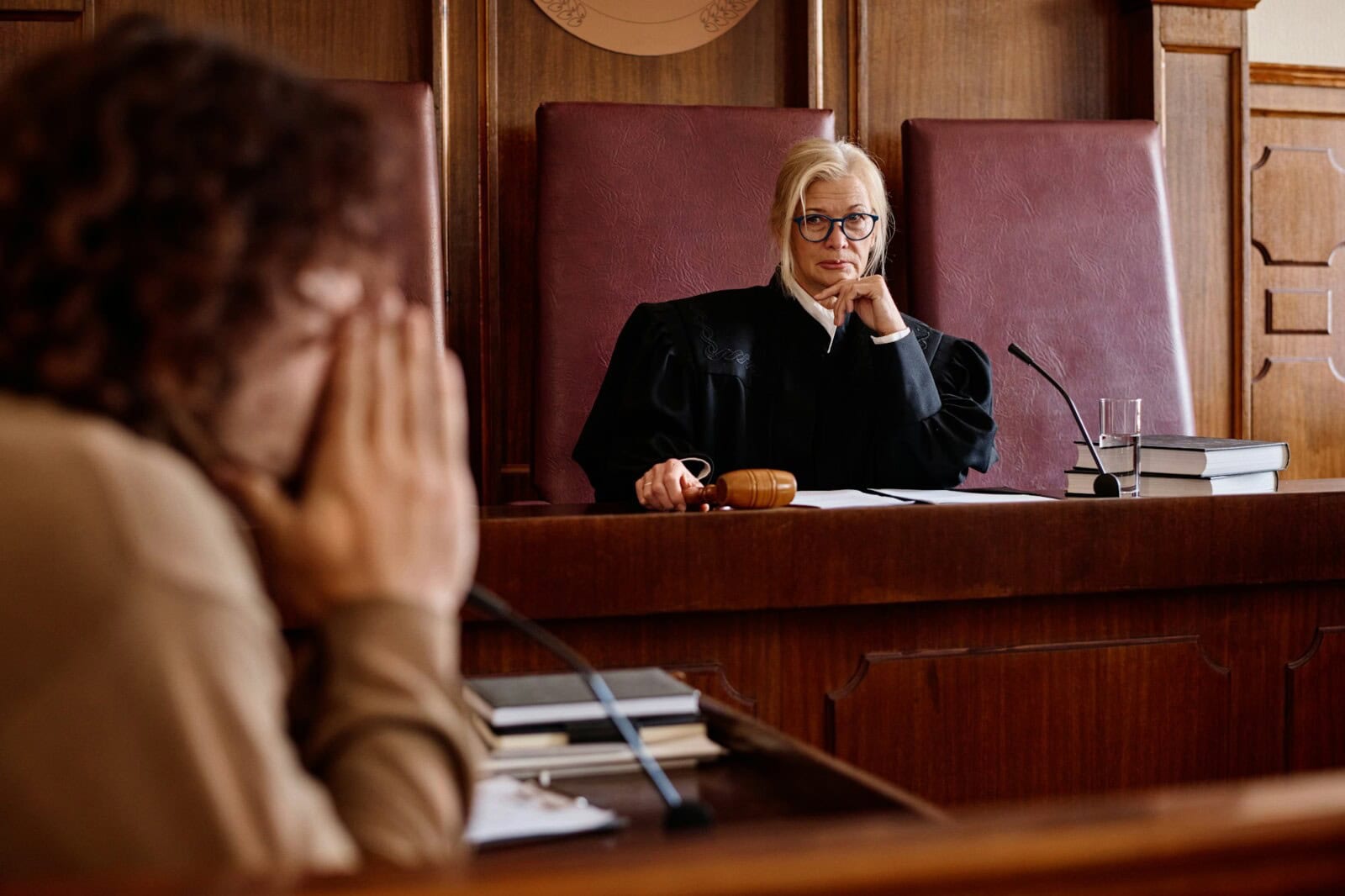
How Domestic Violence is Defined Under Florida Law (F.S. § 741.28)
Types of Domestic Violence
Under Florida Statute Section 741.28, domestic violence encompasses any criminal offense resulting in physical injury or death of one family or household member by another. While the underlying acts are criminal, they must occur between specific individuals, such as spouses, former spouses, cohabitants, or co-parents, to trigger domestic violence classifications.
- Assault and Aggravated Assault: Intentional threats, by word or act, to do violence to a family or household member, coupled with the apparent ability to do so, creating a well-founded fear that violence is imminent.
- Battery and Aggravated Battery: Actually and intentionally touching or striking another person against their will, or intentionally causing bodily harm.
- Stalking and Aggravated Stalking: Willfully, maliciously, and repeatedly following, harassing, or cyberstalking the victim.
- False Imprisonment or Kidnapping: Forcibly, by threat, or secretly confining, abducting, or imprisoning another person against their will.
Mandatory Penalties Triggered by a Domestic Violence Conviction
Unlike standard misdemeanor battery, a domestic violence classification in Florida triggers strict statutory penalties under Chapter 741. If convicted, a defendant faces:
- A mandatory 26-week Batterers’ Intervention Program (BIP).
- 12 months of probation.
- A minimum of 5 days in county jail if there is bodily injury.
- The permanent loss of firearm rights.
- A permanent criminal record, as Florida law prohibits the sealing or expunging of domestic violence convictions, even if adjudication is withheld
One point that surprises many clients: Florida's mandatory arrest law under F.S. § 741.29 requires responding officers to make an arrest when they have probable cause to believe domestic violence occurred. Officers do not need the alleged victim's consent or cooperation to make an arrest, and if both parties have injuries, officers must identify and arrest the "primary aggressor" based on factors such as injury severity, prior history of domestic violence, and whether either party acted in self-defense. In our experience, this mandatory arrest framework means clients often arrive at our office having been arrested despite the alleged victim explicitly telling officers they did not want charges filed.
Key Evidence Florida Prosecutors Leverage to Build a Case
Role of Police Reports
When law enforcement responds to a 911 domestic call, they are legally required to compile a detailed police report. Although the police report itself is generally considered inadmissible hearsay at trial, it acts as the foundation of the state's case. Prosecutors use it to secure contact information for witnesses, evaluate inconsistencies in statements, and prep officers to testify regarding their firsthand observations of physical injuries, emotional distress, or property damage.
Importance of Medical Reports
If the alleged victim seeks medical treatment, those medical records provide critical, objective evidence of the encounter. Under Florida's rules of evidence, statements made to medical professionals for the purpose of diagnosis or treatment are often admissible as an exception to the hearsay rule. These records establish an undeniable timeline and document physical trauma, making it significantly harder for the defense to argue that no physical contact took place.
Use of Photographs and Physical Evidence
Prosecutors rely heavily on visual and physical evidence to corroborate a victim's testimony or 911 statements. This includes photographs taken by responding officers of the victim's injuries (such as defensive scratches, bruises, or ligature marks) and the immediate crime scene, documenting disarray, broken household items, or property damage. Tangible physical evidence, such as torn or bloodstained clothing, damaged cell phones, or any weapons allegedly used during the incident, will be collected and entered into evidence to establish the violent nature of the altercation.
How the State Proves Domestic Violence Charges in Florida Courts
Evaluating the admissibility and strength of the state's evidence is the foundation of any strong defense in domestic violence cases.
The Trial Phase
By the time a case reaches a bench or jury trial, the prosecution's strategy shifts to presenting the gathered evidence through witness testimony. Prosecutors will call the responding law enforcement officers, medical personnel, and the alleged victim to the stand to establish the elements of the crime.
The defense focuses on cross-examining these witnesses, highlighting inconsistencies in their timelines, questioning the handling of physical evidence, and raising reasonable doubt regarding the defendant's intent. Bail conditions and protection orders are handled much earlier at the first appearance, meaning the trial is strictly focused on guilt or innocence.
The 'Non-Cooperative Victim' Dilemma in Florida Courts
It is a common misconception that if an alleged victim refuses to testify or files a 'Request Not to Prosecute,' the state must drop the charges. Florida prosecutors frequently pursue 'evidence-based prosecutions' without the victim's cooperation.
To do this, the state must navigate the Sixth Amendment's Confrontation Clause, as outlined in the landmark U.S. Supreme Court case Crawford v. Washington, 541 U.S. 36 (2004). If the victim is unavailable to testify and the defense has not had a prior opportunity to cross-examine them, the victim's out-of-court statements to responding police are inadmissible.
However, prosecutors often bypass this hurdle by introducing 911 emergency calls under Florida's excited utterance or spontaneous statement hearsay exceptions (F.S. § 90.803), arguing these immediate, frantic communications are non-testimonial.
Defending Against Domestic Violence Charges
Gathering Evidence for Defense
A strong defense strategy requires independently gathering evidence that contradicts the state's narrative. This can include:
- Digital Communications: Text messages, emails, or voicemails can show the nature of your relationship, reveal prior threats made against you, or put the allegations into a different context.
- Photographs: Pictures of your own injuries or property damage can help show inconsistencies in the accuser's story or support a claim of self-defense.
- Medical Records: These can be used to support a claim of self-defense, establishing that your injuries are consistent with fending off an attack rather than instigating one.
- Witness Statements: Neighbors, friends, family members, and others with knowledge of the relationship or incident can provide statements that challenge the state's timeline or the accuser's credibility.
Common Defense Strategies
The right defense strategy turns on the specific evidence the state has and what happened leading up to the arrest. The most commonly applicable approaches in Florida domestic violence cases include:
- Contesting the Evidence: Your attorney evaluates the prosecution's evidence, such as 911 call transcripts or police body camera footage, to identify inconsistencies or procedural errors that can be exploited in your defense.
- Challenging the Accuser's Credibility: Your attorney can highlight a possible motive for the accuser to make false domestic violence accusations, such as revenge, gaining control in a custody dispute, or access to resources.
- Arguing Self-Defense: If you suffered injuries in the alleged incident, your attorney can argue that you acted in self-defense and that any use of force was reasonable and necessary for your protection.
- Asserting 'Mutual Combat': Under Florida law, a person cannot legally consent to domestic abuse or physical battery. However, if both parties willingly participated in a physical altercation as equal aggressors, an attorney can raise a 'mutual combat' defense to challenge the state's assertion that you were the primary physical aggressor.
- Stand Your Ground Immunity (F.S. § 776.012): Florida has robust self-defense laws that allow individuals to use reasonable force to protect themselves, others, or their property from an unlawful threat. An experienced defense attorney can file a motion for a Stand Your Ground immunity hearing. If successful, you are granted complete immunity from criminal prosecution, and the charges are dismissed by a judge before the case ever reaches a jury trial.
Speak To A Criminal Defense Attorney About Your Charges
If you've been charged with domestic violence in Florida, you should make hiring an attorney your number one priority. A domestic violence conviction carries consequences that cannot be undone: a permanent criminal record that cannot be sealed or expunged, the loss of your right to possess a firearm, and mandatory intervention programs. Retaining an attorney as early as possible, before the State Attorney's Office files formal charges, gives your defense the best opportunity to challenge the evidence and protect your rights throughout the process.
Call Weinstein Legal Team at 888.626.1108 or click here to schedule a free case review with an attorney today.