
Traffic stops are common on Florida roads, but they often lead to complex legal issues involving search and seizure. Law enforcement officers have the authority to enforce traffic laws, but this power is limited by constitutional protections that prevent drivers from being held longer than necessary. Knowing how these rights apply on Florida roads helps you safeguard yourself against law enforcement overreach.
A traffic stop may last only as long as the traffic matter takes. When a routine stop turns into a drug investigation without new grounds, the detention has crossed a line the Fourth Amendment draws, and everything found after that point is open to challenge. Knowing where that line falls is what turns a roadside encounter into a suppression issue.
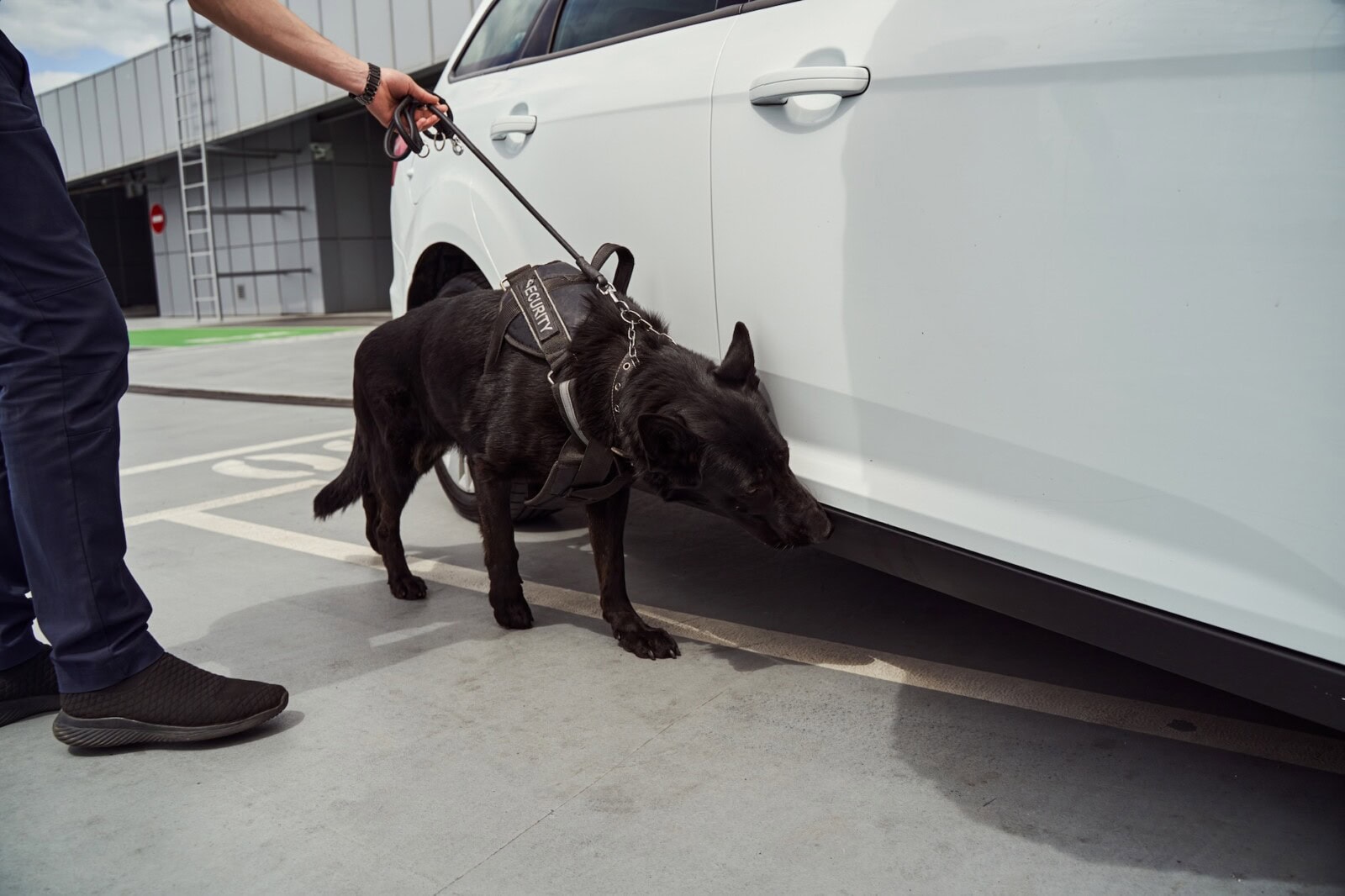
Understanding Your Fourth Amendment Rights During a Traffic Stop
The Fourth Amendment of the U.S. Constitution serves as a shield for citizens against government overreach. It specifically protects individuals from unreasonable searches and seizures by state or federal agents. When you're driving in Florida, every interaction with a police officer must be grounded in legal authority and conducted within reasonable limits.
Police officers do have the legal right to pull a vehicle over if they witness a valid traffic infraction. The legal authority to enforce traffic laws allows officers to stop the car and address the specific reason for the detention, such as a violation of Florida Statute 316.187 regarding speeding. However, initial authority is not a blank check that allows the officer to investigate unrelated crimes without additional evidence.
Courts recognize a delicate balance between law enforcement interests and your right to privacy. A routine traffic stop shouldn't turn into a fishing expedition where officers search for contraband without a specific reason. The Fourth Amendment prohibits unreasonable seizures during roadside detentions, and if an officer exceeds the scope of the original stop, they may be infringing upon your constitutional liberties.
The Protection Against Unreasonable Searches and Seizures
The language of the Fourth Amendment focuses heavily on what's considered unreasonable. In the context of a roadside detention, the courts define unreasonable conduct as any action that lacks a specific, articulable reason. The articulable reason standard ensures that officers cannot act on mere guesses or personal biases when they decide to search a person's property.
The primary purpose of this constitutional protection is to prevent the government from infringing upon your privacy without cause. When an officer stops you, the temporary restriction of your liberty constitutes a seizure under the law. For this seizure to remain legal, the officer's actions must be reasonably related in scope to the circumstances that justified the stop in the first place.
Courts look at the totality of the circumstances to decide if an officer's behavior was unreasonable. If an officer holds you for an extended period without a clear legal basis, the detention becomes illegal. Fourth Amendment protection remains a fundamental part of the American legal system, ensuring every citizen's right to move freely without arbitrary interference.
What Constitutes a Lawful Initial Traffic Stop?
For an officer to initiate a stop, they must meet a legal threshold known as reasonable suspicion. The reasonable suspicion standard requires that an officer have a specific reason to believe that a traffic violation or a crime has occurred. Common examples of valid stops include driving with a broken taillight, failing to maintain a single lane, or exceeding the posted speed limit.
If the initial stop is found to be pretextual or lacks any legal justification, the entire encounter may be deemed unlawful. In these cases, any evidence found after the stop begins can be excluded by a judge. It doesn't matter how long the stop lasted or what the officer found. If the stop's initiation was illegal, the subsequent search is usually invalidated.
Florida law requires officers to have a clear basis for stopping a vehicle to ensure that motorists aren't targeted randomly. When an officer pulls you over, they should be able to explain the specific infraction they observed. If they can't provide a valid reason for the stop, your defense team can challenge the legality of the entire incident in court.
The Mission of a Routine Traffic Stop
Courts use the word mission to describe what a traffic stop is for and how long it may last. Every traffic stop has a specific objective, which is usually to address the traffic violation that prompted the encounter. Once that objective is met or should have been met, the officer's authority to detain the driver and the vehicle ends immediately.
The duration of a traffic stop is legally tied to the tasks at hand, and any extension for an unrelated investigation is a violation. Officers must proceed with reasonable diligence to complete the administrative tasks associated with the stop. If they intentionally slow down to wait for backup or a canine unit, they are likely violating the driver's constitutional rights.
Determining the Ordinary Inquiries of a Traffic Stop
During a standard traffic stop, officers may perform several tasks known as ordinary inquiries. These tasks include checking the driver's license, verifying the vehicle's registration, and confirming proof of insurance. These actions are directly tied to the mission of ensuring roadway safety and identifying the parties involved in the stop.
Officers are also allowed to check for any outstanding warrants that the driver might have. A warrant check is a routine part of the stop that helps protect officer safety and ensures the driver is legally allowed to operate the vehicle. These inquiries must be conducted with reasonable diligence, meaning the officer shouldn't intentionally delay the process.
The law allows officers a reasonable amount of time to complete these safety-related tasks. However, these inquiries aren't an excuse to keep you on the side of the road indefinitely. Once these specific administrative duties are finished, the officer's legal justification for the detention typically begins to expire.
When the Mission is Legally Completed
A traffic stop should naturally conclude when the officer's mission is complete. The conclusion of the mission usually happens when the officer has issued a formal warning or citation and returned all documents. At this point, the legal reason for the detention has been satisfied, and the driver should be free to go.
Any further detention after this point requires a new and independent legal justification. If the officer continues to hold you without a new reason to suspect a crime, they're violating your rights. The transition from a lawful stop to an illegal detention can happen in just a few seconds if the officer refuses to let you leave after the ticket is written.
You are not required to stay and chat once the traffic matter is settled. If the officer has returned your license and isn't telling you that you're under arrest, the stop should be over. If they force you to wait for a K-9 unit at this stage, they're likely unlawfully extending the stop.
Identifying Factors That Justify an Extension
To lawfully extend a stop for a K-9 unit, an officer must have reasonable suspicion of criminal activity. An extension for a K-9 unit must be based on specific and articulable facts rather than a simple hunch or a feeling. For instance, if an officer sees drug paraphernalia in plain view on the passenger seat, they may have a valid reason to extend the detention.
The smell of marijuana has historically been used as a factor for reasonable suspicion in Florida. Since Florida legalized medical marijuana in 2016 and hemp in 2019, the plain smell of cannabis is heavily litigated, because hemp and marijuana smell the same and one of them is legal. A Florida drug charge defense lawyer often argues that the smell of legal hemp is indistinguishable from illegal cannabis, complicating the officer's justification.
Conflicting accounts from the driver and passengers about where they're going or where they've been can also fuel suspicion. If the officer can point to concrete details indicating a crime is in progress, the extension might be lawful. These factors must come to light during the lawful duration of the traffic stop.
An officer can't finish the ticket, realize they don't have enough for a search, and then start looking for reasons to hold you. The suspicion must arise naturally while they're performing the ordinary inquiries of the stop. If the officer develops suspicion after the traffic stop duration has already exceeded its legal limit, any evidence found may be suppressed.
Nervousness and Other Non-Factors in Traffic Stops
Police officers frequently cite general nervousness as a reason to extend a detention. They might mention that a driver's hands were shaking or that they wouldn't make eye contact. However, courts have often found that nervousness alone isn't sufficient to justify a K-9 search, as many people are naturally nervous when they're pulled over.
A refusal to consent to a search is another factor that shouldn't be used against you. You have a constitutional right to deny a search of your vehicle, and exercising that right isn't evidence of guilt. If an officer tries to use your refusal as a reason to call for a drug dog, they're likely on thin legal ground.
Other non-factors include driving a car with out-of-state plates or traveling through a known drug corridor. While officers might use these details to build a narrative, they rarely stand up as the sole basis for reasonable suspicion. Your defense attorney will look for these weak justifications to challenge the legality of your detention.
The Landmark Ruling: Rodriguez v. United States
Rodriguez v. United States, 575 U.S. 348 (2015), set the limit. Police may not extend a completed traffic stop, even briefly, to run a dog sniff unless they have reasonable suspicion of a separate crime. That single holding is the legal backbone of most modern defenses to drug charges that come out of a traffic stop.
Drivers should stay informed about K-9 unit laws in Florida to identify when an officer is acting outside their legal mandate. This case clarified that the police cannot extend a stop for even a de minimis amount of time without new evidence of a crime. The Rodriguez decision forces departments to prioritize the original mission of the traffic stop over speculative drug investigations.
Background of the Rodriguez Case
The case began in the early morning hours of March 27, 2012, when a K-9 officer on patrol noticed a vehicle. The officer observed the vehicle veer onto the shoulder of the road before it jerked back into its lane. Based on this minor traffic infraction, the officer initiated a stop and began the routine process of checking the driver's information.
The stop lasted for roughly twenty minutes, during which the officer completed the necessary administrative tasks. At the end of this period, the officer issued a written warning to the driver, Dennys Rodriguez. Although the traffic mission was complete, the officer refused to let Rodriguez leave and forced him to wait.
Approximately eight minutes after the warning was issued, a second officer arrived on the scene. The two officers then conducted a dog sniff around the vehicle, and the K-9 alerted them to the presence of drugs. The resulting search revealed a bag of methamphetamine, but the legality of those eight extra minutes became the central focus of the legal challenge.
The Supreme Court's Decision on K-9 Sniffs
The Supreme Court ultimately ruled that a police officer may not extend a completed traffic stop to conduct a dog sniff without reasonable suspicion. The Court made it clear that the Fourth Amendment doesn't permit additional time once the original mission of the stop is addressed. Even a brief delay is considered unconstitutional if it isn't supported by new evidence of a crime.
The Supreme Court decision emphasized that a traffic stop's authority is limited to the time needed to handle the traffic violation. A dog sniff isn't considered an ordinary inquiry of a traffic stop because it isn't related to roadway safety. Therefore, if the dog sniff adds any time to the stop, it must be supported by independent, reasonable suspicion.
The Court's decision was a victory for privacy rights, as it prevents officers from holding people for just a few more minutes to see if a dog arrives. It was established that the mission of the stop defines the timeline. If an officer finishes the ticket and then makes you wait for a dog, they've violated the constitutional standard set by Rodriguez v. United States.
Why Even a De Minimis Delay Matters
Before the Rodriguez ruling, some courts used the de minimis rule to allow brief extensions of traffic stops. Under this old rule, police could extend a stop for a negligible amount of time, such as two or three minutes, to wait for a K-9. Some judges felt that these very short delays weren't a significant enough intrusion on a person's liberty to be considered unconstitutional.
The Supreme Court explicitly rejected this line of thinking in the Rodriguez decision. They clarified that the duration of the stop is tied to the tasks at hand, and any extension for an unrelated investigation is a violation. It doesn't matter whether the delay is 30 seconds or 8 minutes. If the delay is unrelated to the traffic mission, it is illegal.
Eliminating the de minimis rule helps defense attorneys when reviewing police conduct. It means that we don't have to prove the officer held you for an hour to show a violation. We only need to show that the officer stopped working on the traffic citation to facilitate a K-9 sniff, or that the officer waited after issuing the citation.
Challenging the Reliability of Narcotic Detection Dogs
The legal standard for vehicle searches often relies on the specialized training of a drug-sniffing dog. A drug dog alert establishes probable cause for a vehicle search, provided the dog is considered reliable. However, the reliability of these animals is not always as high as the prosecution claims in court.
Florida v. Harris, 568 U.S. 237 (2013), sets the standard, and it is not a friendly one for the defense. The Supreme Court reversed the Florida Supreme Court and rejected any fixed checklist of records the state must produce. Probable cause is judged on the totality of the circumstances, and evidence that a dog satisfactorily completed a bona fide certification or training program can by itself be enough to trust the alert. What Harris gives a defendant is the right to attack that showing, by cross-examining the handler and by calling fact or expert witnesses of their own on the dog's training, its field record and the circumstances of the alert.
So the work is in the record. If a dog regularly alerts where no drugs are found, that field history is fair game under Harris. We also look at whether the handler cued the alert, deliberately or not, the same effect that made the horse Clever Hans look as though he could count. Which organization certified this dog, and to what standard, is itself a question for the hearing.
The Impact of Residual Odors on Dog Reliability
Narcotic detection dogs often alert to residual odors rather than actual drugs. These 'dead' scents remain on clothing or upholstery long after the substance is gone. If an officer relies on an alert in which no contraband is found, it calls into question the dog's proficiency and the legality of the search.
Challenging the dog's background is a standard part of a drug arrest defense strategy. If the dog's training records are incomplete or if the animal has failed recent proficiency tests, the entire search may be deemed illegal. A scientific approach to defense ensures that citizens are not subjected to searches based on unreliable animal behavior.
Discovery and Evidence Gathering in Drug Dog Cases
When fighting charges involving an extended stop, the discovery process is where the case is often won. A Florida drug charge defense lawyer investigates the legality of a police encounter by requesting specific records from the department. These records go far beyond the initial police report, which only provides the officer's biased perspective.
We perform a comprehensive forensic review of police body-worn camera footage and dispatch timestamps to reconstruct the timeline. One of the most useful tools in this process is the Computer-Aided Dispatch (CAD) log. These logs show the exact second the K-9 officer was dispatched, as well as the exact second the ticket was written and issued to the driver.
If the CAD logs show that the officer requested a dog before they even finished running the driver's license, it suggests they were stalling. We also look for evidence in the officer's own communications, such as radio transmissions in which they discuss the canine unit's arrival. These pieces of evidence allow us to show a judge exactly how the stop was unnecessarily prolonged.
Training records for the K-9 and the handler are also requested during discovery. We check for any disciplinary actions against the officer or issues with the dog's performance in controlled environments. Forensic data provides the foundation for a motion to suppress evidence by highlighting inconsistencies in the state's narrative.
The Right to Remain Silent and K-9 Unit Laws
Many drivers feel pressured to answer an officer's questions while waiting for a K-9 unit to arrive. They may believe that being cooperative will result in the officer letting them go sooner. However, the right to remain silent is a critical defense tool that prevents the officer from gathering the reasonable suspicion needed to extend the stop.
You are not required to provide details about your travel plans, your employer, or your personal life during a traffic stop. If an officer asks these questions, it is often to find contradictions that they can use to justify a longer detention. By remaining silent, you limit the amount of information the officer has to build a case against you.
It is helpful to know your Miranda rights during traffic stop encounters, though these usually apply only after an arrest. However, the general right against self-incrimination is always available. Simply stating that you wish to remain silent and do not consent to a search can protect your legal interests throughout the interaction.
If the officer continues to question you after you have asserted your rights, their conduct may be used to challenge the legality of the detention. A driver who remains calm and silent is much harder to manipulate into a search-and-seizure scenario. A disciplined approach to roadside interactions is the best way to handle a police encounter while protecting your future legal options.
How Police Unlawfully Extend Stops for K-9 Units
While the law is very clear about traffic stop duration, some officers use subtle tactics to bypass these rules. They know they can't hold you after the ticket is written, so they may try to ensure the K-9 arrives before they finish the paperwork. These tactics are designed to create a loophole in the Rodriguez ruling.
The transition from a lawful stop to an illegal detention can be difficult to spot without careful analysis. Officers are trained to make these delays appear to be part of the routine process. However, any deviation from the mission of roadway safety should be viewed by the driver and their legal team as a potential constitutional violation.
The "Wait and See" Tactic
The "wait and see" tactic involves an officer calling for a K-9 unit immediately after the stop begins. Instead of issuing the citation promptly, the officer might intentionally delay the administrative process. They might take an unusually long time to run a background check or type out the ticket on their computer.
By dragging out these routine tasks, the officer hopes the K-9 unit will arrive while the traffic mission is still technically ongoing. They might pretend there's a problem with the computer system or wait for a second officer to arrive before starting the paperwork. Artificial delays represent a direct attempt to circumvent your constitutional rights.
Defense attorneys often examine the timing of these actions to determine whether the officer was acting with diligence. If a simple speeding ticket takes forty minutes to write, it's a red flag that the officer was stalling. Proving that the officer didn't work as quickly as possible is a key part of challenging an illegal detention.
Prolonging Routine Tasks to Allow for K-9 Arrival
Officers might also prolong the stop by engaging in repetitive questioning that's unrelated to the traffic violation. They might ask you about your life story, your job, or your travel plans several times in an effort to waste time. These conversations aren't part of the mission of a traffic stop and shouldn't be used to extend the encounter.
Body-worn camera footage and dispatch logs are essential tools for proving that these delays were unreasonable. These records provide a minute-by-minute timeline of what the officer was doing while you were sitting on the side of the road. If the footage shows the officer standing by their car doing nothing while waiting for the dog, it's evidence of an illegal extension.
It's common for officers to claim they were performing safety checks when they were actually waiting. However, a detailed review of the evidence can often debunk these claims. If the timeline shows the officer had all the information they needed to finish the stop but didn't, the detention is likely unconstitutional.
The Legal Consequences of an Unlawful K-9 Sniff
If your rights were violated during a traffic stop, there are significant legal remedies available. A constitutional violation isn't just a technicality; it's a serious breach of the law that can change the outcome of a case. The usual remedy is suppression of the evidence found during the unlawful part of the stop.
Courts take these violations seriously because they represent an abuse of government power. When a judge finds that an officer acted outside their authority, they must take steps to correct the situation. Legal correction usually involves barring the prosecution from using evidence obtained during the illegal portion of the stop.
The Exclusionary Rule and the "Fruit of the Poisonous Tree"
The Exclusionary Rule is a legal principle that prevents evidence gathered through unconstitutional means from being used in court. The Exclusionary Rule is often described using the fruit of the poisonous tree metaphor. If the initial detention was illegally extended, then any evidence found during that extension is considered tainted.
If a judge determines that the K-9 sniff was illegal because the stop was too long, the drugs or cash found during the search cannot be used against you. Without that evidence, the prosecution's case often collapses because they have nothing to prove you committed a crime. This rule is designed to discourage police from violating citizens' rights.
Applying this rule is a powerful way to fight back against drug charges. Even if the police found a large amount of contraband, it doesn't matter if they broke the law to find it. Protecting the integrity of the Fourth Amendment is more important to the legal system than a conviction based on illegal police work.
Filing a Motion to Suppress Evidence
To take advantage of these protections, your defense attorney must file a Motion to Suppress evidence. This is a formal request to the judge to throw out the evidence because it was obtained through an illegal search or seizure. A Motion to Suppress challenges the admissibility of seized evidence and is a primary tool for your defense.
During a suppression hearing, the judge will hear testimony from the officer and review evidence, such as body-cam footage. The prosecution must prove that the stop was conducted legally and that any extension was supported by reasonable suspicion. If they can't meet this burden, the judge will grant the motion and suppress the evidence.
A suppression hearing is often the most important part of a criminal defense strategy in drug cases. Once the evidence is suppressed the state often has no admissible proof left, though whether to dismiss is the prosecutor's decision and never a guarantee. It's a complex process that requires a deep understanding of both state and federal search-and-seizure laws.
Civil Rights Violations and Section 1983 Claims
An illegal detention is not only a defense in a criminal case but can also be the basis for a civil lawsuit. Under 42 U.S. Code Section 1983, individuals can sue government officials who violate their constitutional rights. If the police held you unlawfully for a drug dog search, you may have grounds to seek damages for the violation of your liberty.
These claims seek damages for the lost liberty and the distress of the detention, and they have to get past qualified immunity, which shields an officer unless the right he violated was clearly established at the time. A successful Section 1983 claim can result in the department being held financially liable for its officers' actions. Civil litigation provides another layer of accountability that encourages law enforcement to follow the law.
Filing a civil rights claim is a separate process from the criminal case. It requires showing that the officer acted under color of law and that their actions directly resulted in a constitutional deprivation. While these cases are complex, they are a powerful way for citizens to fight back against systemic police misconduct.
Your attorney can evaluate your case to see if a civil lawsuit is appropriate after your criminal charges are handled. Many people choose this path to ensure that the same officer does not violate others' rights in the future. Filing a Section 1983 claim is one of the many ways we work to hold law enforcement to high constitutional standards.
Florida Law and K-9 Search Precedents
While federal rulings like Rodriguez v. United States set the baseline for rights, Florida courts have their own history of interpreting these protections. Florida's own constitution ties its courts to federal law here. Article I, section 12 of the Florida Constitution requires that search and seizure rights be construed in conformity with the Fourth Amendment as interpreted by the United States Supreme Court, so Rodriguez is not a floor that Florida courts can build above. It is the standard.
Florida appellate courts have been very active in applying the Rodriguez ruling to local cases. They focus heavily on whether the officer acted with reasonable diligence in completing the traffic mission. If a Florida judge sees that an officer was distracted or intentionally slow, they're likely to rule that the stop was unlawfully prolonged.
Florida has settled one narrower question. In State v. Creller, decided May 23, 2024, the Florida Supreme Court held that a K-9 officer who arrives partway through a lawful traffic stop may order the driver out of the vehicle for officer safety before the sweep. The holding depends on the stop still being lawful and not already prolonged.
So if the dog arrives while the officer is genuinely still writing the ticket, being asked to step out is not by itself a violation. However, the key remains that the dog's arrival must not have been facilitated by an intentional delay in the paperwork, as noted by the Florida Supreme Court.
Fighting Drug Charges Following a K-9 Alert
Many people believe that if a drug dog alerts to their car, they have no chance of winning their case. A K-9 alert is only one piece of evidence that can be challenged in several ways. A K-9 alert is not the end of the road for a legal defense; it's often just the beginning of a thorough investigation.
A comprehensive grasp of criminal defense law allows us to identify every potential error the police may have made. From the moment the lights flashed to the moment you were placed in handcuffs, every second counts. We use forensic experts and legal precedents to dismantle the state's case piece by piece.
Challenging the K-9's Reliability and Training
One way to fight these charges is by investigating the dog itself. K-9s are animals, and they can make mistakes or be influenced by their handlers. Defense lawyers can request the dog's certification records, training history, and past performance logs to look for issues.
If a dog has a high rate of false alerts, which means signaling when no drugs are present, their reliability can be questioned. An alert from an unreliable dog might not be enough to establish probable cause for a search. We look for evidence that the dog was poorly trained or that the handler gave subtle cues to the dog to alert.
Challenging the dog's credentials is a standard line of attack. If the certification had lapsed, or the training records do not show the proficiency the state claims, the alert may not carry probable cause. Every detail of the dog's history is relevant when your freedom is on the line.
Questioning the Officer's Narrative and Body Cam Footage
Police reports often provide a version of events that makes the stop look perfectly legal and efficient. However, these reports don't always match the reality of what happened on the side of the road. Your defense team will meticulously review every second of the body-worn camera footage to verify the officer's account.
We time the duration of every task, from the moment the lights go on to the moment the dog arrives. If the officer's written report says they were busy with a background check, but the video shows them talking on their personal phone, we can impeach their credibility. These discrepancies are vital for showing the judge that the stop was unlawfully extended.
Body cam footage doesn't lie, and it's often the best evidence we have to prove a constitutional violation. By comparing the video to the dispatch logs and the officer's testimony, we can build a clear picture of any illegal stalling. A high level of detail is necessary to protect your rights and fight for a dismissal of the charges.
Protect Your Rights Against Illegal K-9 Searches
If you were arrested after a roadside encounter where the police stalled to allow a canine unit to arrive, you have legal options. These unconstitutional tactics often result in the suppression of evidence and the eventual dismissal of criminal charges.
Our team understands the tactics that Florida law enforcement officers use to circumvent the law and prolong detentions. We know how to analyze body-cam footage and dispatch logs to identify the exact moment when a stop becomes an illegal detention. If the police didn't follow the rules, the evidence they found against you shouldn't be allowed in a courtroom.
If you believe your roadside detention was unnecessarily prolonged to allow for a drug dog arrival, you need a defense team that knows how to challenge the prosecution's evidence. Contact Weinstein Legal Team 24/7 at 888.626.1108 for a free case review with a criminal defense lawyer, or click here to schedule a free consultation.