
If a driver hits you in Florida and leaves, your own uninsured motorist coverage is usually the only place left to recover. Fla. Stat. s. 627.727(1) makes every Florida auto policy that carries bodily injury liability coverage include UM coverage unless a named insured rejected it in writing.
Florida does not make you prove that the phantom car touched yours. In Brown v. Progressive Mutual Insurance Co., 249 So. 2d 429 (Fla. 1971), the Florida Supreme Court struck down a policy clause that conditioned hit-and-run UM coverage on physical contact, holding that contact is only one way of proving the crash happened as described and that the question is one of fact. Here is how a claim against an unidentified driver actually works.
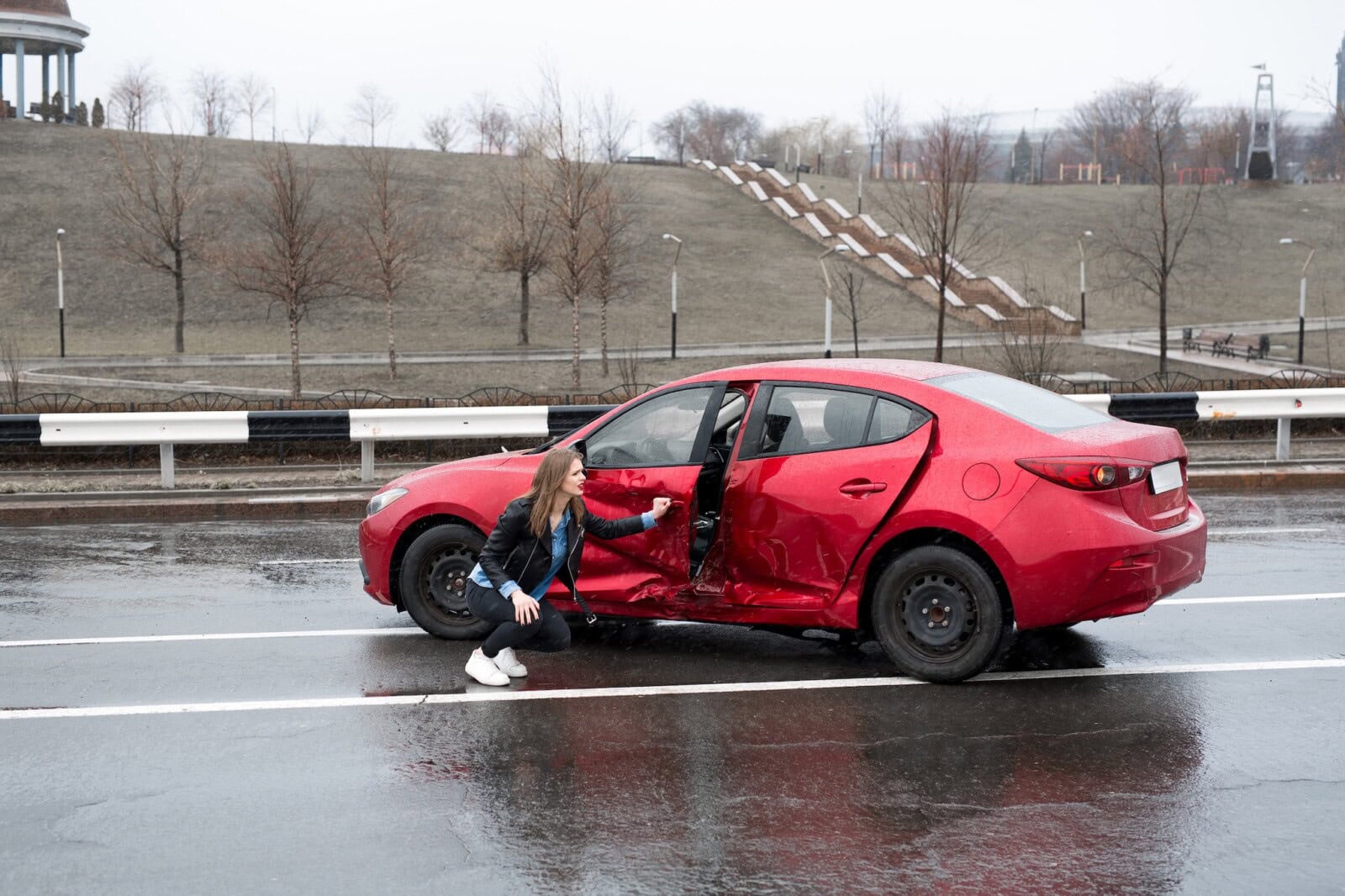
Understanding the "Ghost Driver" Phenomenon in Florida Hit-and-Runs
The term "ghost driver" refers to an at-fault motorist who causes a car accident and then flees the scene, remaining unidentified. These incidents present unique challenges for victims in Florida because there's no known party to whom they can seek compensation for damages. The absence of a liable driver means victims must turn to alternative solutions to recover their losses.
The Florida Department of Highway Safety and Motor Vehicles reports that nearly 25 percent of all Florida crashes involve a hit-and-run, and that more than 81 percent of the 2023 hit-and-run fatalities happened at dawn, at dusk or at night.
What Qualifies as a Hit-and-Run with an Unidentified Driver?
Under Florida law, a hit-and-run accident occurs when a driver involved in a crash leaves the scene without fulfilling their legal obligations. These obligations include exchanging information, rendering aid if necessary, and reporting the accident to law enforcement. When victims or investigators cannot identify the fleeing driver, it becomes an unidentified driver or "phantom vehicle" hit-and-run.
FLHSMV counted 104,273 hit-and-run crashes in Florida in 2023, resulting in 271 fatalities and 871 serious bodily injuries. When the driver is never identified there is nobody to sue, so the claim moves onto your own policy. Florida still punishes the driver who leaves: under the Aaron Cohen Life Protection Act, leaving the scene of a crash that causes a death is a first-degree felony carrying a four-year mandatory minimum.
Why UM Coverage Is Usually the Only Recovery After a Phantom Vehicle Crash
Uninsured Motorist, or UM, coverage becomes the primary recourse for victims of hit-and-run accidents involving unidentified drivers in Florida. Without a known at-fault driver or their insurance policy, victims would typically be left to cover all expenses out of pocket. UM coverage acts as a bridge, providing compensation when no other insurance policy is available.
Florida does not require you to buy UM coverage, but s. 627.727(1) makes an insurer include it in any policy that has bodily injury liability coverage unless a named insured signs a written rejection on a form approved by the Office of Insurance Regulation. Florida also does not require a private passenger vehicle owner to carry bodily injury liability coverage at all. Section 627.733 requires personal injury protection and s. 324.022 requires $10,000 of property damage liability, and that is the whole mandate. That gap is why UM coverage carries these claims.
Decoding Florida's Uninsured Motorist (UM) Coverage
Understanding Uninsured Motorist (UM) coverage is important for all drivers in Florida, particularly those concerned about the repercussions of a hit-and-run incident involving an unidentified driver. This type of insurance is designed to protect you and your passengers when the at-fault driver lacks adequate insurance or, as in the case of a "ghost driver," cannot be found. It covers medical expenses, lost wages, and pain and suffering that the at-fault driver's liability insurance would normally cover.
Having a clear understanding of your UM policy can significantly improve your ability to recover after a collision. Knowing the specifics of your policy helps you pursue a claim effectively and avoid potential pitfalls. This protection extends beyond just uninsured drivers, also covering instances where the at-fault driver is underinsured, meaning their policy limits are insufficient to cover various types of damages.
The Two Types of UM Coverage: Stacked vs. Unstacked
Florida UM coverage is sold stacked or unstacked, and the difference can double or triple what is available after a hit-and-run. Unstacked coverage exists because Fla. Stat. s. 627.727(8) lets an insurer offer a policy in which the limits for two or more vehicles are not added together, in exchange for a UM premium at least 20 percent lower. Stacked coverage combines the limits for every vehicle on the policy.
For example, if you have two cars, each with $50,000 in stacked UM coverage, you'd effectively have $100,000 in total coverage available for a single accident. This option can potentially double or even triple available coverage, offering a much higher level of financial protection against significant damages. Unstacked UM coverage, on the other hand, limits the coverage to the specific vehicle involved in the accident, regardless of how many vehicles you own or policies you hold.
The coverage amount is fixed for each vehicle, meaning if you have $50,000 in unstacked UM coverage on your car, that's the maximum you can recover, even if you own other vehicles with similar policies. When dealing with a ghost driver claim, stacked coverage can provide substantially more financial relief.
Key Elements of UM Coverage in Florida Law
UM coverage pays what the fleeing driver's liability insurer would have paid. Three provisions of Fla. Stat. s. 627.727 decide how much of that you actually get.
Section 627.727(2) sets your UM limits at the bodily injury liability limits you bought, unless you selected a lower limit that complies with your insurer's rating plan. So $100,000 of bodily injury liability means $100,000 of UM by default, not as a floor. There is no statutory 10/20 UM minimum, because Florida does not require bodily injury liability coverage in the first place.
Section 627.727(7) is the one people are surprised by. A UM carrier is not liable for pain, suffering, mental anguish or inconvenience unless the injury fits one of the categories in s. 627.737(2): significant and permanent loss of an important bodily function, permanent injury within a reasonable degree of medical probability, significant and permanent scarring or disfigurement, or death. Medical bills and lost wages are not subject to that threshold.
The last sentence of s. 627.727(1) says the coverage available may not be reduced by a setoff against any other coverage, including liability insurance. Your UM limits are not shaved by whatever the at-fault driver's policy would have paid.
Does Florida Require Physical Contact With the Phantom Vehicle?
No. Florida law has no physical contact requirement for a hit-and-run UM claim, and an insurer cannot create one by writing it into the policy. In Brown v. Progressive Mutual Insurance Co., 249 So. 2d 429 (Fla. 1971), the Florida Supreme Court held such a clause void, reasoning that contact proves only that the crash happened the way the claimant describes, which is a question of fact rather than a condition of coverage. Fla. Stat. s. 627.727 itself says nothing about contact.
What you do have to prove is that an unidentified driver's negligence caused the crash and caused your injuries, and your own carrier will test that. Evidence still decides the claim. Paint transfer, glass and debris that came off the other vehicle, skid marks showing you swerved, dash cam video and footage from nearby cameras all help.
A witness who saw the other car is often worth more than any of it. Get a name and a phone number at the scene, because a crash report listing no witnesses is the first thing an adjuster points to.
Immediate Actions and Essential Evidence After a Florida Hit-and-Run
The moments immediately following a hit-and-run accident are often chaotic and stressful. However, the actions you take during this critical time are important for both your safety and the success of any potential insurance claim, especially when dealing with a "ghost driver." Acting quickly and deliberately can help preserve your rights and maximize your chances of recovery.
Those first steps fix the record before it disappears, because debris gets swept up, paint transfer gets washed off and witnesses drive away within the hour. Properly handling the aftermath of a hit-and-run sets the foundation for a successful claim. It helps demonstrate to your insurance company that you took all reasonable measures to identify the other driver and gather evidence.
Prioritizing Safety and Calling Law Enforcement
After a hit-and-run, your first priority must be your personal safety. If your vehicle is still operational, move it to a safe location away from traffic. If not, activate your hazard lights and remain in your vehicle with your seatbelt fastened, if safe to do so, until help arrives. Once you're in a safe position, call 911 immediately to report the accident to law enforcement.
Under Florida law, a driver must stop immediately at the scene of any crash on public or private property that results in property damage, injury, or death. Filing an official police report isn't just a legal obligation; it's a foundational piece of evidence for any subsequent UM claim.
The report documents the incident, details vehicle damage, and records any potential witness information, all of which are critical for your insurance company.
Thorough Documentation of the Scene
Document the accident scene thoroughly after a hit-and-run, while the evidence is still there. Begin by taking numerous photos and videos of your vehicle's damage from multiple angles, including close-ups and wider shots of the surrounding area. Also, photograph any debris on the road, skid marks, and specific road conditions. Don't overlook potential evidence that could help identify the phantom vehicle, such as paint transfers or broken glass.
Look for any visible injuries you or your passengers sustained. If there are any witnesses, ask for their contact information and a brief statement of what they observed. Also, scan the area for nearby surveillance cameras, such as dashcams in other vehicles, traffic cameras, or security cameras from local businesses, as these may have captured the incident. Collecting all available evidence, no matter how minor it seems at the time, can significantly strengthen your UM claim.
Small details decide these claims, because the fight is usually about whether another vehicle was involved at all. The more information you gather, the more compelling your case becomes to your insurance provider.
Notifying Your Insurance Company Promptly
Following a hit-and-run, it's important to promptly notify your own insurance company about the accident. Do this as soon as you've addressed immediate safety concerns and contacted law enforcement. Even if you're unsure about the specifics of your UM coverage, reporting the incident is a necessary step.
Most insurance policies have specific deadlines for reporting an accident. Delayed notification can jeopardize your claim, potentially leading to a denial or a reduced payout. Your insurer needs to be aware of the incident to begin their own investigation and to guide you through the claims process. Be ready to provide them with the police report number and any evidence you've collected.
Navigating the UM Claim Process for an Unidentified Driver
A UM claim against an unidentified driver runs on your own policy's notice and cooperation terms and on the evidence you can produce. The process can feel daunting, especially when dealing with injuries and vehicle repairs. However, understanding each step can empower you to effectively seek the compensation you deserve.
This process begins with the official documentation of the accident and extends through evidence collection and communication with your insurance provider. Success in these claims often hinges on diligent record-keeping and a clear demonstration that the hit-and-run indeed occurred as reported. Knowing what to expect helps streamline your path to recovery.
The Role of the Police Report and Investigation
The official police report serves as a cornerstone for any phantom vehicle UM claim. When law enforcement responds to your hit-and-run report, they create a formal document detailing the incident, including the date, time, location, involved parties (if any are known), and initial observations of damage or injuries. This report provides a credible, third-party account of the accident.
Most UM policies require you to report a hit-and-run to law enforcement promptly, and the crash report is the document your adjuster starts from. Identifying the driver is not a prerequisite. If police did identify the driver, the claim would move to that driver's liability insurer and would stop being a UM claim at all. What the report shows is that you reported the crash immediately and described it then the same way you describe it now.
Building Your Case: What Evidence Do You Need?
Substantiating a UM claim against an unidentified driver requires a comprehensive collection of evidence. The police report is important, but it's only one piece of the puzzle. You'll need to gather additional documentation to support your version of events and prove your damages.
Other evidence includes detailed photographs and videos of the accident scene, vehicle damage, and any visible injuries you sustained. Witness statements from anyone who saw the hit-and-run or the fleeing vehicle can be powerful. Medical records detailing your injuries, treatments, and prognosis are also essential for documenting the extent of your physical damages. This evidence helps establish that the accident occurred as a hit-and-run by an unknown party and directly resulted in your injuries and losses.
The more of that you can hand the adjuster, the harder the claim is to deny.
Overcoming Challenges in Unidentified Driver Claims
Pursuing a UM claim for an unidentified driver often presents unique challenges that can complicate the recovery process. While proving physical contact is a specific hurdle discussed earlier, other common issues arise. These can include dealing with skeptical insurance adjusters who might question the legitimacy of a phantom vehicle claim or attempt to attribute your damages to other causes.
Demonstrating the full extent of your damages, including medical expenses, lost wages, and pain and suffering, can also be difficult without a direct liable party to pursue. These situations require a diligent approach to ensure your claim isn't undervalued or denied.
How a Florida Personal Injury Attorney Can Secure Your UM Claim
Navigating the aftermath of a "ghost driver" hit-and-run in Florida can be incredibly complex. From understanding intricate insurance policies to gathering sufficient evidence, the process is fraught with potential pitfalls. An experienced personal injury law attorney can be an invaluable asset, providing the expertise and advocacy needed to successfully secure your Uninsured Motorist (UM) claim.
A lawyer ensures that your rights are protected every step of the way, allowing you to focus on your recovery rather than the burdensome details of an insurance claim. Their knowledge of Florida law and insurance practices gives you a significant advantage when facing challenging situations, such as proving physical contact or dealing with uncooperative adjusters.
Expert Guidance Through Complex Insurance Policies
Florida personal injury attorneys possess an in-depth understanding of the intricacies of UM policies, including policy limits, exclusions, and the critical differences between stacked and unstacked coverage. Many policyholders are unaware of these nuances, which can significantly impact their claims. An attorney can interpret these complex documents and explain how they apply to your specific situation.
By providing expert guidance, a lawyer ensures that all procedural requirements are met, preventing common mistakes that could lead to claim denials. They review your insurance policy to identify the full extent of your coverage, helping you understand what benefits you're entitled to. This expertise is particularly important in phantom vehicle claims, where specific conditions, such as proof of physical contact, must be rigorously met.
Investigating and Maximizing Your Claim's Value
An attorney's role goes past reading the policy. A lawyer can send preservation letters and subpoenas for camera footage that a business will otherwise overwrite within a week. This can involve reviewing surveillance footage from traffic cameras or nearby businesses, interviewing potential witnesses, and even consulting accident reconstructionists to piece together what happened. Their investigative resources are a significant advantage.
Valuing the claim is the other half of that work. They meticulously document all your losses, including current and future medical expenses, lost wages, and the intangible costs of pain and suffering. By thoroughly evaluating every aspect of your case, they ensure that your claim reflects the true impact of the hit-and-run on your life, seeking the maximum compensation available under your UM policy.
Advocating for Your Rights Against Insurance Companies
Insurance companies, even your own, are businesses focused on minimizing payouts. An attorney serves as a strong advocate for your rights, negotiating with insurance adjusters on your behalf. They understand the tactics insurers use to undervalue claims and are prepared to challenge lowball offers.
If negotiations don't yield a fair settlement, your attorney can prepare your case for litigation. They can file suit against your UM carrier and try the case if the offer stays unreasonable. This unwavering advocacy protects you from being exploited during a vulnerable time and ensures you don't settle for less than your claim is worth.
Don't Let a Ghost Driver Leave You Without Justice: Contact Weinstein Legal Team Today
Even when the at-fault driver is never identified, uninsured motorist coverage under Fla. Stat. s. 627.727 can still pay your medical bills, your lost wages and, if your injury meets the s. 627.737(2) threshold, your pain and suffering. Florida does not require physical contact with the phantom vehicle, so a denial resting on that ground is worth challenging.
What these claims turn on is evidence and timing: a prompt report to police, a scene you photographed, and video pulled before it is overwritten. The party paying is your own insurer, and it will investigate the claim the way a defendant would.
Don't let a ghost driver leave you without justice. Call us at 888-626-1108 to speak to an attorney now, or click here to schedule a case review with Weinstein Legal Team. We handle Florida hit-and-run UM claims from the first report through suit against your own carrier when that is what it takes.