
If you have suffered severe injuries in a Florida car accident, you may quickly discover that the medical bills and lost wages exceed the limits of your Uninsured Motorist policy. When standard insurance tiers fail to cover catastrophic expenses, injured parties must seek alternative legal avenues to bridge the gap. Your financial stability depends on knowing how to pursue excess liability claims and additional sources of recovery.
Because Florida has unique auto insurance requirements, victims often face a substantial coverage gap. Evaluating secondary policies, investigating personal assets, or holding your insurer accountable through a bad-faith action can reveal the critical funding required to pay for ongoing rehabilitation and long-term care.
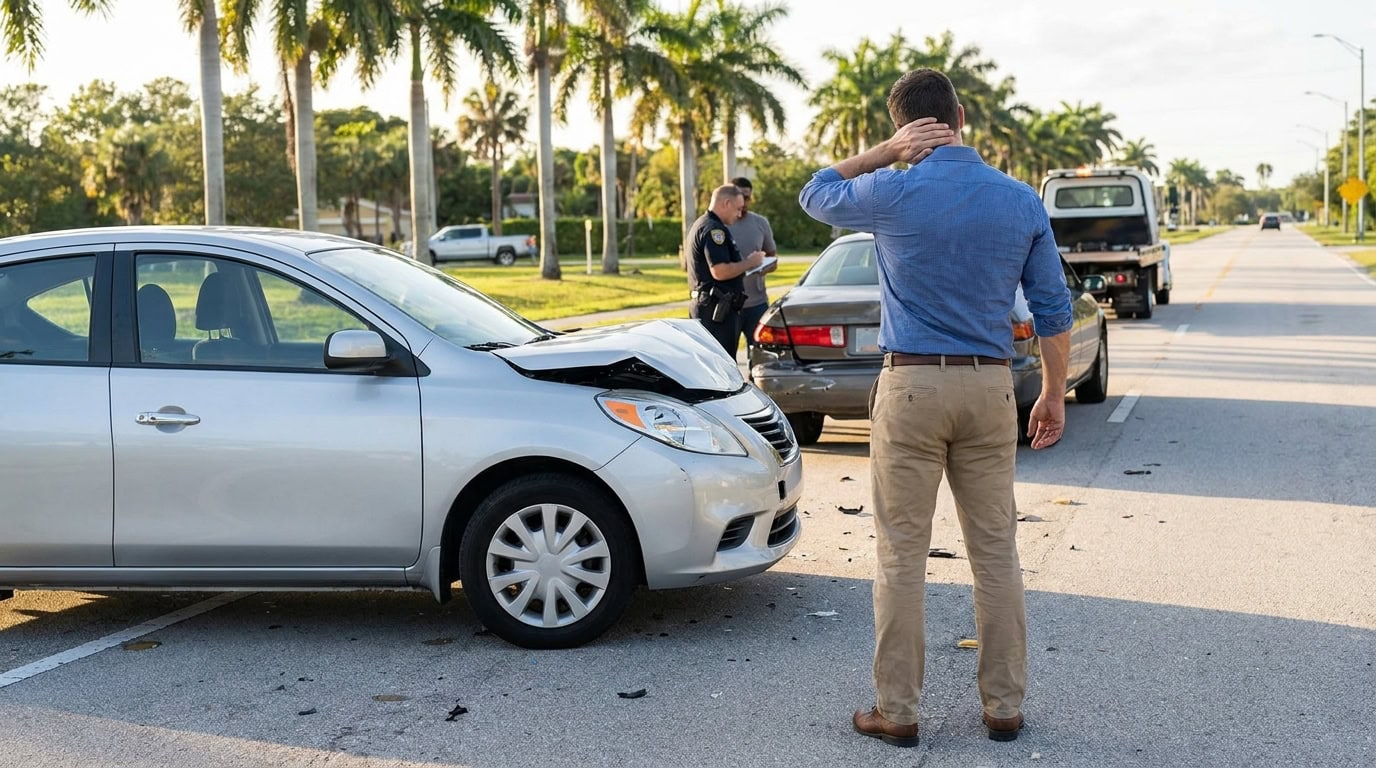
What Happens If Damages Exceed Your Florida Uninsured Motorist Limits?
In Florida, an excess liability scenario arises when the total value of your medical bills, lost earnings, and pain and suffering surpasses the combined limits of all applicable insurance policies. Rather than accepting an inadequate settlement, you must explore secondary insurance layers, bad-faith litigation, and personal recovery methods.
Florida Statute 627.733 and the Lack of Bodily Injury Requirements
Under Florida Statute Section 627.733, motor vehicle owners are only required to carry $10,000 in Personal Injury Protection and $10,000 in Property Damage Liability. Florida does not mandate Bodily Injury Liability coverage for standard passenger vehicles, meaning a negligent driver can legally operate a vehicle without carrying any coverage to pay for the injuries they cause to others.
According to the Insurance Information Institute, an estimated 15.9% of Florida drivers were uninsured in 2022, the most recent Insurance Research Council estimate the Institute publishes. Many more carry only the state minimum, which cannot cover a serious collision. That makes high Uninsured Motorist limits a practical necessity for Florida drivers.
When an at-fault driver carries zero Bodily Injury Liability coverage, the injured person must rely almost exclusively on their own Uninsured Motorist policy. Relying exclusively on a personal policy creates a high-stakes scenario in which the victim's own policy becomes the primary, and often the only, source of significant compensation. If the victim's injuries are extensive, they may find that even a substantial policy is insufficient to cover the lifetime costs of their care.
How Serious Injuries Exhaust Policy Limits Instantly
Catastrophic injuries such as traumatic brain damage, spinal cord trauma, or complex bone fractures require immediate medical interventions. Emergency room visits, multiple surgeries, and stays in intensive care units can produce substantial medical bills within days, and lost income adds to the burden. When these costs are combined with the loss of primary income, a standard $25,000 or $50,000 policy is exhausted almost immediately.
A traumatic brain injury, a spinal cord injury or a complex fracture can exhaust a $25,000 policy in the first days of hospital care, before rehabilitation, home care and lost earnings are counted.
Florida Statute Section 627.737 establishes a strict "verbal threshold" that determines when an accident victim may seek non-economic damages. Section 627.737(2) lists four qualifying categories: significant and permanent loss of an important bodily function, permanent injury within a reasonable degree of medical probability other than scarring or disfigurement, significant and permanent scarring or disfigurement, and death. If your injury falls into one of them, you can pursue compensation for pain and suffering. These non-economic damages often represent the largest portion of a high-stakes claim. However, if the uninsured motorist policy is small, there may be insufficient funds to cover these intangible losses, despite their legal validity.
Legal Strategies When Uninsured Motorist Claims Exceed Policy Limits
When a first-party insurance claim is insufficient to cover a victim's total losses, legal teams must seek alternative sources of recovery. These pathways include pursuing the negligent party's personal assets or identifying other entities that share responsibility for the accident.
Pursuing the At-Fault Driver Personally
Victims always have the legal right to sue a negligent driver personally to recover damages that exceed insurance limits. The litigation process involves obtaining a court judgment that the driver is personally responsible for the remaining balance of the victim's losses. While this is a clear legal path, the primary challenge is often the driver's ability to pay. Many uninsured drivers lack significant wealth, which can make them technically judgment-proof in the eyes of the law.
However, if the negligent party possesses substantial personal assets, filing a personal lawsuit can yield actual recovery. Non-homestead real estate, secondary vehicles, boats, and non-qualified investment portfolios can be targeted. Recording a certified copy of your money judgment in the public records of any Florida county creates a statutory judgment lien on the debtor's non-exempt real property, and your attorney can initiate sheriff's levies or bank garnishments to seize these assets.
If an at-fault driver has regular wages but lacks liquid assets, pursuing wage garnishment in Florida is notoriously difficult. Under Florida Statute Section 222.11, the "head of family" exemption completely protects the disposable earnings of any individual who provides more than half the financial support for a child or other dependent. Therefore, your attorney must meticulously analyze the debtor's household dependency status and focus collection efforts on structured payment plans or seizing non-exempt assets instead.
How to Conduct a Personal Injury Asset Search to Find Hidden Recovery Sources
Determining whether an at-fault driver has sufficient assets to make personal litigation viable requires an exhaustive financial investigation. Our legal team collaborates with forensic investigators to conduct comprehensive asset searches, scanning public records, corporate registries, and property deeds to identify non-homestead real estate, business interests, and active bank or investment accounts that can satisfy a court judgment.
Understanding Umbrella Insurance and Excess Liability Policies
Identifying an active umbrella or excess liability policy during the pre-litigation discovery phase can radically change the trajectory of your claim, securing a source of direct compensation for catastrophic injuries without the need to seize or liquidate personal property.
Exploring Third-Party Auto Accident Liability and Multiple Defendants
A car accident often involves more than just the two drivers directly involved in the collision. Third-party auto accident liability allows victims to seek compensation from other entities whose negligence contributed to the event. Under the doctrine of vicarious liability (respondeat superior), an employer can be held legally responsible for an employee's negligent driving if the employee was acting within the scope of their employment at the time of the collision. That matters because commercial entities typically carry auto liability policies with limits of $1 million or more.
Under Florida's unique Dangerous Instrumentality Doctrine, first established by the Florida Supreme Court in Southern Cotton Oil Co. v. Anderson, 80 Fla. 441 (1920), a vehicle owner is strictly, vicariously liable for the negligence of anyone driving their vehicle with express or implied consent. Unlike negligent entrustment, which requires proving the owner knew the driver was unfit, Florida's doctrine requires only proof of permissive use. This allows you to pursue the owner's auto insurance policy directly, even if the owner was nowhere near the scene of the crash.
There are also instances where the vehicle itself or the environment caused the severity of the injuries. A product liability claim can be filed against a vehicle manufacturer if a defective airbag or a failing braking system made the crash worse. If poor road design or negligent construction zone management contributed to the accident, a premises liability claim against a construction firm or government entity may be possible.
The Impact of Florida HB 837 on Uninsured Motorist Litigation
Legislative changes in Florida have altered the timeline and standards for many personal injury cases. In March 2023, the state enacted House Bill 837, which significantly shortened the statute of limitations for general negligence claims. For a crash on or after March 24, 2023, victims have two years from the date of the accident to file a lawsuit against a negligent driver. A cause of action that accrued before that date keeps the old four-year period. The shortened deadline makes it imperative to initiate an investigation immediately after a crash happens.
The Five-Year Statute of Limitations for UM Claims
While HB 837 slashed the statute of limitations for general negligence claims to 2 years, first-party Uninsured Motorist claims are governed by your contract with your insurance company. Consequently, UM lawsuits are governed by Florida Statute Section 95.11(2)(b), which provides a five-year statute of limitations for breach of a written contract. This longer window provides critical breathing room to document the full scope of your injuries and future care needs.
The shorter negligence period still applies to a lawsuit against the at-fault driver, and House Bill 837 renumbered it, so the current citation is Florida Statute Section 95.11(5)(a). If your case requires pursuing the driver's personal assets or invoking third-party liability, you must file suit within two years of the crash date or lose those recovery paths permanently.
Modified Comparative Negligence and the 51% Bar
House Bill 837 amended Florida Statute Section 768.81 to replace the state's pure comparative negligence standard with a modified system. Under the current rule, if an injured plaintiff is found to be more than 50% at fault for the accident (the 51% bar), they are completely barred from recovering any damages from the defendant. That version of Section 768.81 applies to cases filed after March 24, 2023, which can include a crash that happened before that date.
If you are 50% or less at fault, you can still recover damages, but the court will reduce your award by your percentage of blame. For example, if your damages are $100,000 and you are 20% at fault, you would receive $80,000. Insurance adjusters will use every available tactic to increase your assigned percentage of fault to protect their profits.
Uninsured Motorist Bad-Faith Actions in Florida
An insurance company has a legal obligation to treat its policyholders fairly and to settle claims promptly. When an insurer fails to meet this obligation, it may be acting in bad faith, creating a new legal avenue for the policyholder. This process can sometimes force the company to pay far more than the policy's face value.
The Duty of Good Faith Under Florida Statute Section 624.155
Florida Statute Section 624.155 establishes a statutory private right of action for first-party bad faith. This statute requires your insurer to act fairly, honestly, and with due regard for your interests when investigating and settling a claim. If the company prioritizes its own financial margins over your legitimate recovery, it can be held liable for bad faith.
Bad-faith behavior can take several forms during the processing of an uninsured motorist claim. Common examples include failing to conduct a proper and thorough investigation of the accident or stalling the settlement process without a valid reason. Some insurers may offer a settlement amount that is unreasonably low compared to the clear evidence of the victim's injuries. They might also fail to communicate honestly with the policyholder about the status of the claim or the reasons for a denial.
Proving an insurer's bad faith changes what the claim is worth. The victim is no longer bound by the original limits of the insurance policy they purchased. Florida law recognizes that an insurer shouldn't be allowed to hide behind policy limits if it has intentionally mistreated its customer.
The Role of the Civil Remedy Notice in First-Party UM Bad Faith
Before filing a formal bad-faith lawsuit, policyholders must follow a specific procedural requirement to notify the state and the insurer:
- File the CRN: Submit a Civil Remedy Notice electronically with the Florida Department of Financial Services.
- Detail the Specific Violations: Explicitly outline the statutory provisions, facts, and policy language the insurance company violated during their claims evaluation.
- Trigger the Statutory 60-Day Cure Period: Serve the insurer with the CRN, initiating a strict 60-day window under Florida Statute Section 624.155 during which the insurer must "cure" its bad-faith behavior (typically by paying the policy limits or the demanded amount) to avoid a bad-faith lawsuit.
Once the notice is filed, the insurance company is given a strict 60-day window to cure the violation. To cure the bad faith, the insurer must typically pay the full demanded policy limits or address the specific grievances listed in the notice. If the company takes this action within the 60-day timeframe, the policyholder generally cannot proceed with a bad-faith lawsuit. The 60-day window encourages insurers to resolve disputes fairly without the need for extended litigation.
If the insurance carrier allows the 60-day period to pass without curing the violation, the policyholder gains the right to sue. At this point, the insurer faces the risk of a trial in which its internal handling of the claim will be scrutinized. The Civil Remedy Notice is a powerful tool that forces insurance adjusters to take a claim more seriously.
How Bad-Faith Actions Can Exceed the Policy Limit
In the landmark case of Fridman v. Safeco Insurance Co. of Illinois, 185 So. 3d 1214 (Fla. 2016), the Florida Supreme Court held that an insured is entitled to a full jury determination of their total damages in the underlying UM trial. If bad faith is subsequently proven under Section 624.155, that full "excess judgment" becomes the measure of damages, forcing the insurer to pay the entire verdict even if it dwarfs the original policy limits.
The court's ruling ensures that insurance companies cannot simply pay the policy limit at the last second to avoid the consequences of their previous bad behavior. The total amount recoverable in a bad-faith action can include the full excess judgment plus interest on the unpaid benefits. The insurance company may also be required to pay the policyholder's attorney's fees and litigation costs. These additional costs impose a significant financial penalty on insurers that ignore their customers' legitimate needs.
Another major legal protection was established by the Florida Supreme Court in Ellison v. Willoughby, No. SC2021-1580 (Fla. Nov. 2, 2023). The court ruled that a settlement payment from a UM insurer to resolve a first-party bad-faith claim is not a "collateral source" under Florida Statute Section 768.76. So a defendant cannot use that bad-faith recovery as a collateral-source set-off under Section 768.76. The court did not decide whether a set-off is available under Section 768.041(2), because that argument was not raised in the trial court. These legal precedents work together to ensure that victims of bad faith can pursue the maximum possible compensation for their suffering.
Stacked vs. Non-Stacked Uninsured Motorist Coverage in Florida
The way an insurance policy is structured can drastically change the amount of money available after an accident. Florida Statute 627.727 allows policyholders to choose between stacked and non-stacked Uninsured Motorist coverage. Stacking policies can turn a modest amount of coverage into a significant fund for your recovery.
The Math of Stacking and Notice Requirements
Stacking provides a multiplier effect for your total available benefits. For example, if you have three vehicles insured with $100,000 of UM coverage each, stacking allows you to combine them. In the event of an accident, you would have $300,000 in total coverage available to pay for your injuries. Non-stacked coverage, by contrast, limits you to the single limit of the vehicle involved in the crash.
In the landmark case of Jervis v. Castaneda, 243 So. 3d 996 (Fla. 4th DCA 2018), the Fourth District Court of Appeal held that an insurer's failure to comply with the mandatory written notice requirements of Florida Statute Section 627.727(1) completely precludes it from claiming the insured made an oral, knowing rejection of stacked coverage. Under Florida law, if your insurer cannot produce a legally valid, signed written rejection form on a state-approved template, your coverage defaults to stacked by operation of law.
Many people choose non-stacked coverage because it comes with a mandatory 20% premium reduction. However, they often don't realize the massive amount of protection they're giving up for a relatively small saving. An attorney will carefully review your policy and the insurer's records to see if you're entitled to a higher stacked limit.
Preserving Your Rights Before Settling with an Underinsured Driver
Under Florida Statute Section 627.727(6)(a), an injured party must provide written notice via certified or registered mail to their own UM carrier before finalizing any third-party liability settlement. Section 627.727(6)(a) applies whenever the proposed settlement would not fully satisfy your claim, so that an underinsured motorist claim is left over, and following it is how the statute lets you finalize that settlement without prejudice to the underinsured motorist claim.
Once the carrier receives the notice, Section 627.727(6)(a) gives it 30 days to authorize the settlement or keep its subrogation rights. If the carrier authorizes the settlement, or fails to respond within the 30 days in the way Section 627.727(6)(b) requires, you may sign a full release in favor of the at-fault driver and that driver's liability insurer and finalize the settlement without prejudice to your underinsured motorist claim. If the carrier instead refuses permission in order to keep its subrogation rights, Section 627.727(6)(b) requires it to pay you the amount of the liability insurer's written offer within those 30 days, and once the underinsured motorist claim is resolved it can pursue the at-fault driver and that driver's insurer for what it paid. Either way your own limits stay whole. Section 627.727(1) says UM coverage may not be reduced by a setoff against any other coverage, including the at-fault driver's liability insurance, and the credit the carrier takes under Section 627.727(6)(c) comes off your total damages, not off your policy limits.
Releasing the at-fault driver without sending the notice can cost you the underinsured motorist coverage, but not automatically. Florida courts treat the carrier's prejudice as a presumption you can rebut rather than an irrebuttable forfeiture: Gray v. State Farm Mutual Automobile Insurance Co., 743 So. 2d 973 (Fla. 2d DCA 1999), and Moskowitz v. State Farm Mutual Automobile Insurance Co., 646 So. 2d 262 (Fla. 2d DCA 1994). A settlement finalized after proper notice is without prejudice to your underinsured motorist claim. Send the notice by certified or registered mail before you sign any release.
Motorcycle Accidents and the Absence of PIP
In Florida, motorcycles are excluded from the statutory definition of a "motor vehicle" under Florida Statute Section 627.732(3) because they lack four or more wheels. Consequently, motorcyclists are exempt from Personal Injury Protection mandates under Florida Statute Section 627.733, and do not have access to the standard $10,000 no-fault medical benefit safety net, leaving injured riders fully responsible for their immediate medical bills from the first dollar.
Because motorcycles are outside the no-fault system, the prevailing view among Florida practitioners is that a rider does not have to satisfy the tort threshold in Section 627.737(2) to recover pain and suffering from an at-fault driver. The statute is written around the defendant's vehicle and the security required for it, and no reported Florida appellate decision squarely decides the motorcycle-rider question, so treat that as the better reading of the statute rather than settled precedent. A UM claim is different. Section 627.727(7) says a UM insurer is not liable for damages in tort for pain, suffering, mental anguish and inconvenience unless the injury is one of those described in Section 627.737(2)(a) through (d), and it makes no exception for motorcyclists. However, without PIP, your Uninsured Motorist coverage on your motorcycle policy becomes your primary shield. This makes it vital to carry substantial UM limits, as a single motorcycle crash often results in catastrophic injuries that exceed standard limits within hours.
The lack of no-fault benefits changes what a rider has to prove against an at-fault driver, but it does not change what a UM carrier owes under Section 627.727(7). Without adequate UM coverage, there may be no funds available to pay those damages at all. Our team helps riders investigate third-party liability and umbrella policies to fill this significant financial gap.
Speak To Weinstein Legal Team About Your Uninsured Motorist Claims
Facing damages that exceed your uninsured motorist limits can be one of the most overwhelming experiences of your life. The reality of mounting medical debt and lost income creates a heavy burden for any family.
Weinstein Legal Team understands the high stakes involved in catastrophic injury cases and the tactics required to win. We have the resources and experience to investigate every possible source of recovery, no matter how complex the case. With offices in Fort Lauderdale, West Palm Beach, and Orlando, we are ready to serve victims throughout the entire State of Florida.
If you are struggling with a claim that exceeds your policy limits, you do not have to navigate this journey alone. Contact us today to schedule a free and completely confidential case evaluation with an attorney.