


- Florida ranks as one of the worst states for uninsured motorists, with approximately 20.6% of drivers lacking coverage and nearly 40% being underinsured.
- Under Florida’s no-fault system, victims must seek medical care within 14 days of a car accident to remain eligible for up to $10,000 in mandatory Personal Injury Protection (PIP) benefits.
- Uninsured Motorist (UM) coverage provides a critical safety net for recovering non-economic damages like pain and suffering when an at-fault driver lacks sufficient bodily injury liability insurance.
- Selecting stacked UM coverage allows policyholders to combine insurance limits across multiple vehicles, significantly increasing the total compensation available for serious injuries or hit-and-run accidents.
Florida roads are home to some of the highest concentrations of uninsured motorists in the United States. This reality creates a significant risk for law-abiding motorists who follow every rule of the road. While accidents involving uninsured drivers are common in the Sunshine State, the legal remedies available to victims are often misunderstood by the public.
While the aftermath of a collision can feel overwhelming, specific legal avenues and insurance protocols exist to protect victims. This guide covers everything from immediate scene safety to the nuances of Uninsured Motorist coverage. You'll learn how to navigate the complex insurance landscape to ensure your medical bills and damages are paid. Keep reading to learn more about what to do after being hit by an uninsured driver in Florida.
Understanding the Statistics: Why Florida's Uninsured Rate Is So High
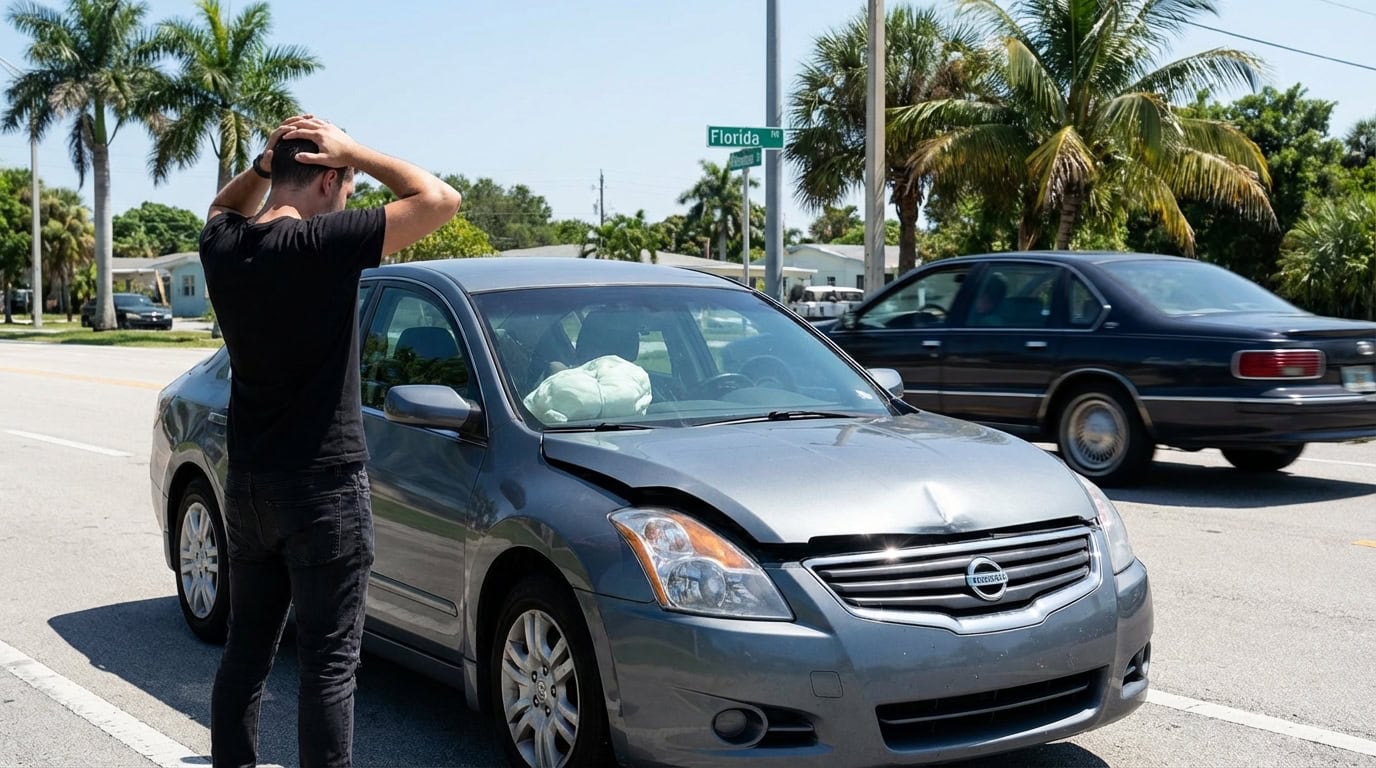
Florida consistently ranks among the most difficult states for drivers due to a massive lack of proper insurance coverage. In 2023, approximately 20.6% of motorists in Florida were uninsured, making the state the 7th-worst in the nation for this category. These figures represent a staggering number of people who lack the financial means to pay for the damage they cause.
The problem is compounded by the fact that nearly 40% of Florida drivers are underinsured. These individuals might have the bare minimum in legal coverage, but it's not enough to cover serious medical costs. This environment makes the roads particularly dangerous for motorcyclists, cyclists, and pedestrians who are vulnerable to severe injury.
The high rate of uninsured motorists largely stems from Florida's specific insurance requirements. While Personal Injury Protection is mandatory, Bodily Injury liability insurance isn't required for all drivers. Many people believe they're fully insured when they only carry PIP, which leaves them unable to compensate others for physical injuries.
Florida is unique compared to neighboring states like Georgia or Alabama. Those states require all drivers to carry bodily injury liability insurance to maintain a valid registration. Florida's lack of this requirement creates a massive coverage gap that puts every responsible driver at financial risk. This statute was designed specifically to protect the public from the high volume of uninsured motorists operating on public highways.
Immediate Steps to Take at the Scene of the Accident
The actions you take in the minutes following a collision can significantly impact the outcome of your future legal claim. You must remain calm and focused on documenting the reality of the situation before people leave the scene.
Prioritize Safety and Call 911
You should immediately call emergency services to report the accident and request medical help if anyone is hurt. If possible, move your vehicles to a safe location away from active traffic to avoid secondary accidents. Staying in the middle of a busy Florida road can lead to further collisions and more severe injuries.
A police report is non-negotiable in uninsured driver car accidents. This document serves as the primary official record that the other driver lacked insurance or fled the area. Officers will verify the insurance status of everyone involved and note it in their final report for the insurance companies.
The other driver might beg you not to call the police because they know they're uninsured. You must ignore these requests to protect your legal rights and your ability to recover damages. Without a formal police report, your own insurance carrier may find reasons to delay or deny your claim.
The responding officer's testimony provides a foundation for your case. Their objective findings regarding the lack of insurance coverage are vital to your UM carrier's processing of your claim. Don't let the other driver talk you out of following the proper legal procedure.
Gathering Critical Evidence and Documentation
You should document the scene thoroughly while you wait for the police to arrive. Use your phone to take high-quality photos and videos of all vehicle damage, including paint transfers and shattered glass. Be sure to capture the license plates of all involved vehicles and the surrounding traffic signals or signs.
Gathering contact information from witnesses who saw the accident occur is another step that helps build a strong case. Their testimony can be helpful if the insurance company eventually disputes who was at fault for the crash. Ask for their full names, phone numbers, and a brief description of what they witnessed.
Take note of the other driver's physical appearance and the specific make and model of their car. This information is helpful if they decide to leave the scene before law enforcement arrives. Recording these details immediately prevents you from forgetting them during the stress of the aftermath.
Check the surrounding area for security cameras at nearby businesses or homes. Dashcam footage is another powerful tool that can prove the other driver's negligence. Weinstein Legal Team represents victims of uninsured-motorist accidents in Florida and uses this evidence to maximize their recovery.
An Actionable Checklist for the Scene
If you're physically able, you should go through a specific checklist to ensure no data is lost. First, photograph the other vehicle's dashboard, if possible, to check for warning lights or mileage. Second, record the exact time of the crash and the lighting conditions at that moment.
Third, look for skid marks on the pavement and photograph them from several angles. These marks help accident reconstructionists determine the vehicles' speeds before impact. Fourth, obtain the badge number and name of the responding officer for your records.
Fifth, ask the other driver for their driver's license number and current address. Even if they don't have insurance, their identity is necessary for the police report and any potential personal lawsuit. Keeping these details organized in a digital folder on your phone is a smart way to manage the data.
Identifying the Other Driver's Status
You should exchange basic information with the other driver, such as names and addresses. Stay calm and professional, even if you suspect they don't have the proper insurance coverage. Getting into a heated argument about their lack of insurance won't help your case and could escalate the situation.
If the driver admits they don't have insurance, you should ensure this admission is repeated to the responding officer. You might also record the admission on your phone if it's safe to do so. Having this on the record early prevents the driver from changing their story later in the process.
You should never accept a cash under-the-table offer from an uninsured driver at the scene. These offers are usually much lower than the actual cost of repairs and medical treatment. Taking this money can void your ability to seek further compensation from your own insurance carrier.
Uninsured drivers are often desperate to avoid legal trouble or license suspension. They may offer you a few hundred dollars to walk away without a report. Always decline these offers, as the true cost of your injuries may not appear for several days.
Why Florida's No-Fault Insurance Laws Matter
Florida operates under a no-fault insurance system that differs significantly from many other states. This system requires you to have your own insurance to cover your initial medical costs, regardless of who caused the crash. Understanding how this system works is the first step toward securing the compensation you deserve.
The Role of Personal Injury Protection (PIP)
Personal Injury Protection is mandatory for all Florida vehicle owners and serves as your first line of defense. PIP provides up to $10,000 in coverage for medical bills and lost wages after an accident occurs. This coverage applies regardless of whether the at-fault driver had insurance or fled the scene.
Personal Injury Protection (PIP) covers eighty percent of medical expenses for eligible drivers. It also covers sixty percent of lost wages if your injuries prevent you from returning to work. These benefits provide immediate financial relief while your legal team works on your larger UM claim.
Florida law includes a strict 14-day rule requiring victims to seek medical treatment within 14 days. If you wait longer than 14 days to see a doctor, you lose your eligibility for PIP benefits entirely. This rule exists to ensure that injuries are documented as being directly related to the accident.
PIP only covers a portion of your losses, which creates a significant gap if your injuries are serious. When an uninsured driver hits you, this gap can quickly become a heavy financial burden. You must identify other coverage sources early to ensure your medical providers are paid in full.
The Emergency Medical Condition (EMC) Requirement
A critical nuance of Florida law affects the total amount of PIP benefits you can access. You only receive the full $10,000 benefit if a qualified medical professional determines you have an Emergency Medical Condition. This diagnosis is required to prove that your injuries are severe enough to warrant the full policy amount.
If a doctor doesn't diagnose an EMC, your PIP benefit is often capped at just $2,500. This smaller amount is rarely enough to cover even a single emergency room visit in Florida. This restriction makes it even more important to have additional coverage options, such as Uninsured Motorist protection.
Qualified medical professionals include medical doctors, osteopathic physicians, and certain nurse practitioners or physician assistants. Chiropractors can provide treatment, but they cannot officially diagnose an EMC under current Florida statutes. You should ensure you see a provider who can verify your condition within the legal timeframe.
Insurance companies often look for reasons to dispute an EMC diagnosis. They may hire their own doctors to review your records and argue that your injuries are minor. Having an attorney helps protect your right to the full $10,000 benefit through aggressive advocacy.
How to Read Your Florida Insurance Declarations Page
Your insurance declarations page is the most important document in your policy. It summarizes the types of coverage you have and the financial limits for each. Many drivers don't realize they have UM coverage until a lawyer reviews this page for them.
Look for the section labeled Uninsured Motorist Bodily Injury. If you see numbers listed there, such as 25/50 or 100/300, you have protection against uninsured drivers. The first number represents the maximum payout per person, while the second is the total payout per accident.
You should also check for the words " Stacked or Non-Stacked next to your UM limits. As we'll discuss later, this distinction significantly affects the total amount of money available for your recovery. If this section is blank or says Rejected, you may be limited to your PIP benefits only.
Florida Statute 627.727 mandates that insurance providers offer uninsured motorist coverage. If your insurer cannot produce a signed form showing you rejected this coverage, the law may treat you as if you have it. This technicality has saved many victims who were unaware of their rights.
The Difference Between PIP and Uninsured Motorist (UM) Coverage
While PIP is your initial resource, Uninsured Motorist coverage is what protects you when damages exceed the $10,000 limit. UM coverage essentially steps into the shoes of the at-fault driver's missing liability insurance. It provides a way for you to recover the full value of your claim when the other party can't pay.
PIP is designed only to cover basic economic losses, such as bills and wages. In contrast, UM coverage provides compensation for non-economic damages like pain and suffering or mental anguish. It also covers loss of enjoyment of life and any permanent disfigurement caused by the collision.
You can use UM coverage to pay for the remaining 20% of medical bills that PIP doesn't cover. It also addresses future medical costs and long-term care needs that extend beyond the initial treatment phase. Having high UM limits is often the only way to achieve a full financial recovery.
Uninsured Motorist (UM) Bodily Injury coverage is specifically designed to compensate victims for pain and suffering. This is a first-party claim, meaning you're filing against your own insurance company. Even so, your insurer will likely try to minimize the payout to protect its bottom line.
The Critical Difference Between Uninsured and Underinsured Motorist Claims
The term "UM" often refers to two distinct scenarios in Florida insurance law. An uninsured motorist is someone who has no bodily injury liability coverage. This includes drivers who have let their policies lapse or who carry only the bare minimum PIP and PDL.
An underinsured motorist has some insurance, but the limits are too low to cover your total damages. For example, if a driver has a $10,000 BIL policy but their medical bills are $50,000, they are underinsured. Your own UM policy would cover the $40,000 difference in medical bills in this scenario.
Most Florida policies use the same UM coverage for both situations. It provides a vital safety net, regardless of whether the other driver is completely uninsured or has insufficient coverage. You should treat these claims with the same level of care and documentation.
Insurance providers must act in good faith when evaluating these claims. If they refuse to pay a fair amount when liability is clear, they may face a bad-faith lawsuit. Understanding these nuances helps you push for the maximum compensation available under your policy.
How to File an Uninsured Motorist Claim in Florida
You should notify your insurance company as soon as possible after the accident occurs. Most policies require prompt notification to ensure the company has time to investigate the scene. Delaying this notification can give the insurer a reason to deny your claim later in the process.
Understanding how to file an uninsured motorist claim correctly is the only way to ensure your insurance carrier does not use a procedural error to deny your benefits. You must provide a clear account of the accident and prove that the other driver was at fault. This process involves submitting medical records, police reports, and witness statements.
An uninsured motorist claim is considered a first-party claim because it's against your own insurer. This is different from a third-party claim, which is filed against another driver's insurance company. Even though it's your own company, you must remember they're still looking to minimize their financial loss.
You must be very careful with what you say during any recorded statements with insurance adjusters. They may ask leading questions designed to get you to admit fault or downplay your injuries. It's often better to have an attorney handle these communications to avoid costly mistakes.
A Walkthrough of the UM Lawsuit Process
If your insurance company refuses to offer a fair settlement, you may need to file a formal lawsuit. This process begins with a Complaint that outlines the facts of the accident and the terms of your policy. Your insurance company then has a specific timeframe to file an Answer in court.
The discovery phase follows, where both sides exchange evidence and take depositions. You will likely be asked to testify about how the accident happened and how your injuries have affected your life. This stage can take several months as both sides build their cases.
Florida judges often require mediation before a case can go to trial. This is a formal meeting in which a neutral mediator helps both parties reach a compromise. Many UM claims are settled during mediation once the insurance company sees the strength of the evidence.
If mediation fails, your case will proceed to a jury trial. The jury will decide the extent of your damages and whether your insurance company is responsible for paying them. Winning a trial requires a deep understanding of Florida civil procedure and evidence rules.
Scenarios: When an Uninsured Driver Hits You
Uninsured motorist accidents manifest across different modes of transportation in Florida. The way your insurance applies depends heavily on whether you were in a car, on a motorcycle, or walking. Each scenario carries different legal implications for how you'll recover your damages.
Uninsured Driver Car Accidents
Vehicle-on-vehicle collisions are the most common scenario involving uninsured motorists on Florida roads. These often include rear-end collisions or T-bone accidents at busy city intersections. The damage to your vehicle and your body can be extensive in these high-impact situations.
In Florida, UM coverage typically applies to bodily injury rather than physical damage to your car. You'll likely need to use your own collision coverage to pay for vehicle repairs if the other driver has no Property Damage Liability insurance. Florida requires all drivers to carry at least $10,000 in PDL, but many uninsured drivers ignore this rule.
Dealing with an insurance company in a UM claim can feel like an adversarial process. Even though it's your own insurer, they'll often try to minimize the value of your injuries to save money. This is why you must treat the claim with the same level of preparation as a lawsuit against a stranger.
The impact of car accidents involving uninsured drivers can be financially devastating. If you don't have collision coverage, you might be forced to pay for vehicle repairs out of your own pocket. A personal injury lawyer can help you explore every possible avenue for property damage recovery.
Uninsured Driver Motorcycle Accidents
Motorcyclists face unique risks because Florida law doesn't require them to carry PIP insurance. This exclusion means UM coverage is even more vital for motorcycle riders. Without PIP or UM, a motorcyclist might have no immediate way to pay for emergency medical care.
Motorcycle injuries are often catastrophic because the rider lacks the protective cage of a standard vehicle. Medical bills in these cases almost always exceed the minimum insurance limits of any standard policy. A single surgery for a motorcycle accident victim can cost tens of thousands of dollars.
Some insurance companies try to exclude motorcycles from standard UM policies through specific language. You may need specialized riders or a specific policy to ensure you're covered while on your bike. Reviewing your policy details before an accident occurs is the best way to avoid a coverage gap.
Settlement calculations for motorcycle crashes often account for the high cost of orthopedic care and road rash treatment. Juries in Florida sometimes have a bias against motorcyclists, making it harder to win a fair award. Your legal team must work to humanize your experience and focus on the other driver's negligence.
Pedestrian Accidents Involving Uninsured Motorists
Being hit by an uninsured driver while walking or cycling poses unique challenges regarding which insurance policy takes precedence. A pedestrian's own auto insurance will often cover them if they're hit by a car while walking. PIP and UM coverage typically follow the policyholder even when they aren't inside their vehicle.
If a pedestrian doesn't own a car, they may be able to claim against a relative's policy. This usually requires that the pedestrian live in the same household as the insured relative. These rules can be complex, but they provide a path to recovery for those without their own vehicles.
Pedestrian accidents have high fatality and permanent injury rates due to the lack of physical protection. High-limit UM coverage is necessary to address the lifelong costs associated with these severe impacts. Victims often face months of rehabilitation and may never return to their previous physical state.
Resident relative rules allow children and other family members to access the household's UM protection. This is a lifesaver for families whose children are injured by hit-and-run drivers in residential neighborhoods. We review every household policy to find the maximum coverage available to our clients.
Bicycle Accidents and Insurance Coverage
A cyclist's auto insurance policy usually follows them onto the bike path or the road. If you're hit by an uninsured driver while riding your bike, your own UM coverage should apply. This allows you to seek compensation for injuries even if the driver has no assets or insurance.
Drivers often use the common defense that they didn't see the cyclist before the impact. This tactic is used to shift the fault onto the victim and reduce the value of the claim. Documenting the scene and finding witnesses are essential to fighting these unfair negligence claims.
Cyclists often suffer from complex orthopedic injuries and head trauma during a collision. UM coverage facilitates the long-term rehabilitation needed to recover from these painful conditions. It provides the financial support required for physical therapy and multiple follow-up surgeries.
Being hit by an uninsured driver while on a bike can result in the total loss of expensive cycling equipment. While UM primarily covers bodily injury, some policies allow for limited property damage claims. We review your specific policy language to identify every possible benefit.
Hit-and-Run Accidents: When the At-Fault Driver Flees
A hit-and-run driver is legally treated as an uninsured motorist under Florida law. Since their insurance status cannot be verified, your own UM coverage must step in to provide protection. This ensures that victims aren't left without options simply because the at-fault party was irresponsible.
There are strict requirements for reporting hit-and-run incidents to the police within a specific timeframe. Failing to report the crash promptly can lead your insurance company to deny your UM claim. You should call the police immediately from the scene to establish a formal record of the event.
You might also encounter phantom motorist cases in which a driver causes an accident without making physical contact. For example, a driver might swerve into your lane and force you off the road. UM coverage can apply in these complex situations if you can prove the other driver's actions caused your crash.
Phantom vehicle claims often require independent corroboration to prevent insurance fraud. A witness who saw the other car swerve or dashcam footage can provide the proof needed to unlock your UM benefits. Without this corroboration, insurance carriers are legally allowed to deny the claim in many cases.
Deep Dive into Uninsured Motorist (UM) Coverage Options
Understanding how UM coverage is structured helps you make better decisions about your insurance policy. Florida offers different ways to structure this coverage to provide varying levels of protection. The choices you make now will determine how much money is available to you after an accident.
Stacking vs. Non-Stacking Coverage
Stacked UM coverage allows you to combine the limits of all vehicles on your policy. If you have two cars with $50,000 in UM coverage each, stacking provides $100,000 in total protection. This effectively multiplies your coverage and provides a much larger safety net for serious injuries.
Non-stacked coverage limits you to the amount listed for the specific vehicle involved in the crash. If you're in a car with a $50,000 limit, that's the most you can recover regardless of other vehicles you own. While non-stacked policies are cheaper, they offer significantly less protection in the event of a catastrophe.
Stacking also allows you to access coverage from other policies in your household under certain circumstances. This flexibility is a major advantage when medical bills begin to climb past standard limits. It ensures that your family is protected regardless of which vehicle they're using at the time.
The math behind a stacked policy can be the difference between a partial and full recovery. For instance, a family with three cars and a $25,000 limit would have $75,000 in total protection if they chose stacking. This is much better than being capped at $25,000 when a surgery costs $50,000.
Florida Statute 627.727: Your Right to UM Coverage
Under Florida law, insurance companies must offer UM coverage to every policyholder in the state. The amount offered must equal the Bodily Injury limits already on the policy. This requirement ensures that drivers are at least given the option to protect themselves from uninsured motorists.
A policyholder must sign a specific, written rejection form if they choose to decline this coverage. If you didn't sign this form, the law may assume you have the coverage even if it's not on your cards. This legal protection prevents insurance companies from tricking people into giving up their rights.
If an insurer can't produce a signed rejection form after an accident, a court may rule that coverage exists. The UM coverage would then be set at the same level as your existing BI limits. This statute is a powerful tool for victims who were never properly informed about their options.
Florida Statute 627.727 is the legal backbone of your claim against your own insurer. It forces insurance companies to be transparent about the risks of driving without UM protection. Our team carefully audits every client's policy history to ensure compliance with these regulations.
Common Injuries in Florida Uninsured Driver Accidents
The physical toll of an accident with an uninsured driver can be life-altering and extremely expensive. These conditions often require specialized care that quickly exhausts the limits of a basic PIP policy.
Traumatic Brain Injuries (TBI) and Neurological Damage
Traumatic brain injuries range from mild concussions to catastrophic permanent damage that changes a person's personality. These injuries often require lifetime care and cognitive therapy to manage the symptoms. A TBI can result in a total loss of earning capacity if the victim can no longer perform their job.
The diagnostic costs for a brain injury can exhaust a standard PIP policy instantly. MRIs and CT scans are expensive but necessary to identify the extent of the neurological damage. Victims may suffer from chronic headaches, memory loss, and severe emotional instability for years.
Many brain injuries don't show symptoms immediately after the initial impact of the crash. You might feel fine at the scene but develop significant issues in the days or weeks that follow. This is why immediate medical evaluation is necessary for every person involved in a high-speed collision.
Long-term neurological damage often requires specialized home care and expensive medications. The cognitive decline associated with a TBI can prevent a person from ever returning to the workforce. UM coverage is the primary source of funding for these lifelong needs when the at-fault driver is uninsured.
Spinal Cord Injuries and Paralysis
Spinal cord injuries are among the most life-altering consequences of a car accident. Damage to the neck or back can result in paraplegia or quadriplegia, depending on the location of the injury. These conditions often lead to secondary health complications, such as respiratory issues and chronic infections.
The costs of home modifications and wheelchairs are staggering for the average Florida family. Many victims require around-the-clock nursing care to manage their daily needs and medications. These cases often result in the highest settlement demands due to lifelong financial obligations.
Even a non-paralyzing spinal injury can cause chronic pain and limited mobility. Herniated discs often require invasive surgeries or regular injections to manage the discomfort. These long-term treatments are exactly what UM coverage is designed to pay for when a driver is uninsured.
Settlement amounts for back surgery in Florida can be substantial when multiple spinal levels are fused. The pain associated with these injuries often prevents victims from picking up their children or enjoying basic hobbies. We document these losses through expert testimony and personal impact statements.
Orthopedic Injuries and Complex Fractures
High-speed collisions often cause crush injuries or compound fractures in the legs, arms, and ribs. These injuries frequently require multiple surgeries and the installation of hardware like screws and plates. The recovery process is painful and often involves months of intensive physical therapy.
Orthopedic injuries carry a long-term risk of arthritis and chronic pain in the affected joints. This can limit a person's ability to work, exercise, or even enjoy basic hobbies. If the injury doesn't heal correctly, it can lead to permanent disability and a reduced quality of life.
The cost of surgery and hardware can easily reach six figures for a single limb. Without Uninsured Motorist coverage, a victim might be left with massive debt after their PIP is gone. Ensuring you have enough coverage to pay for these orthopedic specialists is a vital part of your financial plan.
Crush injuries often involve damage to soft tissues and nerves that surround the bone. These complex cases require a team of specialists to ensure the limb is saved and function is restored. We work with vocational experts to prove how these fractures limit your future career options.
Soft Tissue Damage and Whiplash
Even accidents that appear minor can cause significant soft tissue damage like whiplash or ligament tears. These injuries might not appear on an initial X-ray, leading some victims to believe they aren't hurt. However, soft tissue damage can cause debilitating pain that lasts for several months or years.
Insurance companies often try to downplay soft-tissue injuries as minor or pre-existing. They may claim that you're exaggerating your pain to get a larger settlement check. Having a consistent medical record and a clear diagnosis is the only way to fight these unfair tactics.
Ligament tears in the knees or shoulders often require surgical repair to restore full function. These procedures are followed by months of rehabilitation to regain strength and range of motion. UM coverage ensures you can afford the best physical therapists to help you get back on your feet.
Chronic pain from whiplash can lead to secondary issues like sleep deprivation and depression. The emotional toll of living with persistent pain is a valid component of your non-economic damages. We work with medical experts to explain how these "invisible" injuries affect your daily life.
Settlements and Compensation: What to Expect
Recovery in an uninsured motorist case involves both economic and non-economic damages. The total value of your settlement depends on the severity of your injuries and the limits of your policy. Understanding how these damages are calculated helps you set realistic expectations for your case.
Economic vs. Non-Economic Damages
Economic damages are quantifiable losses that you can prove with receipts and invoices. These include medical bills, future surgical costs, and the wages you lost while you were unable to work. They also cover the cost of medications and any medical equipment you need for your recovery.
Non-economic damages are subjective losses, such as pain and suffering or mental anguish. These don't have a specific price tag, so they're calculated based on the impact the injury has on your life. UM coverage is often the only source for these damages when an uninsured driver hits you.
Your attorney will use your medical records and expert testimony to build a case for these subjective losses. They'll look at how your daily life has changed and what you've lost in terms of personal enjoyment. This comprehensive approach ensures that every aspect of your suffering is addressed in the final settlement.
The multiplier method is often used to estimate the value of your pain and suffering. We multiply your total economic losses by a factor between 1.5 and 5. This calculation provides a starting point for negotiations with your insurance company.
Factors That Influence Settlement Value
The severity of your injury is the most significant factor in determining the value of your claim. A permanent disability or a TBI will naturally result in a much higher settlement than a minor sprain. The clarity of who was at fault also plays a major role in the negotiations.
Florida follows a modified comparative negligence law, which can reduce your settlement. If you're found to be 51% or more at fault, you can't receive any compensation at all. If you're 50% or less at fault, your recovery is reduced by your specific percentage of blame.
The total amount of UM coverage available on your policy acts as a cap on what you can recover. If your damages exceed your policy limits, you may not be able to get the full amount you need. This is why choosing higher UM limits is a vital decision for every Florida driver.
Evidence from the scene, such as witness statements and skid marks, helps establish the fault percentages. Even a 10% shift in fault can mean a difference of thousands of dollars in your settlement.
Suing an Uninsured Driver: Is It Worth It?
You have the legal right to sue an uninsured driver personally for the damages they caused. However, this is often a difficult path because many uninsured drivers are judgment-proof. This means they don't have significant assets or real estate that can be seized to pay for your losses.
The costs of litigation can be high, and there's no guarantee you'll ever be able to collect the money. Even if you win a judgment in court, the driver may have no way to pay it. This makes personal lawsuits a risky and often frustrating strategy for many victims.
The most effective strategy is usually to exhaust all insurance avenues first. This includes your PIP, your UM coverage, and any other applicable policies. Only after these options are gone should you consider the time and expense of personal litigation against the driver.
An attorney can often uncover hidden insurance policies that the average person might miss. They have the resources to investigate the driver's background and household to see if other coverage applies. This thorough investigation can significantly increase the total amount of money available for your recovery.
Legal Deadlines and the Statute of Limitations
Florida recently changed its statute of limitations for most negligence and car accident cases. You now have only two years from the date of the accident to file a lawsuit against the negligent driver. The timeline for Florida personal injury lawsuits is now much stricter, making it vital to secure evidence immediately after a collision.
A contract-based UM claim against your own insurer has a different deadline. Under Florida law, you generally have five years to file a claim for Uninsured Motorist benefits. This longer window provides more time to understand the full extent of your injuries and long-term needs.
You should still start the legal process as soon as possible to avoid losing your right to recover. Evidence can disappear, and witnesses can forget details if you wait too long to take action. Contacting an attorney early ensures that your rights are protected from the very beginning.
If you are unsure if you meet the statutory requirements, a lawyer can review your medical records to determine if you can sue for my injuries beyond the limits of your PIP coverage. Missing these deadlines is a permanent mistake that ends your case. We manage all filing dates to ensure your rights remain intact.
How to Choose the Best Uninsured Motorist Lawyer in Florida
Choosing the right representation is the most important decision you'll make after an accident. You should look for a firm with specific experience in UM and UIM litigation in South Florida. A local lawyer understands the specific judges and insurance adjusters that operate in our region.
Ask potential attorneys about their trial record and how many UM cases they have successfully resolved. You want a team that isn't afraid to take your insurance company to court if it offers a low settlement. A firm that only settles quickly may leave significant money on the table.
Check online reviews and testimonials from past clients to see how the firm handles communication. You deserve a lawyer who will keep you informed and answer your questions throughout the process. The Weinstein Legal Team provides personalized service and aggressive advocacy for every client.
Ensure the firm operates on a contingency-fee basis so you have no upfront costs. This arrangement aligns your interests with those of your attorney. We only get paid if we win, which motivates us to fight for every possible dollar in your claim.
Speak To A Car Accident Lawyer About Your Uninsured Motorist Claim
Being hit by an uninsured driver in Florida is a complex legal challenge that requires aggressive advocacy. You shouldn't be left paying for someone else's negligence simply because they failed to carry the right insurance. While PIP is limited, UM coverage and other legal strategies provide the financial security needed for a full recovery.
Our car accident injury lawyers understand the stress and uncertainty that follow a serious motor vehicle collision. We're dedicated to helping you navigate the insurance process and securing the maximum compensation available under your policy. We'll fight tirelessly to ensure that your medical bills, lost wages, and pain and suffering are fully addressed. We have the resources to document your injuries and stand up to insurance companies that want to minimize your suffering.
Call us now at 888.626,1108 to speak to a personal injury attorney, or click here to schedule a case review with Weinstein Legal Team. We're ready to review your policy, investigate your accident, and provide the personalized service you deserve during this difficult time. Let us help you protect your future and get your life back on track today.