
- Under Florida Statute 777.011 a lookout or getaway driver who intended the burglary and did something to assist it is charged as a principal, facing the same felony as the person who went inside.
- If a partner becomes armed, the state will argue the armed burglary upgrade in Section 810.02(2)(b) reaches the lookout too, but whether a co-principal who did not know about the weapon can be convicted of the armed offense is contested in Florida, and the firearm minimums in Section 775.087(2) do not travel, because Section 775.087(4) defines possession as carrying the firearm on the person.
- Prosecutors prove constructive presence with cell phone GPS data, license plate reader hits and nearby surveillance footage showing the vehicle was positioned to assist the person who entered.
- The independent act doctrine is a defense where a co-defendant commits an unplanned crime that was not a foreseeable consequence of the agreement the lookout joined.
- Florida's Criminal Punishment Code scoresheet produces a lowest permissible sentence rather than a mandatory minimum: burglary of a dwelling is a Level 7 offense scoring 56 points under Section 921.0022, which works out to 21 months in prison under Section 921.0024(2), and a court may go below that only on a valid ground for downward departure under Section 921.0026.
People are often shocked when they are arrested for a burglary they never physically entered. You might have been sitting in the driver's seat of a car while a friend walked into a house a block away. It is common to assume that because you did not cross the threshold, the law cannot touch you for the break-in.
Florida law takes a much stricter approach to these situations than many people realize. If you acted as a lookout or a getaway driver, the state views your contribution as a necessary part of the crime. Learning how Florida prosecutors use these laws is the first step toward building a strong defense against these charges.
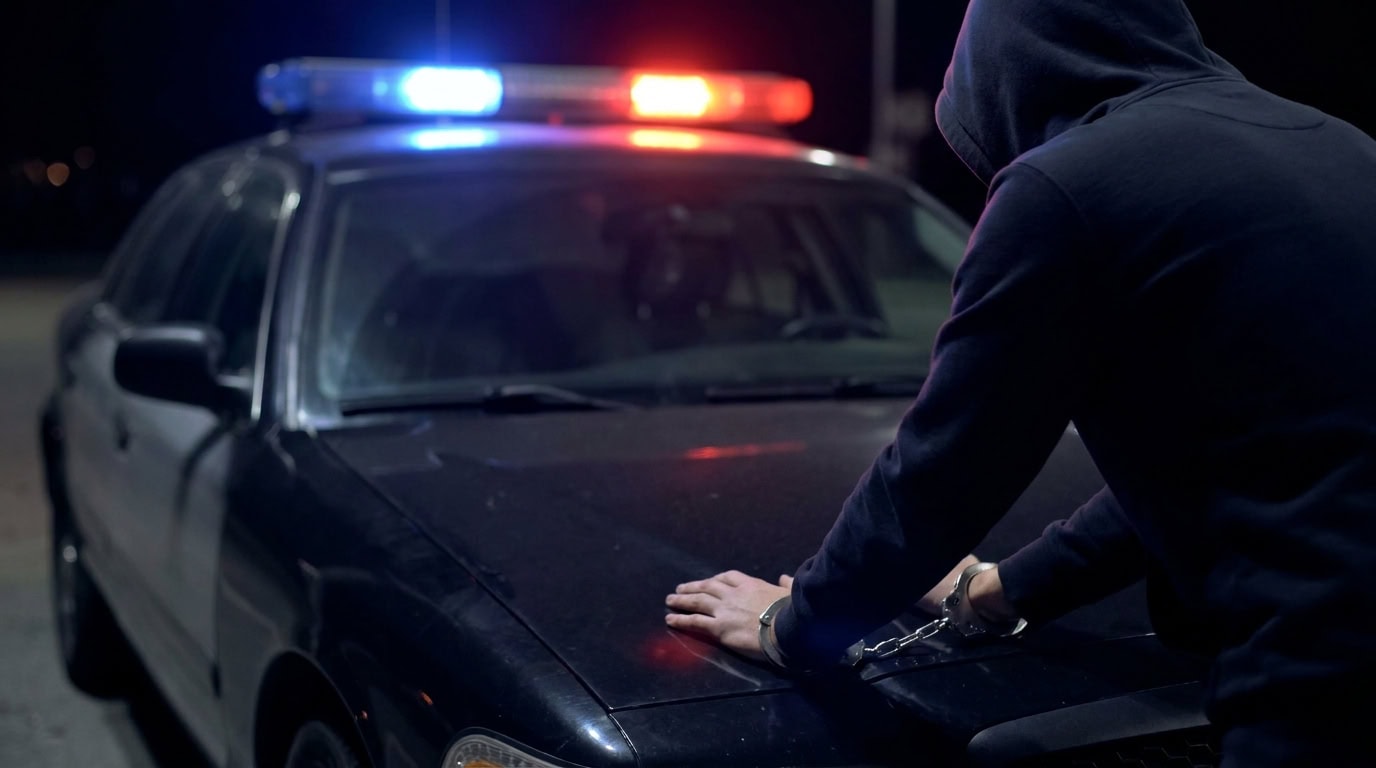
Understanding the Common Misconception: "I Never Went Inside"
Individuals facing arrest often believe that a lack of physical entry serves as a complete legal defense. The confusion regarding physical entry is understandable, as the word 'burglary' usually conjures images of someone climbing through a window. However, the State Attorney does not care whether you were the one holding the flashlight or the one behind the steering wheel.
In the court's eyes, the person who stays behind to watch for the police is responsible for the outcome. Florida statutes do not differentiate between the person who does the heavy lifting and the lookout who provides security. Both parties are viewed as active participants in a unified criminal enterprise in which each role supports the other.
Staying in a vehicle does not provide the protection that many people expect when things go wrong during a crime. Burglary of a dwelling, occupied or not, is a Level 7 offense under Florida Statute § 921.0022, which is 56 points before anything else is added. That ranking follows the charge, not the role, so the person in the car scores the same as the person who went inside and faces the same felony charges and prison exposure.
The law views the criminal act as a team effort, with the driver serving as the lifeline. Without a lookout, the intruder would be far more exposed to detection by neighbors or law enforcement. Providing logistical support makes the driver a target for aggressive prosecution in the Florida circuit court system.
How Florida Law Defines Burglary for All Participants
To grasp why a lookout faces such high stakes, you must understand the underlying charge of burglary. Florida Statute 810.02 defines the crime as the unlawful entry into a location with the intent to commit an offense. A lookout essentially adopts every action the physical intruder takes once they enter the building.
Burglary of a Dwelling, Structure, or Conveyance
Florida law distinguishes between different types of locations, such as a dwelling, a structure, or a conveyance. A dwelling is typically a home or residence where people live, even if they are not home at the time. A structure might be a business or a warehouse, while a conveyance includes vehicles such as cars and boats.
If a lookout waits in the car while a partner enters a house, the lookout is charged with burglary of a dwelling. The burglary of a dwelling charge remains valid even if the person in the car never saw the residence's front door. Because it is a second-degree felony, the penalties are higher than those for a simple unoccupied structure.
The state treats the lookout's involvement as a total commitment to burglarizing that specific type of property. You are held responsible for the nature of the building your partner targets, regardless of your personal preference. Shared liability is one of the most dangerous aspects of aiding and abetting burglary in Florida.
The Impact of "Armed" Burglary on the Lookout
Charges can escalate if the person entering the building becomes armed at any point. If the intruder finds a firearm inside the home, the charge becomes armed burglary for everyone involved. Armed burglary is an enhancement that elevates the crime to a first-degree felony, punishable by up to life in prison.
The state will argue that the lookout is on the hook for the upgrade under § 810.02(2)(b) even without knowing a weapon was there, and it is a real exposure. Whether a co-principal who had no knowledge of the weapon can be convicted of the armed variety is a contested question in Florida, and it is worth raising rather than conceding. One thing is settled: the firearm mandatory minimums in § 775.087(2) do not travel. Section 775.087(4) defines possession for that section as carrying the firearm on the person, so a lookout who never held the gun does not pick up the 10-20-Life minimum from a partner who did.
The armed enhancement rule exists to discourage people from participating in crimes where violence is a possibility. Since you cannot control what happens inside the building, you are taking a significant risk by acting as a lookout. One unexpected move by your partner can change your charge from a fifteen-year felony to a potential life sentence.
What is the Florida principal theory under Statute 777.011?
The legal mechanism that allows the state to punish lookouts is known as the principal theory. Florida Statute 777.011 governs principal liability in the state legal system. The principal theory ensures that anyone involved in the commission of a crime shares the liability for the outcome.
The Legal Definition of a Principal in the First Degree
Florida Statute 777.011 defines what it means to be a principal in the first degree in broad terms. The law states that anyone who aids, abets, or counsels the commission of an offense is treated as the primary actor. Consequently, the prosecution need not prove that you were the primary actor responsible for the break-in.
Instead, the prosecution must prove conscious intent for the group to commit the burglary. They also need to show that you did some act intended to assist the other person. If these elements are met, you are charged as a principal, even if you never saw the target building.
Florida Statute 777.011 collapses the traditional distinctions people often make among criminal roles. It rejects the idea of a hierarchy of guilt based on who did the physical work. If you helped the process in any way, the law treats you as if you committed the entire offense yourself.
Florida Standard Jury Instruction 3.5(a)
When a case goes to trial the judge reads the jury a standard instruction on principals. It is instruction 3.5(a) in the Florida Standard Jury Instructions in Criminal Cases, not one of the homicide instructions in chapter 7, and it tells the jury that a defendant does not have to be present when the crime is attempted or committed.
Instruction 3.5(a) sets two conditions, and the jury has to find both. First, that the defendant had a conscious intent that the criminal act be done. Second, that the defendant did or said something intended to and which did incite, cause, encourage, assist or advise the other person to commit the crime. Section 777.011 then makes presence irrelevant either way, since it applies whether the defendant is or is not actually or constructively present.
Jurors are told that "help" means the person did or said something which was intended to assist the other person. For a getaway driver, simply being ready to drive away satisfies this requirement for the state. The technical definition of assistance serves as a powerful tool for prosecutors seeking convictions against every member of a group.
Evidence Used to Prove Constructive Presence
Florida law recognizes constructive presence when a defendant is positioned to assist the primary actor. While you might not be inside the home, being a block away in a running car qualifies as being present. Prosecutors use a variety of modern tools to place you at the scene even if no one saw your face.
Law enforcement investigators often use cell phone GPS data to prove a defendant was aiding and abetting burglary by maintaining a watch. Your phone constantly pings nearby towers, creating a digital map of your movements during the crime. GPS data can show the jury that you were circling the neighborhood or parked in a specific spot for an extended time.
Police also rely on license plate readers (LPRs) installed on patrol cars or stationary poles. These cameras automatically scan every plate that passes, creating a record of your vehicle's location. If your car was seen near the burglary site minutes before the alarm went off, it becomes a central piece of the state's case.
Surveillance footage from nearby businesses or residential doorbells can also capture your vehicle. Even if the video does not show you inside the car, it establishes that the vehicle was used as a tool for the crime. The combination of digital and physical evidence makes it hard to argue that your presence was a coincidence.
Constructive Possession of Stolen Property
A getaway driver can also face charges related to the possession of stolen property through the legal concept of constructive possession. If a co-defendant places items taken during the burglary into your vehicle, law enforcement may argue that you exercised control over those items. Even if you never touched the stolen goods, your knowledge of their presence and your control over the car can lead to additional felony counts. The risk of constructive possession highlights the danger of serving as a means of transportation for a criminal enterprise.
The Independent Act Doctrine: A Defense for Unplanned Actions
There are limits to what a lookout can be held responsible for under Florida law. The Independent Act Doctrine serves as a defense when a co-defendant commits a crime that was not part of the plan. The doctrine keeps you from carrying a more serious offense that you never agreed to.
For example, if you agreed to be a lookout for a simple theft, you might not expect your partner to commit arson. If the person inside sets the building on fire without your knowledge, that could be considered an independent act. This defense requires showing that the additional crime was not a foreseeable consequence of the original plan.
The independent act doctrine is a vital tool for many people facing getaway driver burglary charges. It allows your attorney to argue that you should only be held liable for the specific crimes you intended to help with. However, this defense is often contested by the state, which will argue that all crimes committed were part of the general risk.
The Role of the Lookout: Legal Realities of the Getaway Driver
Prosecutors frequently argue that the lookout provides the essential security necessary for the crime to succeed. Without someone to watch the street, the intruder would be far more likely to get caught by the police. Active logistical support makes the driver just as dangerous as the person stealing the items in the eyes of the law.
Modern technology has changed how lookouts operate and how they are caught by law enforcement. Using a cell phone to warn a partner about approaching police is a clear act of helping. Digital evidence, such as call logs or text messages sent during the crime, often serves as the evidence the state needs.
Providing the vehicle used to carry off stolen goods is another act the state will point to, and driving the group out to scout targets puts you in the planning stage. One narrow thing works in the driver's favor here. Section 810.02(2)(c) upgrades a burglary to a first-degree felony when a motor vehicle is used as an instrumentality to help commit it, but the statute expressly carves out a vehicle used "merely as a getaway vehicle". Waiting at the curb does not trigger that upgrade.
Proving Intent: How the State Connects the Lookout to the Crime
The prosecution bears the burden of proving that the person in the car intended for the crime to occur. A lookout will usually say they were just sitting in the car and had no idea what was happening. However, the state uses circumstantial evidence to bridge the gap between your presence and your intent.
To secure a conviction, the state must prove you knew your partner intended to commit a burglary. Prosecutors look at the surrounding circumstances to show that your claim of ignorance is unlikely. If your partner had masks or crowbars in the car, the state will argue you knew exactly what was planned.
The timing of the event also helps prove your knowledge of the plan. If you are parked in a quiet residential area at three in the morning, it is difficult to argue you were visiting. These details help paint a picture of a driver who was fully aware of the criminal intent.
Pre-arrest behavior and communication are used to establish a meeting of the minds between participants. If the state finds social media messages discussing the target house, the lookout charge becomes much harder to beat. Digital and cellular evidence show that the burglary was not a spontaneous act by one person.
Principal vs. Accessory After the Fact
There is a significant legal distinction between helping someone during a crime and helping them after it is finished. While both are illegal, the penalties and the way the charges are filed vary depending on the timing. Identifying where your actions fall on the legal spectrum is a key part of your defense strategy.
Florida Statute 777.03 covers the crime of being an accessory after the fact. This applies to someone who helps an offender avoid arrest after the felony has already been committed. A defendant may be charged as an accessory to burglary if their assistance was limited to providing a hideout after the crime was completed.
Accessory after the fact is graded off the underlying felony, and § 777.03(2) is more particular than it is usually described. If the underlying felony is a third-degree felony ranked at Level 1 or Level 2, accessory is a first-degree misdemeanor. If it is a third-degree felony ranked at Level 3 or higher, or a second-degree felony, accessory is a third-degree felony. Burglary of a dwelling is a second-degree felony, so accessory after the fact to it is a third-degree felony, not a misdemeanor. It is still a common plea when the state cannot prove you were in on the plan.
Lookouts are rarely treated as mere accessories because they are usually on call during the act. Since you are there to provide an immediate escape, you are facilitating the crime as it happens. Providing an immediate escape route satisfies the requirements for a principal rather than an accessory in the eyes of most prosecutors.
Severe Penalties and Scoresheet Math
Florida abolished parole for offenses committed on or after October 1, 1983, and there is no discretionary release to serve out the back end of a sentence. Under the truth-in-sentencing rule in § 944.275(4)(b)3., a prisoner cannot earn enough gain-time to be released before serving 85 percent of the sentence imposed. A 21-month sentence means about 18 months in custody.
Florida uses a scoresheet to calculate what § 921.0024 calls the lowest permissible sentence. Points come from the offense severity level in § 921.0022, not from the degree of the felony, and this trips people up constantly. The ten levels score 4, 10, 16, 22, 28, 36, 56, 74, 92 and 116 points as a primary offense. Sixteen points means a Level 3 offense, and third-degree felonies are scattered across the lower levels rather than sitting at any one of them.
At 44 points or fewer the lowest permissible sentence is any nonstate prison sanction. Above 44, § 921.0024(2) subtracts 28 from the total and cuts the remainder by 25 percent to get a sentence in prison months. Burglary of a dwelling alone scores 56, which works out to 21 months before any prior record is counted. That figure is a floor rather than a command: the court may go below it if there is a valid ground for a downward departure under § 921.0026.
The scoresheet takes most of the judge's discretion off the table for a serious felony. Getting below the number usually means changing the inputs, by getting the primary offense reduced or a count dropped, rather than arguing for mercy at sentencing. The lack of judicial discretion makes the initial arrest warrants and charges filed by the prosecutor incredibly important to your future.
What to Do Immediately if Arrested as a Lookout
If you are arrested while sitting in a car near a burglary, your immediate actions will define your case. You must exercise your right to remain silent, especially regarding your knowledge of the crime. Prosecutors rely on the driver's own statements to prove they knew a burglary was occurring at that time.
Do not attempt to explain your way out of the situation or claim you were giving a friend a ride. While these might be true, the police will look for inconsistencies in your story to use as evidence of guilt. Anything you say can be twisted to show that you were part of the planning phase of the crime.
Request an attorney immediately and refuse to answer any questions about your relationship with the other suspects. Your lawyer will be the one to communicate with the State Attorney and review the evidence against you. Taking these steps is the best way to protect your rights from the moment the handcuffs are applied.
Legal Defenses for Lookouts Charged With Burglary
While the situation is grave, being charged with a crime does not guarantee a conviction in court. There are several strategic defenses that an attorney can use to protect someone who stayed in the car. A strong defense focuses on undermining the state's evidence of intent and participation.
The strongest defense for many lookouts is the mere presence argument. Simply being at the scene of a crime or knowing that a crime is being committed is not enough for a conviction. An attorney can argue that you were a passive bystander who did not participate or intend to help the intruder.
The unwitting driver scenario is another common defense used in these cases. You might think you are helping a friend pick up their belongings from a relative's house. If they instead commit a burglary, you lack the criminal intent necessary for a conviction under the principal theory.
Your attorney will look for evidence that supports your belief in a legitimate errand. This might include text conversations leading up to the event or your behavior during the drive. Without a meeting of the minds, the state cannot legally hold you responsible for your friend's secret criminal plan.
The Difference Between Burglary and Trespassing for Lookouts
Many lookouts mistakenly believe they can only be charged with trespassing for remaining on a public street or in a parking lot. While trespassing involves being on property without permission, burglary requires the intent to commit a crime inside a structure or conveyance. If the prosecution proves you were part of a plan to enter a building illegally, the charge remains burglary regardless of where you were positioned. A defense attorney may attempt to negotiate a charge down to trespassing if the evidence regarding your intent is weak.
According to Florida law, a principal in the first degree is someone who aids or abets a crime, even if they are not inside the building. First-degree burglary can result in life imprisonment if any participant becomes armed during the event.
Protect Your Future With a Florida Burglary Defense Attorney
Florida law makes no distinction between the person who breaks the window and the person who watches the street from a car. If you were in the vehicle during a burglary, you may still face serious felony charges. The principal theory is a powerful tool prosecutors use to secure long prison sentences for everyone involved in a crime.
Walking onto someone's property without permission and nothing more is trespass under § 810.08, and in an occupied structure that is a first-degree misdemeanor. Add the intent to commit an offense inside and it becomes burglary, a felony, and § 777.011 hands that felony to the lookout as well. There is no mandatory prison term attached to it, but the scoresheet math above usually gets there on its own. A conviction reaches your freedom, your job prospects and your family.
Weinstein Legal Team understands how the state builds these cases and how to tear them down. We have dedicated our practice to providing aggressive representation for individuals facing principal charges. If you or a loved one has been arrested for burglary, call us 24/7 at 888.626.1108 for a free case review with a criminal defense lawyer, or click here to schedule a free consultation.