
In Florida the line between a misdemeanor gun charge and a felony gun charge often comes down to what the weapon was and who was carrying it. Carrying a concealed firearm without qualifying under Florida Statute 790.01(1) is a third-degree felony under Florida Statute 790.01(3). Carrying a concealed weapon that is not a firearm, in the same circumstances, is a first-degree misdemeanor under Florida Statute 790.01(2).
This page sets out how Florida sorts gun offenses into misdemeanors and felonies, what each grade carries, and what a conviction does to your record and your rights afterward.
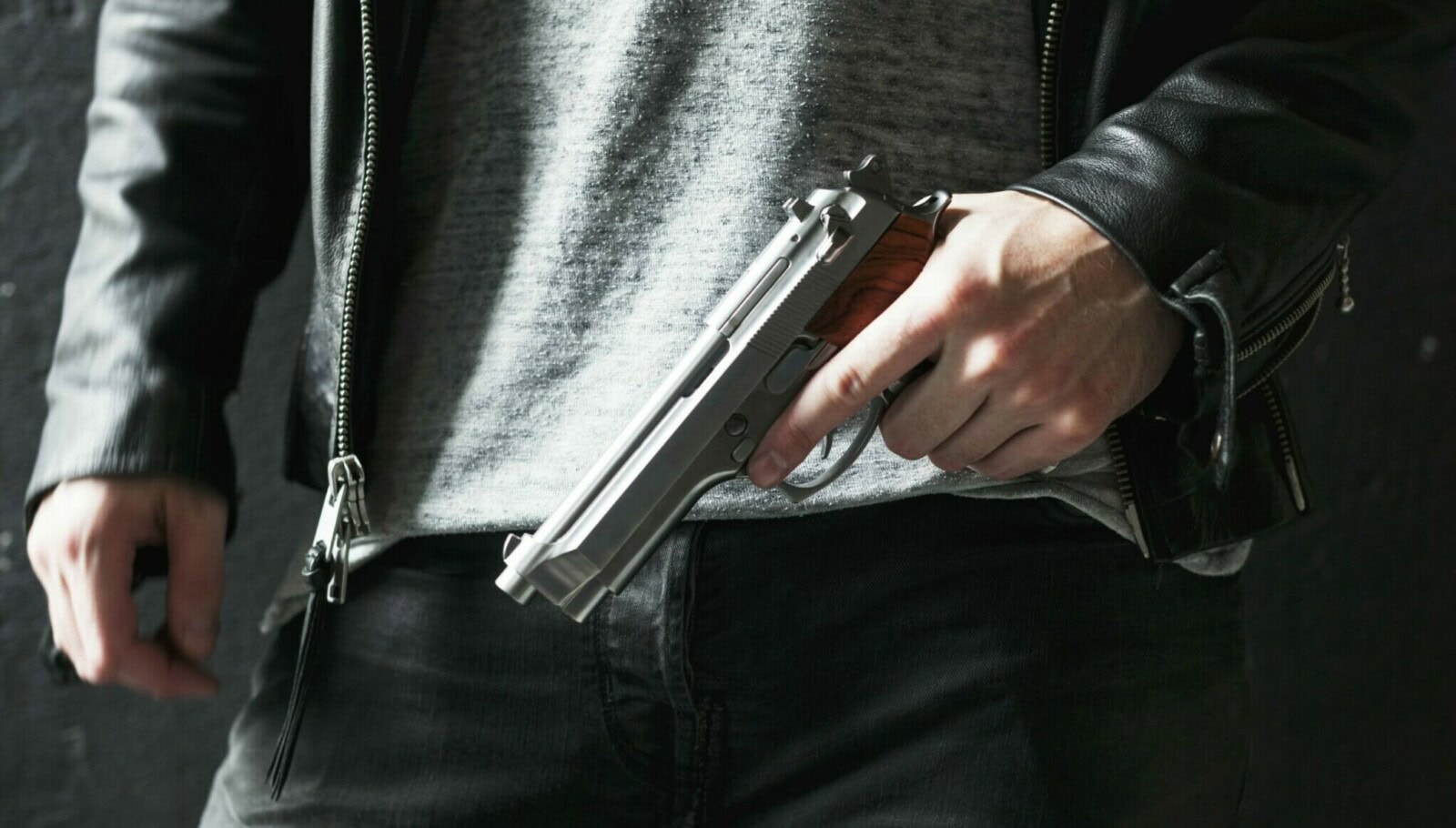
Understanding Florida's Classification of Gun Offenses
Florida sorts every crime into a misdemeanor or a felony, and that single choice decides which court hears the case, how long a sentence can run, and what happens to your civil rights afterward.
Defining Misdemeanor vs. Felony Charges
Under Florida law, misdemeanor charges represent less severe criminal offenses. These generally carry a maximum penalty of up to one year in jail and potential fines. Specifically, a first-degree misdemeanor is punishable by up to one year in jail, up to 12 months of probation, and a $1,000 fine, while a second-degree misdemeanor might result in up to 60 days in jail, six months of probation, and a $500 fine.
A felony is any offense punishable by more than one year, and under Florida Statute 775.082 a third-degree felony carries up to five years, a second-degree felony up to 15 years, and a first-degree felony up to 30 years. Felony sentences are served in state prison rather than county jail.
The Impact of Charge Classification
The initial classification of a gun charge directly dictates the judicial path an individual will take. This includes the nature of court proceedings, the types of bail available, and the strategies that can be employed for defense. It also significantly influences the potential sentencing, ranging from county jail time for misdemeanors to lengthy state prison terms for felonies.
The grade also decides who handles the case. Misdemeanors are prosecuted in county court and felonies in circuit court, and the two move at different speeds and offer different resolutions.
What happens after a gun arrest, before trial?
The immediate steps following an arrest for a firearm offense in Florida differ based on the charge's classification. For misdemeanors, the booking process may be quicker, often leading to a lower bond amount or release on one's own recognizance. Felony arrests, however, typically involve more extensive booking procedures and significantly higher bail amounts, which can sometimes be denied.
A first appearance or arraignment will be scheduled soon after arrest, where the charges are formally read, and bail conditions are set. Misdemeanor cases usually proceed more quickly through county courts, while felony cases are heard in circuit courts, involving more complex procedures and extensive investigations. Anyone facing gun charges needs to know these initial steps.
Common Misdemeanor Firearm Charges in Florida
Several firearm-related offenses are typically classified as misdemeanors in Florida. These charges, while less severe than felonies, still carry serious legal repercussions. They often involve less aggravating circumstances or are tied to regulatory infractions rather than violent acts.
Examples of Misdemeanor Gun Offenses
Common scenarios that lead to misdemeanor firearm charges in Florida usually involve a weapon that is not a firearm. Under Florida Statute 790.01(2), carrying a concealed weapon or an electric weapon, meaning something other than a firearm, without qualifying under Florida Statute 790.01(1), is a first-degree misdemeanor: up to one year in jail, up to one year of probation, and a fine of up to $1,000 under Florida Statute 775.083(1)(d). Carrying a concealed firearm in those same circumstances is not a misdemeanor at all. Florida Statute 790.01(3) makes it a third-degree felony.
Florida's permitless carry law took effect on July 1, 2023. Under Florida Statute 790.01(1)(b), a person who holds no license may still carry a concealed firearm if they meet the eligibility criteria that a license would require under Florida Statute 790.06. Open carry is a separate question, and the answer changed in 2025: Florida's open carry ban at Florida Statute 790.053 was held unconstitutional in McDaniels v. State, decided by the First District Court of Appeal on September 10, 2025. The Attorney General did not appeal, and the section is not being enforced against law-abiding adults, although the location restrictions in Florida Statute 790.06(12) still apply. In a vehicle, Florida Statute 790.25(4)(a) lets an adult in lawful possession keep a handgun inside a private conveyance if it is securely encased or otherwise not readily accessible for immediate use.
A minor's first firearm possession offense is also a first-degree misdemeanor. Florida Statute 790.22(5)(a)1. requires the minor to serve up to five days in a secure detention facility and to perform 100 hours of community service, and under Florida Statute 790.22(5)(b) the court may direct the Department of Highway Safety and Motor Vehicles to withhold or revoke the minor's driver license for up to a year. A second offense is a third-degree felony carrying up to 21 days of detention and 100 to 250 hours of community service.
Penalties and Immediate Consequences for Misdemeanors
A first-degree misdemeanor carries up to one year in county jail and a fine of up to $1,000 under Florida Statute 775.083(1)(d). A second-degree misdemeanor carries up to 60 days and a fine of up to $500 under Florida Statute 775.083(1)(e). A judge can also impose probation with conditions such as a firearms safety course.
Following an arrest for a misdemeanor firearm offense, the immediate legal process involves bond hearings and initial court appearances. While the penalties aren't as severe as felonies, a misdemeanor conviction can still result in a criminal record, impacting future opportunities and requiring compliance with court-ordered conditions. These charges should still be taken seriously, as they can have lasting effects on an individual's life.
Felony Gun Offenses in Florida
Felony gun offenses represent the more severe category of firearm charges in Florida, carrying significant legal consequences. These charges are scrutinized heavily by the courts and prosecutors. They reflect situations where firearms are used in the commission of more serious crimes, or when possession is prohibited due to a person's criminal history.
Identifying Felony Firearm Charges
The most common felony gun charge in Florida is possession of a firearm by a convicted felon. Florida Statute 790.23(1)(a) makes it unlawful for anyone convicted of a felony in this state to own or possess a firearm, ammunition, or an electric weapon, and Florida Statute 790.23(3) grades that as a second-degree felony punishable by up to 15 years. If the state proves the person actually possessed the firearm, rather than possessed it constructively, Florida Statute 775.087(2)(a)1. adds a three-year minimum mandatory prison term.
Carrying a concealed firearm without qualifying under Florida Statute 790.01(1) is itself a third-degree felony under Florida Statute 790.01(3). It does not begin as a misdemeanor and get elevated. It carries up to five years in prison, up to five years of probation, and a fine of up to $5,000 under Florida Statute 775.083(1)(c). Separate felonies apply when a firearm is used during another crime: under Florida Statute 790.07(2), displaying, using or carrying a concealed firearm while committing a felony is a second-degree felony, and that is on top of charges such as robbery with a firearm.
The classification of a gun offense as a felony often depends on elements like the individual's intent, their prior criminal history, the specific nature of the weapon involved, or the location where the offense occurred. Theft of a firearm is grand theft and a third-degree felony under Florida Statute 812.014(2)(c)5. regardless of the gun's value, and it rises to a second-degree felony under Florida Statute 812.014(2)(g) for someone with a prior grand theft of a firearm conviction. These factors demonstrate how a seemingly similar action can lead to vastly different legal outcomes, underscoring the need for experienced legal counsel.
Severe Penalties and Long-Term Repercussions for Felonies
Felony fines are set by Florida Statute 775.083(1): up to $5,000 for a third-degree felony, up to $10,000 for a first or second-degree felony, and up to $15,000 for a life felony. The prison exposure matters more than the fine, because several firearm offenses carry minimum mandatory terms that a judge cannot suspend, defer or withhold.
Florida's 10-20-Life law is Florida Statute 775.087(2), and it applies only to the offenses listed in Florida Statute 775.087(2)(a)1., which include murder, sexual battery, robbery, burglary, arson, aggravated battery, kidnapping, carjacking, home-invasion robbery, aggravated stalking, drug trafficking and possession of a firearm by a felon. Actually possessing a firearm during one of those offenses carries a 10-year minimum mandatory term. Discharging it carries 20 years under Florida Statute 775.087(2)(a)2. Discharging it and causing death or great bodily harm carries 25 years to life under Florida Statute 775.087(2)(a)3. Aggravated assault is not on that list and carries no firearm minimum mandatory. Aggravated battery is a second-degree felony under Florida Statute 784.045(2), and a firearm discharge that causes great bodily harm brings it within the 25-years-to-life provision.
A felony conviction costs civil rights, but not permanently in every case. Under Article VI, section 4(a) of the Florida Constitution, as amended by Amendment 4 in 2018, a felony disqualification from voting terminates and voting rights are restored once the person completes all terms of the sentence, including parole and probation. The exception in section 4(b) is a conviction for murder or a felony sexual offense, where voting rights come back only through clemency. Firearm rights work differently. Florida Statute 790.23(2)(a) lifts the ban only for a person whose civil rights and firearm authority have both been restored, and that restoration comes only from a grant of clemency by the Governor and Cabinet under Article IV, section 8 of the Florida Constitution. This profound impact extends to future employment opportunities, housing applications, and professional licenses, permanently altering an individual's life.
The Critical Divide: How Misdemeanor and Felony Paths Diverge
The legal journeys for individuals facing misdemeanor versus felony gun charges diverge significantly, primarily due to the inherent differences in severity and potential outcomes. This critical divide influences every stage of the judicial process, from initial appearances to long-term societal reintegration.
Differences in Court Processes and Plea Bargaining
The judicial process for misdemeanor and felony cases in Florida differs considerably. Misdemeanor cases typically proceed through county courts, with quicker resolutions and less extensive discovery. Felony cases, conversely, are heard in circuit courts, involving more complex procedures, extensive investigations, and often lengthy pre-trial motions and hearings. Bail hearings are also vastly different, with felony bonds typically being much higher or even denied.
Plea negotiations also vary dramatically. For misdemeanors, plea agreements might involve community service, fines, or short probation periods, often without significant jail time. Felony cases, however, frequently involve plea bargaining around substantial prison sentences, including the potential for mandatory minimums. The options in a felony case are narrower, and a mandatory minimum term removes the judge's discretion entirely.
Impact on Future Opportunities and Rights
A felony conviction reaches further than a misdemeanor. A person convicted of a felony cannot vote while serving the sentence and regains the right on completing it under Article VI, section 4(a) of the Florida Constitution, unless the conviction was for murder or a felony sexual offense. Many professional licensing boards can also deny or revoke a license after a felony conviction. Securing employment and housing becomes significantly more difficult, and a strong social stigma often accompanies a felony record. Felony convictions may also prevent one from ever buying a gun.
A misdemeanor does not cost you the right to vote in Florida. There is one firearm exception worth knowing: a conviction for a misdemeanor crime of domestic violence is a lifetime federal bar on possessing a firearm or ammunition under 18 U.S.C. 922(g)(9), whatever grade Florida assigns the offense. The process for expungement or sealing of misdemeanor records may also be more accessible, offering a better chance at a fresh start. Although a misdemeanor can still impact job prospects and public perception, its long-term consequences are generally not as debilitating or permanent as those resulting from a felony.
Defending Against Florida Firearm Charges
A defense to a firearm charge in Florida is built from the specific facts: how the gun was found, who had access to it, and whether the state can prove the person knew it was there.
Common Defense Strategies
Various general defense strategies can be employed against gun charges in Florida. A defense attorney might challenge the legality of the initial stop or search that led to the discovery of the firearm, arguing that evidence was obtained unconstitutionally. Asserting self-defense claims is another common strategy, particularly in cases involving the discharge or display of a firearm. This defense hinges on demonstrating that the use of the firearm was a reasonable response to an imminent threat.
In some instances, demonstrating mistaken identity or arguing that the firearm belonged to another individual could also be relevant. The application and potential success of these defenses vary significantly depending on the specific elements of the alleged crime and whether it's classified as a misdemeanor or a felony. A skilled criminal defense lawyer can help determine the best strategy.
Actual vs. Constructive Possession
A critical defense in firearm cases often involves distinguishing between actual and constructive possession. Actual possession means the firearm is physically on your person or within your immediate reach. For instance, a gun carried in a holster or held in your hand constitutes actual possession.
Constructive possession means you did not have the firearm on you but knew it was there and had the ability to control it. A gun in the glove compartment or under the seat is the usual example. Being near a firearm is not enough on its own, but proximity is not always the end of it: in Brown v. State, 428 So. 2d 250 (Fla. 1983), the Florida Supreme Court held that where a vehicle or premises is jointly occupied and the contraband is in plain view in the presence of the occupants, that is enough to support constructive possession against each of them. Where the state cannot show knowledge or control, that is the heart of a defense under Florida's constructive possession law.
The Importance of Evidence and Legal Procedure
A strong defense against firearm charges relies heavily on meticulous evidence gathering. This includes reviewing police reports, witness statements, and forensic evidence to identify any inconsistencies or weaknesses in the prosecution's case. A thorough understanding of complex legal procedures is also essential to ensure all deadlines are met and rights are protected.
If the stop, the search or the seizure violated the Fourth Amendment, the firearm itself can be suppressed, and in a possession case the firearm is usually the whole case. That is why the first motion filed in a gun case is often a motion to suppress.
Facing Firearm Charges in Florida? Protect Your Future Today.
The difference between the misdemeanor in Florida Statute 790.01(2) and the felony in Florida Statute 790.01(3) is the difference between a year in county jail and five years in state prison, and it often turns on details that are worth challenging early.
If you or a family member has been charged with a firearm offense in Florida, the criminal defense attorneys at Weinstein Legal Team handle these cases in county and circuit courts across the state. Contact us for a confidential consultation about your case.