
- Florida accident victims must overcome the serious injury threshold under Statute 627.737 by proving a permanent injury to bypass restrictive Personal Injury Protection (PIP) limits and recover non-economic damages.
- Because microscopic cellular disruptions from concussions often fail to appear on standard emergency room scans, insurance adjusters frequently weaponize normal results to deny permanent brain injury claims.
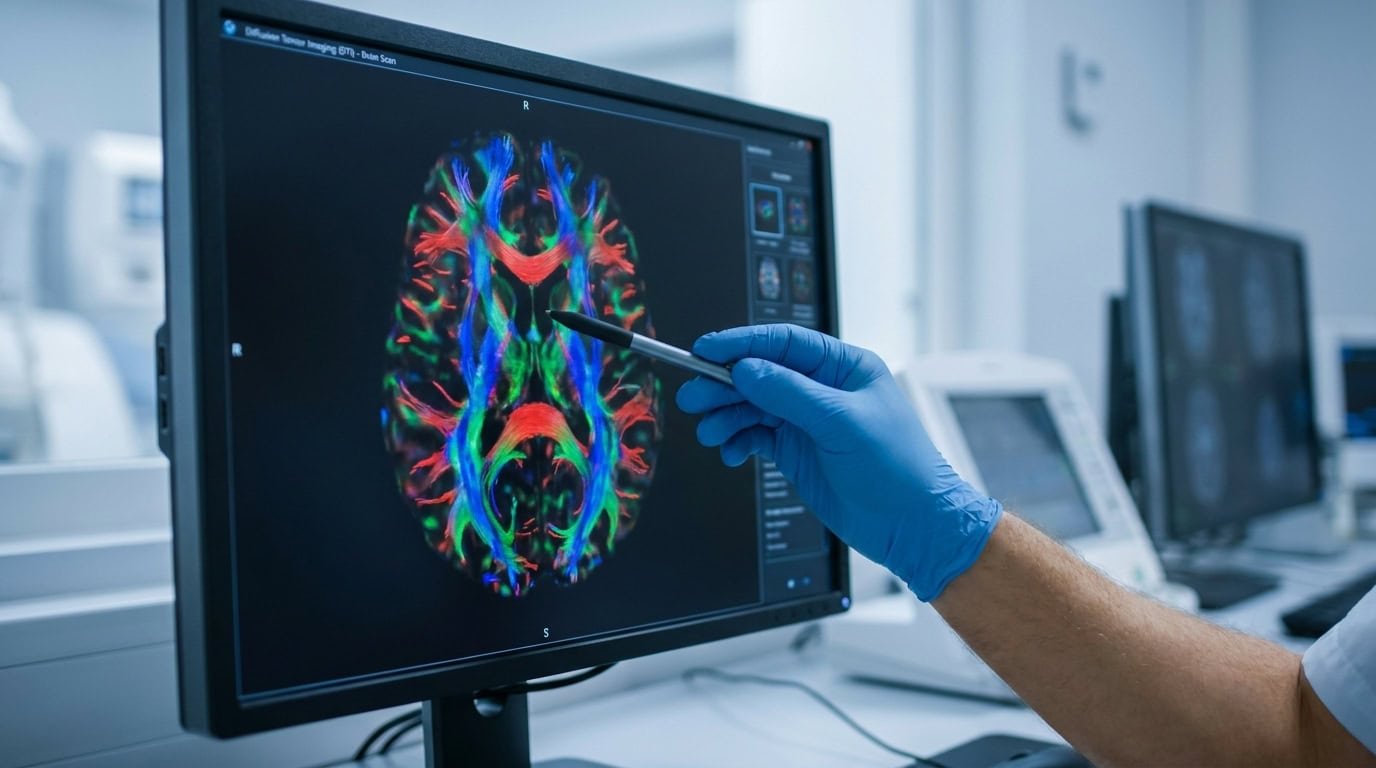
- Utilizing advanced neuroimaging technologies, such as Diffusion Tensor Imaging and NeuroQuant volumetric analysis, provides the objective medical evidence necessary to scientifically prove invisible cognitive deficits.
- Comprehensive neuropsychological evaluations that include Symptom Validity Tests are essential for authenticating self-reported subjective symptoms and establishing a formal diagnosis of permanent Post-Concussion Syndrome.
- Defeating insurance defense strategies requires leveraging expert testimony from treating neurologists alongside documented real-world functional limitations to prove a profound loss of an important bodily function.
- To maintain insurance eligibility and secure the full $10,000 in PIP coverage, concussion victims must seek medical care within the strict 14-day PIP treatment rule and receive an Emergency Medical Condition (EMC) determination.
A motor vehicle collision can result in a concussion that quickly evolves into a life-altering brain injury. When standard insurance benefits fall short, victims must satisfy the Florida serious injury threshold under Statute § 627.737 to seek non-economic damages. Doing so requires proving a permanent injury through objective medical evidence and expert testimony, bypassing Personal Injury Protection limits.
Because brain damage is often invisible on standard scans, insurance carriers frequently dismiss traumatic brain injuries as temporary or minor to avoid paying settlements for long-term care.
Understanding Florida's No-Fault System and the Serious Injury Threshold
Florida's no-fault automobile insurance structure is designed to expedite medical payments regardless of fault, but it simultaneously imposes strict limits on civil claims. Under this system, injured drivers must turn to their own insurance first, which shields negligent drivers from liability unless the victim's injuries satisfy specific severity criteria.
Florida's Personal Injury Protection Coverage and Its Limitations
Personal Injury Protection, commonly known as PIP, is a mandatory coverage under Florida Statute Section 627.736. It's designed to pay up to $10,000 for 80% of medical expenses and 60% of lost wages. These benefits are available regardless of who caused the accident, which helps with immediate costs.
The major limitation of PIP is its strict exclusion of non-economic damages like physical pain, emotional suffering, and mental anguish. For a brain injury, the standard $10,000 PIP cap is often exhausted within the first few days of diagnostic imaging and specialized care. To recover the remaining medical expenses and secure compensation for your pain and suffering, you must step outside the no-fault system by proving your concussion meets the state's threshold for a permanent injury.
Florida Statute Section 627.737 and the Permanent Injury Requirement
Under Florida Statute § 627.737(2), you can only recover non-economic damages in a motor vehicle case if you prove that the crash caused at least one of the following:
- Significant and permanent loss of an important bodily function.
- Permanent injury within a reasonable degree of medical probability, other than scarring or disfigurement.
- Significant and permanent scarring or disfigurement.
- Death.
For concussion victims, proving a permanent injury within a reasonable degree of medical probability is the most common path. Because brain damage is often invisible to standard diagnostic tools, satisfying this threshold requires a sophisticated combination of advanced neurology and strategic legal documentation.
Challenges in Proving Permanent Brain Injury During Insurance Disputes
Concussion victims face specific diagnostic gaps and statutory exemptions when they try to pursue personal injury claims in Florida. Because brain tissue damage isn't always visible on standard medical-diagnostic equipment, insurance adjusters exploit these gaps. They often use the lack of obvious physical evidence to downplay the severity of mild traumatic brain injuries.
The Invisible Injury Challenge and Normal CT/MRI Scans
In a typical emergency room visit, doctors rely on standard computerized tomography scans to rule out acute emergencies like skull fractures or active brain bleeds. However, these scans are highly insensitive to the microscopic, cellular-level damage caused by a concussion. Clinical studies indicate that only 7% to 15% of mild traumatic brain injury patients show any visible abnormalities on a standard ER CT scan.
Concussions often involve diffuse axonal shearing (microscopic damage to the brain's delicate network of connections) rather than a massive, easily visible tear. When a scan comes back clear, insurance adjusters frequently weaponize these normal ER reports, arguing that you lack objective proof of injury and that your ongoing symptoms are entirely unrelated to the crash.
Common Defense Strategies and the Subjective Symptom Challenge
Insurance defense attorneys frequently employ the subjective symptom defense, arguing that common post-concussion symptoms (such as persistent headaches, brain fog, and vestibular issues) are entirely self-reported and unverifiable. This strategy aims to undermine the victim's credibility and downplay the severity of the traumatic brain injury.
To lower settlement values, defense teams often attribute cognitive deficits to pre-existing conditions, general life stress, or accuse the victim of malingering (deliberately faking symptoms for financial gain). Counteracting these high-pressure tactics requires rigorous clinical corroboration. Standardized diagnostic protocols and longitudinal medical tracking provide the concrete data needed to neutralize these assertions and prevent a court from dismissing the claim as a minor, temporary issue.
Medical Strategies to Scientifically Prove a Concussion is Permanent
Overcoming the subjective symptom defense requires translating invisible cognitive deficits into verifiable, objective medical proof. Modern neurological medicine provides powerful diagnostic tools that enable treating physicians to establish permanent brain damage with precision. These methods provide the evidence needed to satisfy the Florida serious injury threshold.
Advanced Neuroimaging Beyond Standard Scans
Sophisticated imaging technologies can reveal microstructural brain damage missed by standard MRIs. While many clinics use 1.5T MRI machines, 3T studies are significantly more sensitive. In 3T studies, traumatic microbleeds appeared in up to 28.8% of mTBI patients, compared to only 13.3% of normal controls.
Treating physicians utilize advanced diagnostic modalities to convert subjective complaints into objective evidence of permanent brain damage. The table below outlines these sophisticated technologies, their clinical functions, and their legal utility in bypassing PIP limitations:
| Diagnostic Technology | Clinical Findings & What It Detects | Legal Value for Bypassing PIP Limits |
| Diffusion Tensor Imaging | Measures the movement of water molecules along white matter tracts to detect diffuse axonal injury (shearing). | Provides objective, color-coded visual proof of axonal shearing that standard CT and conventional MRI scans miss entirely. |
| Susceptibility Weighted Imaging | Identifies micro-hemorrhages and tiny vascular bleeds within brain tissue. | Confirms objective vascular trauma, revealing micro-bleeds in up to 15.6% of patients whose CT results were normal. |
| NeuroQuant Volumetric Analysis | Software that automatically measures brain volume and compares it against a normative database. | Proves irreversible brain tissue loss by mathematically establishing localized hippocampal or cortical atrophy (shrinkage) that a radiologist might miss in a traditional scan review. |
Comprehensive Neuropsychological Testing and Cognitive Assessments
Forensic neuropsychological evaluations are a cornerstone of satisfying the permanent injury standard. A licensed neuropsychologist administers standardized tests measuring executive function, working memory, and processing speed. These detailed assessments, which can take up to eight hours, provide a granular look at how the brain processes information. The resulting scores demonstrate a clear deviation from normal functioning, converting cognitive deficits into measurable, clinical evidence.
To ensure the findings withstand defense scrutiny, these evaluations incorporate embedded Performance Validity Tests (PVTs) and Symptom Validity Tests to rule out exaggeration scientifically. In a published outpatient mTBI specialty clinic study, 43% of patients failed the PVT at their initial visit. Consequently, a passing score on these validity tests is highly persuasive to insurance adjusters and juries alike. By establishing an objective cognitive baseline and demonstrating objective cognitive dysfunction, these evaluations validate the patient's subjective symptoms with clinical data.
Establishing post-concussion syndrome and Long-Term Sequelae
Post-concussion syndrome develops when symptoms persist long past the typical medical recovery window of 30 to 90 days. While many individuals recover within weeks, a significant minority (approximately 10% to 20%) continue to suffer from chronic headaches, light sensitivity, and cognitive irritability for years. A formal diagnosis of permanent post-concussion syndrome directly satisfies the statutory criteria under Florida Statute § 627.737, demonstrating that the neurological changes are likely to endure for the remainder of the victim's life.
The chronic nature of these symptoms (which frequently disrupt sleep architecture and lead to secondary anxiety) provides a solid foundation for bypassing standard PIP limitations when linked directly to the motor vehicle collision by a treating neurologist.
Legal Strategies to Overcome Defense Objections and Bypassing PIP Limits
Personal injury lawyers must synthesize complex medical evidence into a compelling legal strategy. Building an unassailable record requires integrating clinical findings with vivid real-world testimony to defeat insurance motions. Integrating objective data with compelling witness accounts ensures the legal case is as strong as the medical diagnosis.
Leveraging Treating Neurologist and Medical Expert Testimony
Under Florida law, expert witness testimony is required to establish a permanent injury to a "reasonable degree of medical probability." Treating neurologists, neuropsychologists, and neuro-ophthalmologists who have managed the patient's day-to-day care are uniquely credible. Florida courts frequently weigh a treating physician's longitudinal findings far more heavily than a one-time "independent" medical examiner hired by the insurance company. When multiple treating specialists and forensic experts present a unified medical opinion connecting the crash to persistent cognitive deficits, it creates a formidable wall of evidence that can decisively overcome defense motions.
At the Weinstein Legal Team, we have put these exact strategies to work for our clients. For instance, in a recent case involving a client who sustained a concussion after a rear-end collision on I-95, the defense argued the injury was minor due to a normal emergency room CT scan. By presenting 3T MRI NeuroQuant volumetric analysis showing hippocampal atrophy along with comprehensive neuropsychological test scores, we successfully bypassed the PIP limits. We secured a $150,000 settlement to cover their long-term care.
Documenting Real-World Functional Limitations and Life Impact
While advanced imaging and neuropsychological testing provide the scientific basis for permanency, non-medical testimony humanizes the clinical data by demonstrating the daily human toll of the TBI. Detailed statements from family members, friends, and co-workers can illustrate marked changes in the victim's personality, cognitive stamina, and stress tolerance, helping a jury understand how the injury has fundamentally altered their way of living.
Additionally, testimony from employers regarding diminished job performance, paired with daily symptom journals and occupational therapy logs, provides a concrete record of the victim's daily struggles. Documenting these real-world functional limitations is critical for proving a "significant and permanent loss of an important bodily function," unlocking compensation for loss of enjoyment of life and pain and suffering under the serious injury threshold.
Defeating the Independent Medical Examination Defense
In Florida litigation, these defense-sponsored evaluations are technically termed Compulsory Medical Examinations under Rule 1.360, though insurers often spin them as "independent." Defense doctors frequently conduct brief, 15-minute evaluations before rubber-stamping a report that claims the victim is fully recovered. To neutralize this tactic, experienced personal injury attorneys deploy strategic countermeasures. Sending a professional videographer to record the CME ensures the defense doctor cannot mischaracterize the examination or falsify the patient's performance. Furthermore, cross-examining these examiners on their substantial financial history with insurance companies and filing motions to limit improper neuropsychological testing are critical for preserving the integrity of the medical record.
Essential Steps to Take Immediately After a Motor Vehicle Accident
To protect your health and your legal right to compensation after a crash, follow these critical steps immediately:
- Seek emergency medical care within 14 days to preserve PIP benefits.
- Obtain an emergency medical condition determination to unlock full coverage.
- Follow all neurologist and therapist treatment plans without gaps.
- Keep a daily written log of headaches, memory issues, and physical symptoms.
Florida law enforces strict procedural timelines that dictate your insurance eligibility, meaning any delay can result in a total loss of benefits.
Satisfying the 14-Day PIP Treatment Rule and emergency medical condition
Under Florida Statute § 627.736, motor vehicle accident victims must seek initial medical care within 14 days of a crash. Missing this strict statutory window results in a complete forfeiture of PIP coverage. For concussion victims, whose symptoms might not peak until several days post-collision, this makes immediate evaluation by a first responder or emergency physician critical.
Additionally, to access the full $10,000 PIP benefit rather than a severely restricted $2,500 cap, an authorized medical provider (such as a medical doctor, osteopathic physician, or physician assistant) must formally declare that the victim sustained an Emergency Medical Condition. Securing this determination early is crucial not only to fund advanced diagnostic imaging and neurological consults but also to establish a continuous, legally defensible timeline linking the concussion directly to the crash.
Maintaining Detailed Symptom Logs and Consistent Treatment Protocols
Insurance adjusters actively look for gaps in treatment to argue that a concussion was minor or has fully resolved. To protect your health and your legal claim, you must adhere strictly to all prescribed physical therapy, vestibular rehabilitation, and neurology treatment protocols. Alongside formal medical visits, maintaining a daily symptom log that details the frequency and severity of headaches, cognitive fatigue, and memory lapses provides a reliable, contemporaneous record. This consistent documentation eliminates the defense's ability to claim that your symptoms are either exaggerated or stem from an unrelated, intervening event.
Speak To Weinstein Legal Team Today About Your Injuries
Aggressive insurance defense tactics and strict statutory requirements obstruct the path to physical and financial recovery after a concussion in Florida. When PIP coverage is exhausted, overcoming the serious injury threshold under § 627.737 is the only way to hold the negligent party accountable.
Weinstein Legal Team can assist in leveraging advanced neuroimaging, neuropsychological data, and customized trial litigation strategies to prove the long-term reality of traumatic brain injuries. Contact us today for a free, confidential case evaluation to protect your rights and pursue the full compensation you deserve.