
- A gas station customer is a business invitee, owed the highest duty of care in Florida premises law, which includes reasonable security measures against third-party crime that was foreseeable at that location.
- Foreseeability is built from the property's own history, using police dispatch logs and calls for service at or near the address together with a CAP Index score measuring criminal risk at that specific location.
- Florida Statute 812.173(1) requires a convenience business to have a camera able to record and retrieve an image, a drop safe, a parking lot lit to at least 2 foot-candles at 18 inches above the surface, a notice that the register holds $50 or less, an unobstructed outside view of the register, height markers and a cash-limit policy after 11 p.m.; substantially implementing the applicable measures earns a presumption against liability under Section 768.0705.
- House Bill 837 took effect March 24, 2023: Section 95.11(5)(a) now allows two years to file a negligence claim accruing after that date, Section 768.81(6) bars a claimant found more than 50 percent at fault, and the new Section 768.0701 puts the criminal who committed the attack on the verdict form to absorb a share of the fault.
- A negligent security claim can recover economic and non-economic damages, and preserving it means sending a spoliation letter for the surveillance footage and identifying every liable entity behind the station, from the brand to the franchisee to the landlord.
Surviving a violent attack at a gas station leaves deep physical and emotional scars. When property owners cut corners on security, victims bear the cost, but Florida law provides a path to hold them accountable. If you or a loved one suffered an injury during a robbery or assault, the legal framework of premises liability is what decides whether you can recover compensation.
Property owners have a legal obligation to maintain a safe environment for their patrons and can be held financially responsible when they ignore known dangers. Keep reading to learn how we can overcome these legal hurdles and secure the compensation necessary to cover medical costs and rebuild your life.
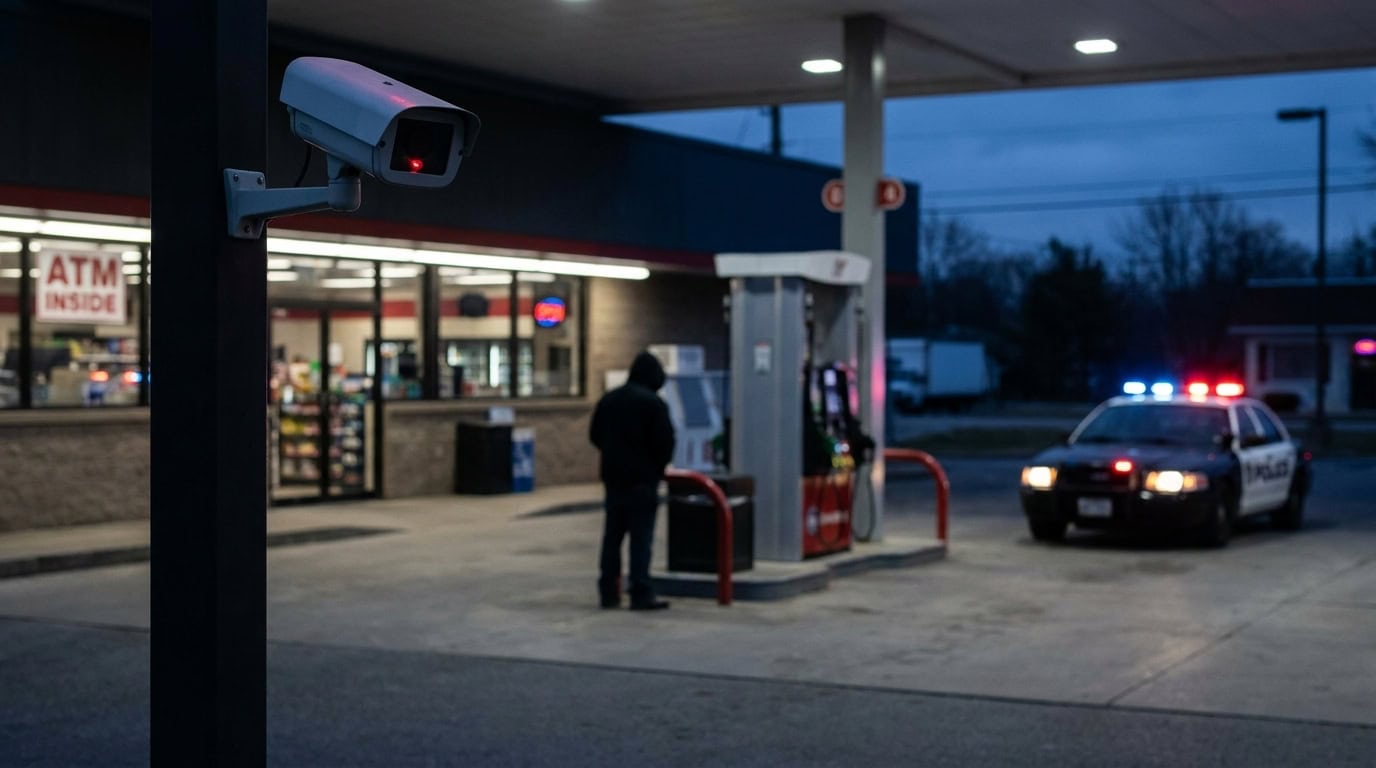
Understanding Negligent Security Laws at Florida Gas Stations
Premises liability law in Florida requires commercial property owners to maintain their land and buildings in a reasonably safe condition for the public. This duty extends beyond fixing physical hazards like broken stairs or slippery floors. It specifically includes the responsibility to implement security measures to protect customers from foreseeable criminal acts by third parties.
The Legal Duty Owed to Florida Business Invitees
Under Florida's legal framework, individuals who visit a gas station or a late-night convenience store to purchase fuel are classified as business invitees. Classifying patrons as business invitees is significant because it entitles the visitor to the highest duty of care available under state law. Property owners must not only repair known hazards but also conduct regular inspections to discover any new dangers that could compromise the safety of their patrons.
The duty of care for a business invitee requires gas station operators to protect customers from likely third-party crimes proactively. Reasonable security measures include maintaining functional lighting, ensuring security systems are operational, and monitoring the premises for suspicious activity. If an owner fails to address these security needs, they've breached their duty to the invitee and may be liable for any resulting damages.
The Elements of a Successful Negligent Security Claim
Proving a negligent security claim requires establishing four distinct legal elements to show that the business owner is responsible for your injuries. A victim's legal team must demonstrate that the owner owed a duty and failed to provide adequate security measures based on the specific risks of that location. Without a direct link between the security failure and the crime, the court may view the incident as an isolated event.
- Duty: the owner owed a legal duty to provide reasonable security in the circumstances.
- Breach: the owner failed to put adequate security measures in place.
- Causation: the criminal act was reasonably foreseeable and the security failure contributed directly to the harm.
- Damages: the victim suffered physical injury, financial loss, or emotional trauma as a result.
Establishing these four elements is the only way to hold a fuel corporation or a local franchise owner legally responsible for security gaps. For instance, if a gas station had no functional cameras or lighting, it's argued that these lapses created an environment that emboldened the criminal. The victim must also show that they suffered actual physical and financial damages as a result of the breach.
Establishing Foreseeability in Gas Station Negligent Security Cases
The success of a negligent security lawsuit hinges on the legal concept of foreseeability. Florida law doesn't require property owners to be insurers of public safety, meaning they aren't liable for every unpredictable or random act of violence. Instead, a victim must prove that the crime was reasonably foreseeable based on the property's history or the surrounding neighborhood.
What Makes a Gas Station a Crime Magnet?
Ask any local police officer, and they will tell you the same thing: late-night gas stations are prime targets for violent crime. These locations are frequently open 24 hours a day and involve high volumes of cash transactions. The very nature of pumping gas requires a patron to exit their locked vehicle, leaving them exposed and vulnerable for several minutes.
Physical layouts often include blind spots and unmonitored perimeters that provide cover for assailants. These factors contribute to the reality of a foreseeable crime gas station, where the lack of basic deterrents makes it a high-risk environment. Security experts recommend measures such as installing pass-through windows made of bullet-resistant polycarbonate and maintaining at least two employees on-site during late-night hours.
Common Foreseeable Crimes at Fueling Stations
Gas stations frequently attract specific types of violent crime due to their layout and late-night operations. Armed robberies at the register, carjackings at the pump, and physical assaults near the restrooms are among the most common offenses. Demonstrating that a property owner knew about the likelihood of these specific crimes is a vital component of building a strong premises liability case.
Analyzing Historical Crime Data and Police Calls for Service
To establish that a crime was foreseeable, attorneys conduct deep investigations into local police dispatch logs and historical calls for service. These records provide a timeline of incidents at or near the gas station, such as robberies, drug deals, and prior battery incidents. If a property has a documented history of violence, the owner is considered to have constructive notice of the danger.
A pattern of 911 calls suggests that the business is in a high-crime area or has become a focal point for criminal activity. Ignoring these reports is a choice the business owner makes to prioritize profit over installing security upgrades. Proving that the owner knew about these dangers but chose to ignore them is a cornerstone of any successful negligence case in Florida.
The Role of CAP Index Personal Injury Assessments
In civil litigation, security experts often use CAP Index scores to provide an objective measurement of risk at a specific address. CAP Index scores quantify criminal risk at specific business addresses using national and state crime data. A high CAP Index personal injury assessment serves as powerful evidence that a business owner was operating in a high-risk zone and should have implemented superior security measures.
By leveraging this scientific data, a victim's legal team can show that the danger was a quantifiable reality. The score compares the gas station's risk level with those of surrounding businesses and national averages to highlight the owner's negligence. Leveraging analytical data removes much of the guesswork from the legal proceedings and provides a clear picture of the environment during the incident.
Compliance with the Florida Convenience Business Security Act
The Florida Convenience Business Security Act was created to protect the public and employees from violent crime. This state law applies to businesses that sell groceries or gasoline and remain open during late-night or early-morning hours. It mandates specific security standards that these businesses must follow to deter criminals and provide a safer environment for late-night patrons.
Mandatory Safety and Security Measures Under Section 812.173
Section 812.173(1) sets out the equipment every convenience business must have, and the statutory wording is more specific than the summaries usually are. It does not require a high definition system or high intensity lighting. It requires this:
- A security camera system capable of recording and retrieving an image to assist in offender identification and apprehension.
- A drop safe or cash management device for restricted access to cash receipts.
- A lighted parking lot illuminated at an intensity of at least 2 foot-candles per square foot at 18 inches above the surface.
- A conspicuous notice at the entrance stating that the cash register contains $50 or less.
- Window signage giving a clear and unobstructed view from outside, in a normal line of sight, of the cash register and sales transaction area.
- Height markers at the entrance.
- A cash management policy limiting cash on hand at all times after 11 p.m.
Section 812.173(2) separately bans window tinting that reduces the view in a normal line of sight, and s. 812.173(3) requires a silent alarm to law enforcement or to a private security agency unless the Division of Alcoholic Beverages and Tobacco has granted a written exemption.
The statute further requires owners to place height markers at the entrance doors to help witnesses provide accurate descriptions of suspects. The cash register area must remain visible from the outside at all times to ensure that passing police can see if a crime is in progress. When a gas station fails to meet these requirements, they're in direct violation of state safety standards and may be held liable.
Enhanced Security After a Violent Crime
Section 812.173(4) is the provision that bites after a crime. If a murder, robbery, sexual battery, aggravated assault, aggravated battery, kidnapping, or false imprisonment has occurred at a convenience business since July 1, 1989 and arose out of its operation, the business must notify the Division of Alcoholic Beverages and Tobacco and put at least one of five measures in place within 30 days of a judicial determination that the crime occurred. The five are: two employees on the premises at all times between 11 p.m. and 5 a.m.; a secured safety enclosure of transparent polycarbonate meeting ASTM D3935 or UL 752 level one; a security guard on the premises between 11 p.m. and 5 a.m.; locking the premises between 11 p.m. and 5 a.m. and transacting only through a pass-through; or closing between 11 p.m. and 5 a.m.
Enforcement runs through s. 812.175(1). The Division issues a notice of violation, the owner has 30 days to prove compliance, and only if the violation continues can the Division impose a civil fine of up to $5,000. In a civil suit, a documented violation is strong evidence that the owner did not act reasonably.
The Safe Harbor Defense and the Presumption Against Liability
The safe harbor is s. 768.0705. An owner or operator of a convenience business that substantially implements the applicable security measures listed in ss. 812.173 and 812.174 gains a presumption against liability for criminal acts committed on the premises by third parties who are not its employees or agents. Two words carry the weight: substantially, and applicable. A business that skipped the employee training in s. 812.174, or that never implemented an s. 812.173(4) measure after a qualifying crime, has not met the condition.
Beating the presumption means auditing the premises against the statutory list item by item. Cameras that were installed but broken, a parking lot below 2 foot-candles, a missing entrance notice, an untrained clerk. Each gap is a reason the presumption never attached in the first place, which is a stronger position than arguing around it.
How Recent Florida Tort Reform (HB 837) Modifies Legal Standards
House Bill 837 became chapter 2023-15 and took effect on March 24, 2023. It created s. 768.0701, which is the provision that matters in a negligent security case, and it cut the negligence limitations period and changed the comparative fault rule. It did not touch s. 768.0705, the convenience business safe harbor, which has been on the books since 1999. Three of its changes reach a gas station claim directly.
The Apportionment of Fault to the Criminal Actor
Section 768.0701, created by House Bill 837, says that notwithstanding s. 768.81(4), in a claim against the owner, lessor, operator, or manager of commercial or real property brought by a person lawfully on the property who was injured by the criminal act of a third party, the trier of fact must consider the fault of all persons who contributed to the injury. Before that, s. 768.81(4) kept intentional torts out of the apportionment. Now the shooter goes on the verdict form and takes a share.
Insurance companies and property owners use this change to argue that the majority of the blame should rest with the criminal. If a jury assigns most of the fault to the criminal, the victim's total recovery is reduced by that same percentage. The updated fault allocation rules make it essential to have a legal team capable of convincingly arguing that the owner's negligence enabled the crime.
The Reduction in the Statute of Limitations
House Bill 837 cut the statute of limitations for negligence from four years to two, and s. 95.11(5)(a) now reads two years. The change applies to causes of action accruing after March 24, 2023, so a claim that accrued before that date still carries the old four year period. Section 95.11(5)(e) gives a wrongful death claim two years as well, running from the date of death. Miss the date that applies to you and the claim is gone whatever its merits.
Gathering evidence, pulling police dispatch logs, and identifying liable corporate entities take significant time. Starting the process early ensures that your legal team has enough time to build a compelling case. Missing this deadline will result in a total bar to any financial recovery, regardless of the severity of the victim's injuries.
The Shift to Modified Comparative Negligence
Florida moved from pure comparative negligence to a modified comparative negligence standard. Under s. 768.81(6) a party found greater than 50 percent at fault for their own harm recovers nothing, and that bar applies to causes of action filed after March 24, 2023. Below that line, fault still reduces the award proportionately rather than eliminating it.
Insurance defense teams will aggressively exploit this rule by attempting to shift the blame onto the victim for their actions. They may argue that the victim was distracted, ignored posted warnings, or shouldn't have been in a high-crime area. Defeating these arguments is necessary to ensure that the victim remains eligible for the compensation they deserve after a violent encounter.
Filing a Lawsuit Against a Gas Station for a Shooting or Assault
Pursuing a civil case against a gas station or a corporate convenience store is a complex process that requires a structured legal strategy. Large insurance companies representing these businesses aggressively work to minimize settlement payouts. Successfully holding them accountable requires transitioning from immediate scene preservation to complex litigation involving experts and detailed investigations.
Essential Steps to Take Immediately After a Gas Station Crime
The actions you take in the moments following an incident of violence are critical for your future legal claim. Your priority must always be to seek immediate medical attention to ensure your physical safety and create a medical record. You should also file an official police report, as this creates an authoritative record of the crime and helps establish the timeline.
If you're physically able, taking photos or videos of the scene can provide vital evidence of inadequate security. Capturing images of broken lights, missing cameras, or unsecured entrances can establish that the property was in disrepair. It's also important to identify any eyewitnesses and secure their contact information before they leave the area.
One of the most important steps your attorney can take is sending a spoliation letter to the gas station owner. This legal notice instructs the owner to preserve all evidence related to the incident, including security camera footage and maintenance records. Without this letter, many businesses will overwrite their surveillance footage within days, potentially destroying the most important evidence in your case.
Identifying Liable Parties and Shell Corporations
The corporate structures in the fueling industry are often intentionally complex to shield owners from liability. A single gas station may involve a national brand, a local franchise operator, a commercial landlord, and even a third-party security firm. Determining which entity had active operational control over the security infrastructure is a vital part of a convenience store crime lawsuit.
Shell corporations often own gas stations specifically to shield owners from liability. Attorneys must use insurance declarations sheets to identify the true owners and operators of the premises. Identifying every potential source of recovery is the only way to ensure that the victim receives the full amount of compensation they're entitled to under the law.
Calculating the Full Scope of Personal Injury Damages
A negligent security claim allows victims to pursue both economic and non-economic damages to cover the losses they've suffered. Economic damages include tangible costs such as past and future medical bills, surgeries, and lost income while recovering. They also cover the loss of future earning capacity if your injuries prevent you from returning to your previous career.
Non-economic damages compensate you for the agonizing pain and suffering that follows an attack, as well as the lasting mental anguish and permanent physical changes you have to live with every day. Victims of violent crimes often have post-traumatic stress disorder, which requires long-term psychological support. When considering negligent security after a shooting, the gravity of the injuries often justifies a comprehensive search for financial relief.
In the most tragic cases, where a violent crime results in the loss of a life, the family may file a wrongful death lawsuit. This allows surviving family members to seek accountability for funeral costs and the loss of companionship. Punitive damages may also be available in egregious cases involving a reckless disregard for public safety.
Frequently Asked Questions About Gas Station Negligent Security in Florida
Can I sue a gas station if I was shot or assaulted in their parking lot?
Yes, you can sue a gas station owner if the crime was reasonably foreseeable and the owner failed to provide adequate security measures, such as working cameras or adequate lighting, which directly contributed to your injuries. Florida's premises liability laws allow victims to seek damages when a business's negligence contributes to an environment where violent crime can occur.
When suing a gas station for shooting incidents, victims should seek a case evaluation to determine if the property had a history of violence. Proving that the owner knew about previous crimes but did nothing to improve security is the key to a successful lawsuit.
What is the Florida Convenience Business Security Act?
It is the set of security standards in ss. 812.171 to 812.175 that every convenience business in Florida has to meet. The equipment requirements in s. 812.173(1) apply whatever the hours. The extra measures in s. 812.173(4), which include a security guard, a two-employee rule, or closing, are tied to the window between 11 p.m. and 5 a.m. and are triggered by a qualifying violent crime having occurred at the business.
Compliance earns the owner a presumption against liability under s. 768.0705, but only where the applicable measures were substantially implemented. Broken cameras or a dark lot mean the presumption does not apply and the owner can still be held responsible.
What is a CAP Index score, and how does it help my personal injury case?
A CAP Index score is a standardized tool used to calculate the statistical risk of violent crime at a specific address. Attorneys use this data to provide objective proof that a crime was legally foreseeable and that the property owner should've taken additional precautions.
High scores indicate that a property is in a high-crime area requiring enhanced security measures. This data-driven approach helps remove the guesswork from the legal proceedings and provides a clear picture of the risks present at the time of the incident.
How has Florida's tort reform changed my ability to file a lawsuit?
House Bill 837 reduced the statute of limitations for filing a negligence claim from four years to two years. It also introduced a 51% bar on recovery and allowed juries to shift fault away from the owner and onto the criminal actor.
These changes mean you must act much faster to preserve your rights and gather evidence. If you wait too long, you'll be permanently barred from seeking any compensation for your medical bills and other losses.
What should I do if the gas station's insurance company contacts me after an incident?
You should politely decline to give any recorded statements or sign authorization forms and avoid accepting any early settlement offers. Direct all communications from insurance companies to your attorney to ensure that you don't inadvertently damage your claim.
Insurance adjusters are trained to find ways to reduce your payout or deny your claim entirely. Having a lawyer handle these conversations protects your rights and ensures you don't say something that could be used against you later.
Speak to a Florida Negligent Security Attorney Today
Gas station and convenience store owners have a clear legal responsibility to prioritize their customers' safety over operational costs. When these businesses ignore known crime patterns or fail to maintain mandatory security equipment, they create an environment where violent crimes are likely to happen. Victims of these incidents have the right to hold negligent owners accountable and seek the civil justice they deserve for their suffering.
Weinstein Legal Team sees firsthand how a violent crime at a local gas station shatters lives. Our experienced attorneys are dedicated to providing aggressive representation for victims throughout South Florida and holding negligent property owners responsible for their failures. We investigate every detail of your case, from historical crime data to the functional status of security cameras, to ensure we build the strongest possible claim for your recovery.
Contact us for a free and confidential case review to discuss your legal options. Our team is ready to fight for the maximum compensation you deserve, helping you secure the resources needed for your long-term medical care and peace of mind.