- Differentiating between short-term operational negligence, like temporary spills, and permanent commercial building code violations is essential for establishing premises liability in a personal-injury claim.
- The massive scale of big-box stores amplifies structural and environmental dangers, as high-volume foot traffic, heavy mechanical equipment, and multi-tiered merchandise displays frequently compromise retail safety.
- Shoppers face five primary risk categories in retail environments, including chronic drainage system failures, hazardous flooring transitions, overloaded racking systems, dangerous exterior grounds, and obstructed egress paths.
- Proving retail negligence often relies on demonstrating that a property owner failed to comply with the Florida Building Code, ADA architectural requirements, or ASTM standards for slip-resistant walking surfaces.
- Under Florida premises liability law, injured customers must prove the retailer had actual or constructive knowledge of a temporary hazard, whereas permanent structural design defects inherently satisfy this notice requirement.
- Following a supermarket injury, victims should immediately file a formal incident report, document the environmental hazards, seek medical evaluation, and consult a legal team to identify all liable parties, including landlords and third-party vendors.
Every year, thousands of Florida shoppers suffer life-altering injuries due to structural and environmental dangers in major supermarkets and big-box stores. While many retailers dismiss these incidents as simple accidents, many result directly from commercial building code violations and neglected infrastructure. If you've been injured, understanding the difference between a temporary spill and a permanent architectural hazard is necessary for a successful personal injury claim.
Dedicated legal advocacy helps victims navigate the complex requirements of Florida premises liability to secure the compensation they deserve. Injured shoppers frequently assume they made a clumsy misstep, blaming themselves for a sudden trip or fall. However, under Florida premises liability laws, business owners have a strict legal duty to inspect, maintain, and repair structural anomalies that pose a hazard to the public.
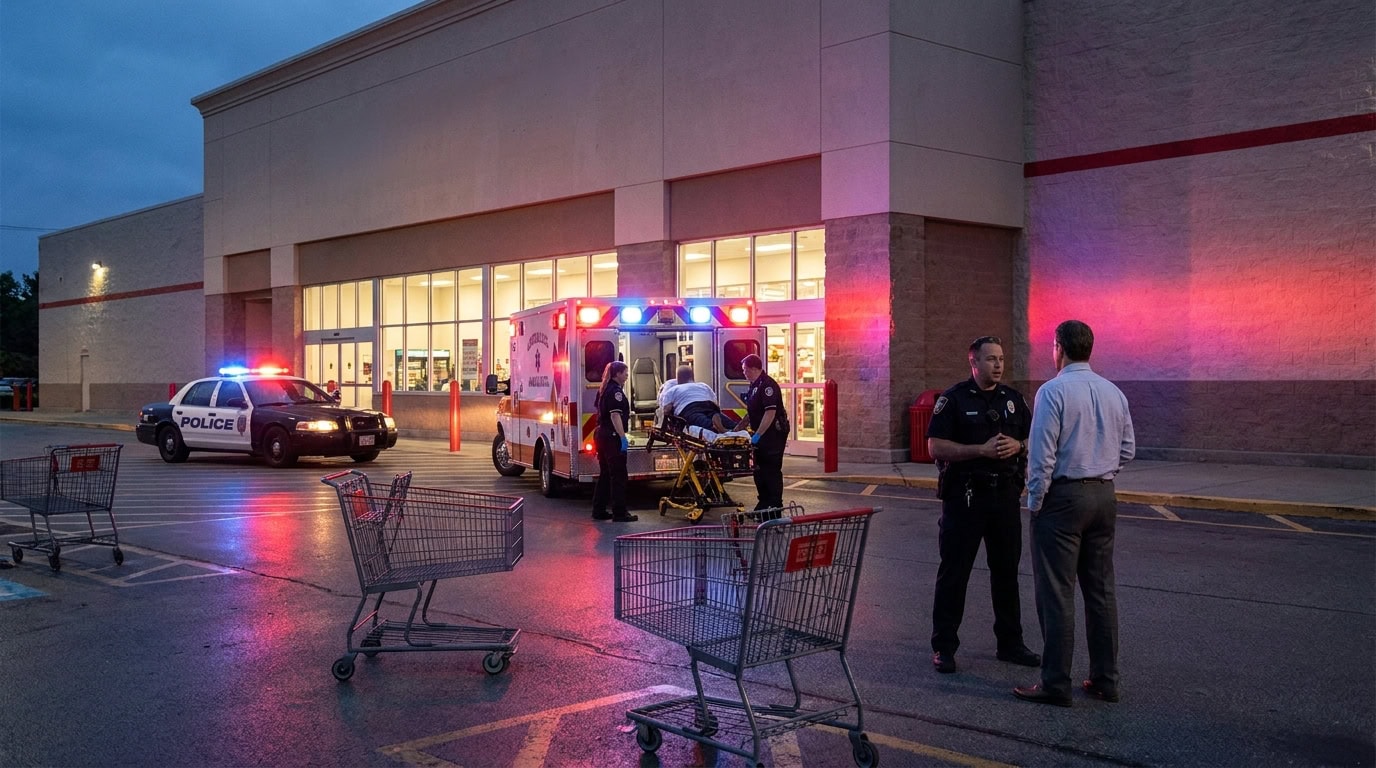
Understanding Supermarket Structural Hazards and Premises Liability
Supermarkets and big-box stores are legally classified as commercial premises open to the general public for business purposes. Such a legal classification places a high duty of care on property owners and corporate operators. Management must maintain a safe physical environment for every customer who enters the facility.
Defining Structural Hazards vs. Operational Negligence
A structural hazard in a retail environment is a permanent or semi-permanent physical defect, such as an improperly sloped ramp or a leaking HVAC system. Such physical defects result from design flaws or deferred maintenance. Unlike transitory spills, these hazards often prove a retailer's inherent negligence.
The distinction between operational negligence and supermarket structural hazards is a major factor in determining liability. Operational negligence usually involves short-term issues, such as a newly spilled drink that staff failed to clean up. Structural and environmental hazards involve the building's physical layout, including drainage systems and architectural integrity. Systemic issues reflect long-term neglect or improper engineering rather than a sudden, unanticipated event.
Under standard forensic engineering methodologies, such as those defined by the American National Standards Institute and the American Society of Safety Professionals in ANSI/ASSP A1264.2, slip-and-fall dynamics are calculated using the walking surface's dynamic coefficient of friction and micro-elevation variations.
Why Big-Box Architecture and High-Volume Retail Create Unique Risks
The massive scale of modern big-box retailers naturally amplifies the structural and environmental dangers present on the property. High ceilings, expansive concrete slabs, and industrial pallet racking create a complex environment. High-volume foot traffic further complicates these issues, as thousands of people move through these spaces daily.
Data from the Centers for Disease Control and Prevention shows that employees in wholesale and retail trade establishments suffer high rates of slip, trip, and fall injuries. Over 75% of injuries in the retail sector occur at ground level rather than at heights, demonstrating that floor-level maintenance and design are critical to retail safety.
Customer self-service models and the use of heavy mechanical equipment, such as forklifts, increase the likelihood of structural failures. Multi-tiered retail shelving and industrial racks must comply with ANSI MH16.1 specifications; without proper anchoring and load-bearing calculations, these units easily shift or buckle under the pressure of constant restocking.
Major Categories of Retail Store Environmental and Structural Hazards
Commercial property hazards generally stem from neglected infrastructure or design non-compliance. The five primary structural and environmental hazards in retail environments include:
- Liquid leaks, condensation, and drainage system failures.
- Flooring transitions, uneven walking surfaces, and slip resistance defects.
- Merchandise display structural failures and overloaded racking systems.
- Exterior grounds, parking lot, and sidewalk hazards.
- Inadequate lighting and obstructed egress paths.
Liquid Leaks, Condensation, And Drainage System Failures
Commercial supermarket plumbing and HVAC systems pose significant risks when not properly maintained. Defective condensation lines beneath open commercial freezers often cause water to pool on the floor. The resulting puddles are often nearly invisible to shoppers under bright retail lighting. Clogged floor drains near floral departments or deli counters also cause chronic moisture runoff, leading to slick surfaces.
Produce misting systems are another common culprit, as they can create a constant mist that settles on the surrounding floor. Leaking roof membranes also pose a major risk during heavy Florida storms. Such conditions represent recurring environmental hazards rather than isolated spills. They often indicate a systemic failure to perform preventative maintenance.
Under Florida Building Code (Plumbing) Section 412, floor drains are required in areas subject to commercial washing or moisture accumulation, such as floral or food-prep sections, to prevent hazardous pooling. When internal condensation lines or drains fail, they create an ongoing, systemic hazard that catches shoppers off guard.
Flooring Transitions, Uneven Walking Surfaces, And Slip Resistance Defects
Physical dangers associated with improper flooring materials and sudden elevation changes are leading causes of retail accidents. Transitioning between different floor coverings can disrupt a person's normal gait. For example, moving from a high-traction vestibule mat to a slick polished concrete floor is dangerous. Sudden changes in friction are difficult for the human body to adjust to instantaneously.
Florida Building Code Section 1003.4 mandates that the walking surfaces of the means of egress be slip-resistant. The flooring materials must also be securely attached to the structure. When retailers use inappropriate finishes in moisture-prone zones, they create a serious property maintenance failure. Ramped threshold changes that are too steep violate basic accessibility standards and safety protocols.
Loose or cracked floor tiles and damaged expansion joints also create significant tripping hazards for unsuspecting customers. According to 2010 ADA Standards for Accessible Design Section 303, changes in level up to 0.25 inches may be vertical, while changes between 0.25 and 0.5 inches must be beveled; any vertical rise exceeding 0.5 inches requires a compliant ramp to prevent tripping.
Merchandise Display Structural Failures And Overloaded Racking Systems
Collapsing retail fixtures and overloaded shelving systems can cause severe impact and crush injuries to anyone nearby. Cantilever shelving and industrial pallet racks can fail if they exceed their rated load limits. If locking pins are missing or damaged, the entire display unit becomes a potential hazard. Frequently, the displays become structurally unsound per the manufacturer's load-bearing specifications.
The risk of a merchandise avalanche is particularly high in big-box stores where items are stacked at high elevations. Material that's not properly secured on a pallet can shift and strike someone below. Such material shifts regularly lead to catastrophic injuries for customers and employees. Under OSHA Standard 29 CFR 1910.176(b), materials stored in tiers must be stacked, blocked, interlocked, and limited in height so that they are stable and secure against sliding or collapse.
Big-box retailers must conduct regular structural load assessments to ensure their displays remain safe for the public. Every display unit should be built and anchored in accordance with commercial safety guidelines.
Exterior Grounds, Parking Lot, And Sidewalk Hazards
The legal duty of care for a retailer extends beyond the front doors to encompass the entire exterior of the commercial property. Deteriorated asphalt, unmarked potholes, and uneven curb cuts in the parking lot create significant risks. Broken speed bumps and wheel stops placed directly in pedestrian walkways are also common environmental hazards.
ASTM F1637 establishes national safety criteria for pedestrian walking surfaces, specifying that walkway elevation changes greater than 0.25 inches must be beveled and that parking lot wheel stops must be highly visible and kept out of primary pedestrian paths to prevent tripping.
Inadequate Lighting, Obstructed Egress Paths, And Overhead Infrastructure Defects
Environmental visibility is a major factor in retail safety because poor lighting can hide existing physical hazards. Blown-out light fixtures and deep shadows in back aisles make it nearly impossible for a customer to see a leak. Under OSHA Standard 29 CFR 1910.37 and Illuminating Engineering Society guidelines, retail operators must maintain adequate illumination (typically 20 to 30 foot-candles on active sales floors) to ensure that exit pathways and surface hazards are clearly visible.
Overhead infrastructure defects, such as unsecured hanging signs or falling ceiling tiles, pose a constant threat. Broken light diffusers and exposed electrical conduits can also fail, striking shoppers. Overhead hazards often result from poor installation or from a lack of regular inspections by store personnel.
Fire and life safety requirements are frequently violated when aisles are overcrowded with secondary merchandise displays. The Florida Building Code, along with NFPA 101 Life Safety Code Section 7.1.10.1, mandates that the means of egress and exit passageways remain free of obstructions, secondary merchandise displays, and promotional pallets at all times. When a retailer blocks these paths, they create tripping hazards and prevent safe egress during an emergency.
Commercial Building Codes And Industry Safety Standards In Retail Liability
In Florida, the statewide Florida Building Code establishes the unified legal baseline for safe commercial construction, rather than a patchwork of municipal building codes. FBC compliance provides a clear benchmark to identify when a commercial property owner's conduct falls below the acceptable standard of care.
| Standard / Code | Governing Authority | Key Retail Safety Requirement |
| Florida Building Code | State of Florida | Mandates slip-resistant egress routes and restricts ramp slopes to a maximum ratio of 1:12. |
| ASTM F1637 | ASTM International | Establishes safety criteria for pedestrian walking surfaces, walkways, and wheel stops. |
| ANSI/NFSI B101.3 | ANSI / National Floor Safety Institute | Defines wet Dynamic Coefficient of Friction standards; wet DCOF ≥ 0.45 indicates high-traction floor surfaces. |
| NFPA 101 Life Safety Code | National Fire Protection Association | Requires that the means of egress remain entirely unobstructed, preventing secondary displays from blocking exit routes. |
| ADA Standards Section 303 | U.S. Department of Justice | Governs floor level transitions; vertical rises over 0.5 inches require compliant ramps with slopes ≤ 1:20. |
International Building Code And Florida Building Code Compliance
The International Building Code and the Florida Building Code govern nearly every aspect of retail store design. These codes set specific requirements for load-bearing capacities, ramp slopes, and the slip resistance of walking surfaces. For example, ramps used as part of an exit path must have a slope not steeper than 1:12.
It's unlawful for a property owner to alter a building in a manner that reduces the width or capacity of the exits. When an injury occurs because a building component was constructed out of compliance, it serves as strong evidence of negligence. Property owners face substantial liability if they modified the structure without proper permits or ignored code minimums.
ASTM Standards For Safe Walking Surfaces And Slip Resistance
ASTM International provides consensus standards like ASTM F1637, which covers the design and maintenance of safe walking surfaces. Forensic engineering experts use these standards to determine if a retailer's flooring meets expected industry benchmarks. The strict guidelines apply to both new and existing structures to ensure consistent public safety.
Personal-injury attorneys often use tribometer testing to substantiate a claim of poor floor maintenance. A tribometer is a specialized device used by forensic engineers to measure the wet Dynamic Coefficient of Friction of a floor in accordance with the ANSI/NFSI B101.3 standard. Under this standard, a wet DCOF value of 0.45 or greater is classified as "high traction,". In contrast, values below 0.30 indicate a high-risk, low-traction surface that violates standard commercial property maintenance protocols.
Life Safety Code And Americans With Disabilities Act Architectural Requirements
The NFPA 101 Life Safety Code and the ADA provide additional mandates for safety and accessibility in commercial spaces. ADA standards govern walkway clearances and curb ramps to ensure individuals of all mobility levels can move safely; for example, the running slope of a walking surface shouldn't exceed 1:20 under these accessibility guidelines. Violating ADA regulations creates dangerous tripping hazards for everyone, including elderly shoppers. Allowing structural entry ramps to exceed these slopes or permitting merchandise displays to narrow accessible routes below the 36-inch minimum clear width violates federal law and creates an immediate tripping hazard.
An accessible means of egress must remain free of all obstructions or impediments at all times. Architectural requirements mandate a continuous, unobstructed route of travel to a public way.
Proving Store Safety Failure Claims In Florida Premises Liability
Recovering compensation for an injury caused by a retail hazard requires meeting specific legal standards. Florida law has clear requirements for how an injured person must prove a business was responsible. A successful store safety failure claim hinges on establishing that the business knew or should have known about the danger.
The Difference Between Actual Notice, Constructive Knowledge, And Inherent Design Defects
Florida Statute Section 768.0755 addresses premises liability for transitory foreign substances in a business establishment. If a person slips on a temporary spill, they must prove the business knew about the hazard. Plaintiffs often prove constructive knowledge by showing the condition existed for so long that the store should have discovered it.
Claims based on architectural defects or permanent structural flaws follow a different evidentiary path. An inherent structural flaw, such as an improperly sloped ramp, demonstrates that the business itself created the dangerous condition. In these cases, because the owner or operator is responsible for the design, construction, or active creation of the physical defect, Florida courts hold that the plaintiff is not required to prove separate actual or constructive notice.
Identifying Potentially Liable Parties Beyond The Retailer
Liability in a commercial retail accident isn't always limited to the brand name on the front of the store. A high-intent legal investigation helps identify other entities that may share legal and financial responsibility. This might include the commercial property landlord, the property management company, or the architectural firm that designed the space.
For example, a third-party maintenance vendor might be responsible if they improperly repaired a flooring system or a drainage line. If a structural display unit collapses, the racking system manufacturer could be held liable for a design defect. Identifying all responsible parties is a major part of ensuring a full recovery for a catastrophic injury.
The Role of Spoliation of Evidence in Commercial Liability
Securing physical and digital evidence immediately after a retail accident is paramount for a successful recovery. Big-box retailers employ robust surveillance networks, but this footage is often automatically overwritten within 14 to 30 days. Plaintiffs must promptly issue a spoliation letter to compel the corporate entity to preserve all internal video feeds that show the structural hazard.
Failing to secure maintenance logs, corporate inspection checklists, and CCTV footage can allow critical evidence of negligence to vanish. When a legal team formally demands this documentation, it prevents the defense from claiming the structural defect was an unforeseeable anomaly rather than a documented hazard.
What Steps Should You Take After an Injury in a Supermarket or Big-Box Store?
- Report the incident immediately: Notify store management of your injury. Ensure they complete a formal, written incident report, and ask for a copy or the incident reference number. Do not sign any waivers or make statements admitting fault.
- Document the physical scene: Use your phone to take clear, detailed photographs and videos of the hazard. Capture the exact leak, uneven transition, or structural defect, along with the surrounding area to show the presence or absence of warning signs and lighting conditions.
- Seek immediate medical care: Visit an emergency room, urgent care, or physician promptly to have your injuries diagnosed and documented. This establishes a direct medical link between the structural hazard and your physical trauma.
- Preserve physical evidence: Keep the shoes and clothing you were wearing at the time of the accident in their exact post-fall condition, as they may be critical to refuting claims of contributory negligence.
- Consult a premises liability attorney: Contact a qualified legal professional before speaking with or providing a recorded statement to the store's corporate risk management team or insurance adjusters.
Contact Weinstein Legal Team To Discuss Your Premises Liability Claim
Serious retail accidents are frequently the result of structural defects, building code violations, and neglected property maintenance. While big-box stores often try to frame these incidents as simple clumsy mistakes, many properties aren't maintained to the required safety standards. Weinstein Legal understands how to uncover these hidden hazards and hold corporate entities accountable for their negligence.
Navigating a claim against a massive supermarket chain requires a rigorous investigation and technical code analysis. These companies often have significant resources and legal teams dedicated to denying claims. Our firm provides aggressive representation to ensure that our clients receive the compensation they deserve for their medical bills and other losses.
Contact us today for a free and confidential case evaluation to discuss your premises liability claim. We have a proven track record of handling complex injury cases throughout the State of Florida. Our attorneys are ready to fight tirelessly to protect your rights and secure the best possible outcome for your situation.