
- The uninsured motorist coverage Section 627.727(1), Florida Statutes, requires an insurer to offer is limited to bodily injury, so it never pays for vehicle repairs and collision coverage is what fixes your car.
- Section 627.727(7), Florida Statutes, bars a UM insurer from paying for pain, suffering, mental anguish or inconvenience unless the injury meets one of the four thresholds in Section 627.737(2), and UM also does not absorb your PIP deductible or pay punitive damages.
- A named driver exclusion under Section 627.747, Florida Statutes, reaches only claims resulting from that individual operating a vehicle, and Section 627.747(2)(a) keeps coverage in place when the excluded person is injured while not driving, such as a passenger or on foot.
- Section 627.727, Florida Statutes, cuts UM coverage back only through a written rejection by a named insured under subsection (1) or the limitations that come with nonstacked coverage under subsection (8); a claimant's license status is on neither list, so ask which policy provision supports a denial made on that basis.
- Insurance Research Council data puts about 20 percent of Florida drivers on the road without insurance, and Florida does not require bodily injury liability for most private vehicles, so stacked UM coverage across household vehicles also protects you as a pedestrian or a cyclist.
Florida drivers often assume their insurance provides a complete safety net, but uninsured motorist coverage in Florida does not cover property damage, punitive damages, or non-permanent injury claims. While about one in six Florida motorists is uninsured (15.9% in 2022, per the Insurance Research Council), uninsured motorist coverage specifically targets bodily injury. These exclusions leave significant gaps for vehicle repairs and minor injuries that fail to meet strict legal thresholds.
Understanding Florida's bodily injury thresholds and comparative fault standards helps prevent unexpected financial gaps after a collision. Because PIP does not cover everything and at-fault drivers often lack sufficient bodily injury liability coverage, the contractual exclusions in your own auto policy decide whether your family is protected.
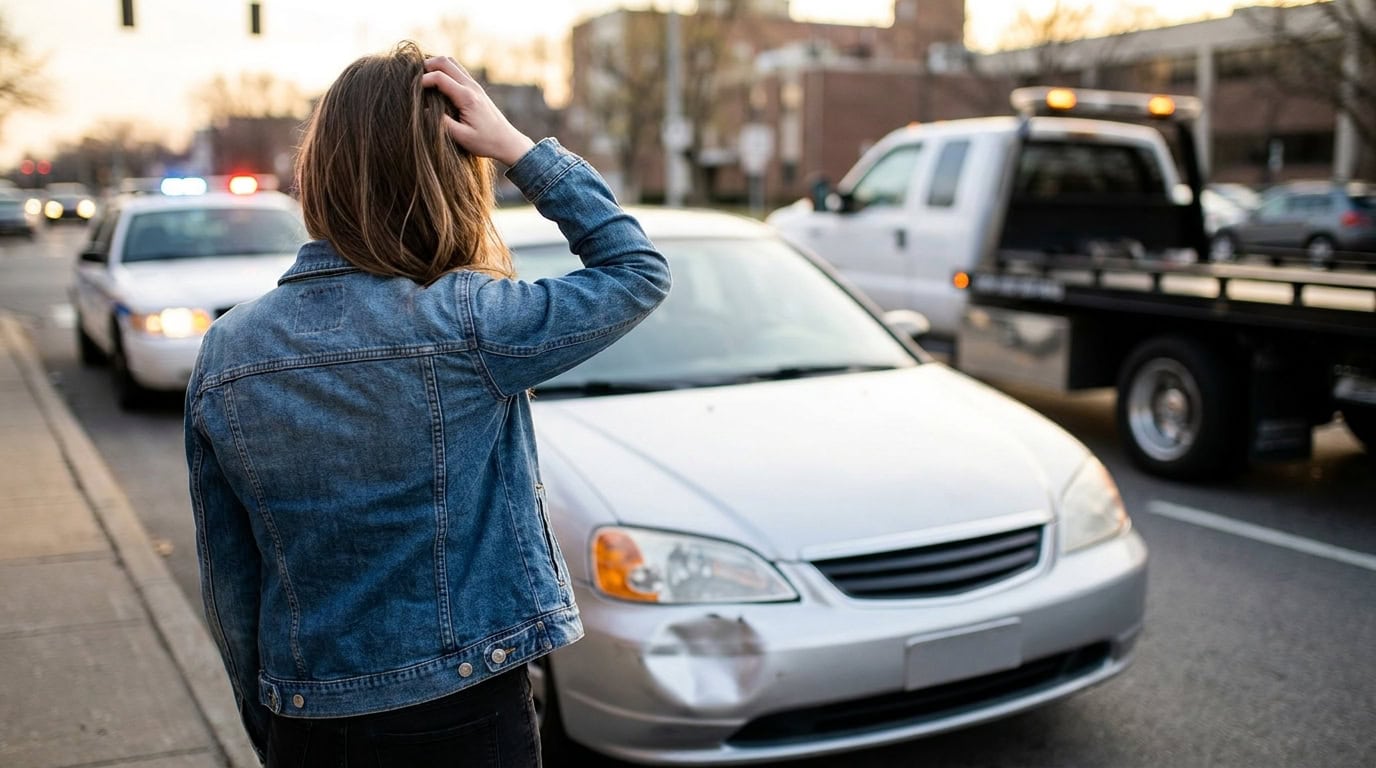
Understanding Standard UM Exclusions That Florida Insurance Companies Apply
Uninsured motorist coverage steps into the shoes of an at-fault driver who failed to carry adequate bodily injury liability insurance. It serves as a safety net that pays for your losses when the person responsible for a crash has no assets or insurance. However, this coverage is not a catch-all solution for every expense that arises following a motor vehicle accident. Every driver should be aware of standard Florida-specific UM exclusions used by carriers to limit their financial liability.
Quick Summary of What UM Insurance Does Not Pay For:
- Vehicle repairs and property damage: These costs require separate collision coverage.
- Punitive damages: These are intended to punish the at-fault driver rather than compensate the victim.
- Personal Injury Protection deductibles: UM coverage does not absorb your initial out-of-pocket costs.
- Non-permanent injuries: Florida law limits pain-and-suffering payouts for temporary injuries.
Your insurance company will not pay for anything you would not be legally entitled to recover from the other driver in court. These UM exclusions mirror the strict limitations of the at-fault driver's missing liability policy.
Why UM Coverage Excludes Vehicle and Property Damage in Florida
Uninsured motorist bodily injury coverage excludes vehicle repair costs. This type of insurance is strictly reserved for physical harm to your body, such as broken bones or spinal injuries. Many drivers mistakenly believe their car will be repaired if an uninsured driver hits them. This is a dangerous misconception that leads to unexpected repair bills.
It helps to contrast bodily injury insurance with property damage liability to understand why they occupy different categories. Bodily injury coverage addresses medical bills and human suffering. Property damage coverage focuses on the physical restoration of tangible objects such as cars and fences. Because Florida law separates these risks, your UM policy will generally exclude any claims arising from a totaled vehicle.
Recovering repair costs from an accident caused by an uninsured driver usually requires you to carry collision coverage. Collision coverage pays to fix your vehicle regardless of who was at fault. While some carriers offer a specific Uninsured Motorist Property Damage option, it's not common in Florida. This leaves collision coverage as the primary tool for vehicle protection.
Personal Injury Protection Deductibles and Benefit Coordination
Uninsured motorist coverage does not pay for or absorb the deductible associated with your Personal Injury Protection benefits. Florida is a no-fault state, meaning your own PIP insurance is always the primary source of medical coverage. By law, PIP provides limited medical coverage as defined by Florida statutes. You must first pay the deductible you selected when you purchased the policy.
The deductible you choose for your PIP coverage is a calculated risk that reduces your monthly premium. Because UM coverage is "over and above" other benefits like PIP, it cannot cover the initial deductible. Your insurance company views the PIP deductible as your personal financial responsibility. It's not a compensable loss under the UM portion of the contract.
Uninsured motorist coverage addresses losses that either exceed the PIP limit or are not covered by PIP. This includes long-term medical care and lost wages beyond what PIP pays. You shouldn't expect your UM carrier to reimburse you for the deductible for your initial treatments. This remains a personal expense regardless of the other driver's insurance status.
Recovery Limitations for Punitive Damages
Punitive damages are almost always excluded from uninsured motorist payouts in Florida. These specific damages are legally designed to punish a defendant for intentional misconduct or gross negligence. Examples include driving while severely intoxicated or engaging in high-speed street racing. The goal is to set an example rather than to make the victim whole.
Insurance companies aren't required to pay punitive damages because UM coverage is compensatory. Compensatory damages aim to restore you to the financial position you were in before the accident. Since your own insurance company did not commit the reckless act, the law does not force them to pay. They didn't engage in the behavior that warrants a penalty.
You cannot recover these damages through your own UM policy even if the at-fault driver's behavior was egregious. If you wish to seek punitive damages, you would typically have to file a direct lawsuit against the driver. However, most drivers who lack insurance also lack personal assets. Collecting on a judgment for punitive damages is often impossible in practice.
Non-Permanent Injury Claims and Non-Economic Loss Limits
Florida law imposes strict limits on the recovery of non-economic damages, such as pain and suffering. Section 627.727(7) says a UM insurer is not liable for pain, suffering, mental anguish or inconvenience unless the injury is one of the four described in Section 627.737(2): significant and permanent loss of an important bodily function, permanent injury within a reasonable degree of medical probability, significant and permanent scarring or disfigurement, or death. If a doctor doesn't certify that your injury is permanent, you can't recover money for physical discomfort. This remains one of the most significant UM exclusions Florida drivers encounter.
An uninsured motorist carrier only pays what you are legally entitled to recover from the at-fault driver. Therefore, they apply these same statutory thresholds to your UM claim. If your injuries are deemed temporary, the insurance company will reject any claim for pain and suffering. They'll limit your payout to quantifiable financial losses, such as unpaid medical bills and lost income.
The carrier will routinely argue that your injuries have fully resolved to avoid paying non-economic damages. In our firm's practice, we frequently see adjusters use early MRI results or gaps in physical therapy attendance to deny permanency claims. Overcoming this statutory hurdle requires aggressive medical documentation and expert orthopedic or neurological testimony. Without proof of permanency, your UM claim value stays strictly limited to quantifiable economic losses.
Policy-Specific Contractual Exclusions and Potential Gaps
Auto insurance policies contain specific contractual exclusions that go beyond general state laws. These are detailed within the fine print of the legal agreement you sign with your provider. Even if you've paid every premium on time, a single violation of these terms can result in denial. Understanding standard auto policy exclusions is the first step in auditing your coverage for potential gaps.
Auto insurance policies contain numerous standard contractual exclusions that protect the carrier from risks outside their written agreement. Review these specific clauses regularly. Your daily driving habits shouldn't inadvertently void the very protection you are paying to maintain.
One common area of confusion involves the definition of an "uninsured" vehicle. Standard Florida UM policies treat a hit-and-run driver as an uninsured motorist. If a person is injured by a driver who flees the scene, their UM coverage applies. However, you must promptly report the incident to law enforcement and the insurer. Failing to meet these reporting requirements can result in a complete claim denial.
The Owned-But-Uninsured Vehicle Exclusion
The owned-but-uninsured vehicle exclusion prevents policyholders from receiving free coverage for multiple vehicles. This exclusion applies when an insured person is injured while occupying a vehicle they own but haven't listed on the policy. For example, if you own two cars but only pay for UM on one, you may be barred from using that coverage. If you're hit while driving the second vehicle, the exclusion takes effect.
Modern insurance contracts use specific language to ensure that drivers pay for the risk associated with every vehicle. Section 627.727(8)(d) allows this exclusion, and it is one of the limitations that comes with nonstacked coverage. It removes UM benefits for the named insured and resident family members who are hurt while occupying a vehicle they own for which UM was never purchased. The strict statutory language makes it essential for households with multiple cars to ensure each vehicle carries its own protection.
Failing to ensure every vehicle can result in a complete loss of benefits when you need them most. You shouldn't assume that coverage on one car automatically extends to any car you own. The courts have deemed this exclusion fair to insurers because it prevents "free" coverage across multiple risks. Always verify that every vehicle in your driveway is listed on your declarations page with UM active.
Named Driver Exclusions Under Florida Statute Section 627.747
Named driver exclusions are a powerful tool used by insurance companies to manage risk. Under Florida Statute Section 627.747, a named insured can consent in writing to exclude an identified individual who is not a named insured, as long as that person is listed on the declarations page or by endorsement. This is usually done to keep premiums lower if a resident relative has a poor driving record. However, the consequences of this exclusion are absolute and severe.
When you specifically name a driver as an excluded individual, your insurance carrier treats them as if they were invisible. If that excluded driver is operating the vehicle and gets hit by an uninsured motorist, the company will deny all UM benefits. The exclusion applies regardless of who was at fault for the collision. It removes the safety net entirely for that specific person while they are behind the wheel.
The exclusion is tied to driving, not to the person. Section 627.747(1) allows it only for claims that result from the excluded individual operating a motor vehicle, and Section 627.747(2)(a) says a policy may not exclude coverage when that individual is injured while not operating one. An excluded relative who is hurt as a passenger, or on foot, is still covered. Think carefully before excluding a household member. This decision removes their primary defense on Florida's dangerous roads.
Unlicensed and Unauthorized Drivers
Carriers sometimes argue that a driver without a valid license gives up UM benefits, but the statute does not give them much to work with. Section 627.727 sets out how this coverage may be cut back: a written rejection by a named insured under Section 627.727(1), and the limitations that come with nonstacked coverage under Section 627.727(8). The license status of the person claiming is not on either list. Ask to see the exact policy wording and the provision the carrier is relying on before you accept a denial on that basis.
Similarly, if someone drives your vehicle without your express or implied permission, they're generally not covered. This situation often arises from vehicle theft or unauthorized use by a friend. In these instances, the insurance company will likely refuse to pay for any injuries the unauthorized driver sustains. They didn't agree to cover risks associated with people who shouldn't have been in the car.
Lending your car to an unlicensed friend still puts you at financial risk, because under Florida's dangerous instrumentality doctrine the owner of a vehicle answers for the negligence of anyone driving it with permission. That risk sits on the liability side of the policy rather than the UM side. Always ensure that anyone operating your vehicle is both licensed and authorized to do so.
The Impact of Florida House Bill 837 on Uninsured Motorist Claims
Florida insurance litigation changed significantly with the passage of House Bill 837 in March 2023. This legislation introduced comprehensive tort reform aimed at reducing the volume of lawsuits in the state. While many of the changes targeted third-party negligence claims, they also have indirect impacts on how UM claims are handled. Policyholders must navigate a more rigorous environment when seeking to prove their right to compensation.
One of the most notable changes involves the shift from pure comparative negligence to a modified standard. Florida law now bars a plaintiff from recovering any damages if they are more than 50% at fault for an accident, and that version of Section 768.81 applies to cases filed after March 24, 2023. While UM claims are technically based on contract law, the underlying issue remains the other driver's negligence. If an insurer can prove you were mostly responsible for the crash (meaning you bear more than 50% of the fault under the modified comparative negligence standard), they can now deny the claim entirely.
The negligence period in Section 95.11(5)(a) was also shortened from four years to two. That change applies to causes of action that accrued after March 24, 2023, so a crash before that date still runs on the old four-year clock. Uninsured motorist claims are separate again, because they rest on the written contract between you and your insurer, and Section 95.11(2)(b) allows five years on a written contract. Despite this longer window, you shouldn't delay your claim, as evidence and witnesses disappear quickly.
HB 837 also adjusted how medical bills are calculated in personal injury cases. Insurers can now argue that the "list price" of medical care is not the true value of the damages. They may use lower reimbursement rates to justify smaller settlement offers for your UM claim. This change makes it more difficult for victims to recover the full amount that hospitals and specialists bill them.
UM Coverage for Pedestrians and Bicyclists
Beyond the immediate impact of changing legislation, uninsured motorist coverage is more portable than many people realize. Your UM coverage extends well beyond the physical confines of your car. It follows you as a person, offering a vital safety net whether you are crossing a busy intersection on foot or cycling through your neighborhood.
If an uninsured driver strikes you while you're walking across a street, your auto policy's UM benefits can be triggered. The same applies if you're riding a bicycle and are run off the road by a negligent motorist. Your insurance company acts as the missing liability policy for the person who hit you. This ensures your medical bills and lost wages are covered even when you aren't driving.
This portability also extends to other members of your household. If your resident relatives don't have their own auto insurance, they may be covered as pedestrians under your UM policy. This provides a layer of security for children or elderly family members who don't drive. It turns your auto policy into a general personal safety net for everyone living in your home.
Those who use alternative transportation are the ones this protects most. You don't need to be in your car for your UM insurance to provide value. If a motorist injures you as a pedestrian, your auto policy exclusions may still apply. However, the core bodily injury benefits remain available to help you recover from the impact. Such coverage provides critical protection in a state where pedestrian accidents are frequent and often involve hit-and-run drivers.
What Is the Discovery Process in a Florida UM Claim?
Securing a payout from your own insurance company requires proving that the other driver was actually uninsured or underinsured. This isn't always a simple task, especially if the other driver refuses to cooperate or provides false information at the scene. The discovery process is the legal phase where your attorney uncovers the truth about the at-fault driver's status. It involves a detailed investigation into insurance policies and personal assets.
Attorneys use subpoenas and formal requests for production to force the disclosure of insurance information. If the other driver claims they have a policy, your lawyer will verify its limits and its active status. Sometimes a driver has insurance, but the insurer denies coverage due to a policy violation. In these "gray area" cases, your UM coverage triggers because no usable insurance is available to you.
The discovery process also involves identifying if the at-fault driver was working at the time of the crash. If they were driving for an employer, there might be a commercial policy that provides much higher limits. Uncovering these third-party liability sources can significantly increase the amount of money available for your recovery. Your lawyer will look for every possible entity that might share responsibility for the accident.
If the search confirms the driver has no insurance, the focus shifts to their personal wealth. A personal injury asset search identifies real estate, bank accounts, and other holdings. While many uninsured drivers are judgment-proof, some do possess assets that can be seized to satisfy a judgment. This information helps you decide whether to settle for your UM limits or pursue the driver personally in court.
Addressing First-Party Bad Faith Claims Against UM Carriers
Your insurance company has a legal duty to handle your UM claim fairly and honestly. This is known as the duty of good faith, and it's mandated by Florida Statute Section 624.155. When a carrier puts its own profits ahead of your legitimate needs, it may be acting in bad faith. This opens up a new legal avenue for victims whose own insurers have mistreated them.
Bad faith can manifest in several ways during the claims process. An insurer might refuse to pay a valid claim without a reasonable investigation. They might also offer an amount that is significantly lower than the documented value of your injuries. If they stall the process for months without cause, they are failing to satisfy their legal obligations to you.
If bad faith is proven, the policy limits are no longer the absolute cap on your recovery. A successful bad-faith lawsuit can force the insurer to pay the full amount of your damages, even if it exceeds your policy limits. This is a powerful tool for holding large corporations accountable for their conduct. It ensures they can't simply ignore you after you have spent years paying your premiums.
To initiate this process, your lawyer must file a Civil Remedy Notice with the state. This gives the insurance company 60 days to "cure" their bad behavior by paying the claim. If they fail to do so, you can move forward with a bad-faith lawsuit. This structured process protects policyholders from being bullied by powerful insurance defense teams.
Property Damage vs. Bodily Injury Insurance in Florida
Confusing bodily injury protection with property damage coverage is a common mistake that leaves Florida drivers with unpaid vehicle repair bills. Property damage liability and collision coverage handle the physical repair of your vehicle, whereas Uninsured Motorist coverage is strictly reserved for your physical recovery and medical bills.
Understanding Property Damage Liability and Collision Coverage
Florida law requires every driver to carry at least $10,000 in Property Damage Liability coverage. PDL does not pay to fix your own car after an accident. Instead, it pays for the damage you cause to other people's property. If an uninsured driver hits you, their lack of PDL means no insurance money is available from them to repair your car.
Collision coverage is the optional coverage that pays to repair or replace your own vehicle. Unlike liability insurance, collision coverage follows your car and applies regardless of fault. This makes it the most reliable tool for handling vehicle repairs when hit by an uninsured motorist. It provides the certainty you need when the at-fault party has no financial resources.
If you choose not to carry collision coverage, you are essentially self-insuring the vehicle's physical value. In the event of a hit-and-run, you would have to pay for all repairs out of your own pocket. For most drivers, the cost of adding collision coverage is a small price to pay compared to losing their primary means of transportation. This coverage is the only guaranteed way to get back on the road quickly.
The Restricted Role of Uninsured Motorist Property Damage
In some other states, drivers can purchase a specific type of coverage called Uninsured Motorist Property Damage. This coverage is designed to pay for vehicle repairs, specifically when an uninsured driver is at fault. Florida is not one of them. The uninsured motorist coverage Section 627.727(1) requires an insurer to offer is limited to bodily injury, so it never pays for your car, and few carriers here sell a separate uninsured motorist property damage product.
Insurance carriers in Florida prefer to use collision coverage as the primary mechanism for protecting vehicles. Never assume your uninsured motorist policy includes a property damage component: it rarely does. Standard Florida UM pays for bodily injury. Period. Unless your agent specifically walked you through purchasing UMPD, your vehicle is not protected under this clause.
Because UMPD is so rare in the state, collision coverage remains the essential mechanism for vehicle protection. It provides broader protection by covering your car in a variety of scenarios. Whether UMPD pays at all depends on the policy's own terms, and many policies require the other driver to be identified and shown to be uninsured. Relying on the hope of UMPD rather than the certainty of collision is a significant risk.
How to Audit Your Auto Policy to Identify Auto Policy Exclusions
You shouldn't wait until after a car accident to find out the specific details of your coverage. At that point, it's too late to make changes or add the protections that could save you from financial ruin. Conducting a proactive audit of your insurance coverage is a simple way to identify dangerous gaps. It allows you to address auto policy exclusions before they become a problem during a claim.
Following these audit steps empowers you to close dangerous coverage gaps before you ever file a claim. Empowering yourself with knowledge about your policy limits is the best defense against the unpredictability of Florida traffic. A thorough audit only takes a few minutes but provides years of peace of mind.
During your audit, look for any mentions of "underinsured" motorists as well. In Florida, UM coverage automatically includes underinsured motorist protection. This applies when the at-fault driver has some insurance, but not enough to cover your total damages. Most Florida drivers carry very low liability limits that are quickly exhausted by medical bills, which is why the underinsured side of the coverage matters.
| Audit Step | Action Required | Why It Matters |
| 1. Analyze the Declarations Page | Locate bodily injury and UM line items. Ensure UM limits match your liability limits and all household drivers are listed accurately. | If UM shows as "rejected" or lists minimum limits (e.g., $10,000), you are severely underinsured against Florida's uninsured drivers. |
| 2. Compare UM vs. Property Damage | Verify that collision coverage is active alongside your UM bodily injury coverage. | UM only covers human injuries. Without collision coverage, you are personally responsible for replacing your totaled vehicle after a crash. |
| 3. Choose Stacked Coverage | Opt for "stacked" UM coverage if you own multiple vehicles, rather than non-stacked. | Stacking multiplies your limits by the number of cars you own and extends protection to you as a pedestrian or bicyclist for a minimal premium increase. |
| 4. Secure Vehicle Protection | Ask your agent to add collision coverage. Note that Florida carriers rarely offer Uninsured Motorist Property Damage. | Collision is the only guaranteed, proactive way to ensure your vehicle repairs are covered after a hit-and-run or uninsured collision. |
When Should I Contact a Lawyer for a UM Claim Denial?
Insurance companies are often more aggressive when defending UM claims because they are technically the defendant in the case. Even though you are their customer, they have a financial incentive to pay as little as possible. If your insurance company denies your UM claim, you should seek legal advice immediately. An experienced Florida uninsured motorist attorney can review the denial letter to see if it violates state law or the terms of your contract.
A denial often hinges on a technicality, such as a missed deadline or a dispute over the permanency of your injuries. Attorneys use medical experts to challenge these findings and prove the extent of your physical damage. They also handle the complex paperwork required to appeal a denial or to file a bad-faith notice. Having professional representation ensures that the insurance company treats your claim with the seriousness it deserves.
You should also contact a lawyer if the insurance company offers a settlement that doesn't cover your medical bills. Many carriers use "lowball" offers early in the process to save money before a victim realizes the full extent of their injuries. A lawyer will calculate the true lifetime cost of your accident, including future surgeries and lost earning capacity. This ensures you don't settle for a fraction of what you actually need to recover.
Why Carrying UM Coverage Is Still Vital on Florida Roads
Despite the exclusions and limitations outlined in this guide, carrying UM coverage remains a vital financial decision. The complexities of the law can make the coverage seem limited, but the alternative is far worse. Without UM coverage, you're essentially gambling that every driver you encounter is both insured and responsible. In Florida, that is a gamble that most people will eventually lose.
The systemic reasons for the necessity of UM coverage are unique to the Sunshine State. Florida's insurance market is shaped by specific laws that create a high level of risk for every person behind the wheel. Understanding these underlying factors helps clarify why UM coverage is not just an optional add-on. It's a fundamental component of a responsible insurance plan for anyone living in Florida.
According to data from the Insurance Research Council, approximately 20% of Florida drivers operate without insurance, which is among the highest rates in the country. Florida law also does not require most drivers to carry bodily injury liability insurance. This creates an environment where you are often the only person looking out for your own financial safety. UM coverage is your primary tool for managing that risk and protecting your family's future.
Florida's Uninsured Driver Epidemic and Lack of Bodily Injury Requirements
The risk of driving in Florida is exceptionally high because the state's uninsured motorist rate consistently hovers around 20%. This means that in any given line of five cars, one of them likely has no insurance. This epidemic of uninsured driving creates an environment where even cautious drivers can be left with no one to sue. It makes your own insurance policy the most important document you carry in your glove box.
A critical loophole in Florida's no-fault law legally allows most private drivers to forgo Bodily Injury Liability coverage. A driver can legally register their vehicle with only PIP and Property Damage Liability. These drivers have zero insurance money available to pay for the medical bills or surgeries of the people they injure. They can cause catastrophic harm while remaining perfectly legal under state insurance mandates.
Given all of that, your own UM coverage is your only real defense against catastrophic medical debt. You can't rely on the law to ensure the other driver has the means to pay for your recovery. By carrying UM, you're essentially buying the liability policy the other driver was too irresponsible to purchase. It is the only way to guarantee that a reckless driver doesn't ruin your financial life.
What Does UM Cover in Florida?
UM coverage directly replaces the at-fault driver's missing bodily injury liability policy. When the at-fault party has no resources, UM coverage addresses the human cost of negligence by paying for:
- Excess Medical Expenses: Covers costs that exceed your $10,000 PIP limit, including emergency room visits, surgeries, and future medical care.
- Lost Wages: Provides a financial bridge if your injuries prevent you from returning to work.
- Non-Economic Damages: Compensates for pain and suffering, provided you can prove you sustained a qualifying permanent injury.
Speak With a Personal Injury Lawyer at Weinstein Legal Team
Insurance companies frequently rely on complex fine print to limit UM payouts. Our legal team investigates every detail of your policy, files preservation letters for critical evidence, and subpoenas relevant insurance data to ensure you are not left vulnerable to unfair claim denials.
Disclaimer: The information provided in this article is for educational purposes only and does not constitute formal legal advice.
Weinstein Legal Team reads the policy language carriers rely on to cut a UM payout, and challenges it. We know that behind every case file is a person trying to put their life back together. We're committed to providing representation that includes filing preservation letters for evidence and subpoenaing all relevant insurance data. We hold insurance companies to the coverage they sold and pursue the full value of the claim. If you've been involved in an accident or want to ensure your policy provides the protection you need, we're here to help. Contact us for assistance in auditing your auto policy exclusions to ensure you are fully protected before an accident happens.