
- Whether a Florida casino can be sued turns on who owns it: tribal casinos such as the Seminole Hard Rock properties hold sovereign immunity and cannot be sued in state court without a waiver, while commercial casinos and racinos answer to ordinary Florida premises liability law.
- The Seminole gaming compact waives immunity for patron injury claims only to the extent Florida waives its own under Sections 768.28(1) and (5), so recovery is capped at $200,000 per person and $300,000 for all claims arising from one incident.
- A patron claiming against the Seminole Tribe must deliver written notice to the Tribe's Risk Management Department no later than three years after the incident and may sue only if the claim is still unresolved one year after that notice, the sequence treated as conditions precedent in Seminole Tribe of Florida v. Manzini, 361 So. 3d 883 (Fla. 4th DCA 2023).
- At a commercial casino, Florida Statute 768.0755 adds an actual or constructive knowledge element only for a slip on a transitory foreign substance; a broken chair, a failed escalator or an assault in an unlit garage is an ordinary negligence claim, and Section 95.11(5)(a) allows two years to file.
- Casino surveillance footage is overwritten on a rolling cycle, so a written preservation request should go out within days of the injury rather than weeks.
Florida's casino industry creates a complex legal maze for those injured on gaming properties. The dividing line is between tribal casinos run by sovereign Native American nations and commercial casinos run under state law. That line decides where you file, what you have to do before you file, and how much you can collect.
When accidents happen at Florida casinos, your path to compensation largely depends on location. Tribal casinos operate under sovereign immunity protections that can limit traditional legal remedies, while commercial facilities follow standard state laws.
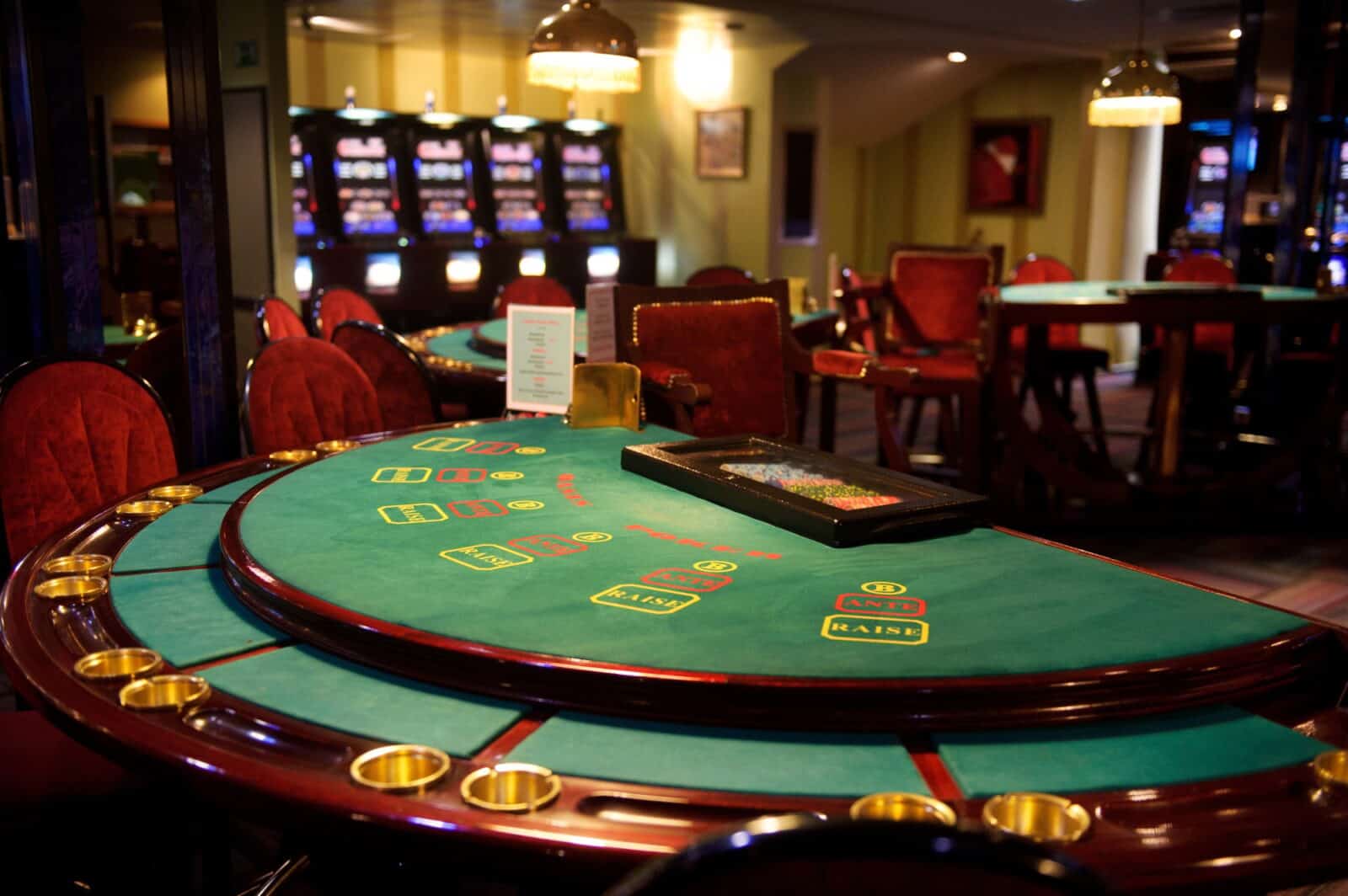
Tribal vs. Commercial Casinos: Why the Property Decides the Case
Florida's casino industry is dominated by the Seminole Tribe, which operates several Hard Rock Hotel & Casino locations in Tampa, Hollywood, and other cities throughout the state. The Miccosukee Tribe also maintains a significant presence with its resort and gaming facility near Miami. These tribal operations offer the largest and most comprehensive casino experiences in Florida, featuring full-service gaming, including slot machines, table games, and poker.
Florida's gaming properties range from the Seminole Hard Rock's multi-tower hotel complexes to smaller pari-mutuel racinos, and each presents distinct hazards across gaming floors, restaurants, hotels, and parking structures. Slip and falls, food poisoning, inadequate security, and defective equipment are the most common categories of premises liability claims arising from these venues.
| Legal Factor | Tribal Casinos (e.g., Seminole Hard Rock) | Commercial Casinos (e.g., Gulfstream Park) |
|---|---|---|
| Jurisdiction & Immunity | Protected by tribal sovereign immunity; cannot be sued in state court without a waiver. | No sovereign immunity; subject to Florida state laws and jurisdiction. |
| Filing a Claim | Governed by the Tribal-State Compact. Written notice to the Tribe's Risk Management Department is a condition precedent, then suit in state court once the compact's steps are exhausted. | Standard premises liability claims filed in Florida civil courts. |
| Time Limits | 3 years to deliver written notice to the Tribe's Risk Management Department, then a 1-year resolution period before suit may be filed. | 2 years to file a negligence lawsuit in state court (Florida Statutes § 95.11(5)(a)). |
| Burden of Proof | Tribal insurance standards and compact requirements. | Ordinary negligence, plus the actual or constructive knowledge showing in Florida Statutes § 768.0755 for slips on a transitory foreign substance. |
Native American Tribal Casinos
The Seminole Tribe's six Florida casino properties range in scale from the destination resort at Seminole Hard Rock Hollywood to smaller facilities in Brighton and Big Cypress. The Miccosukee Tribe's single property west of Miami operates at a significantly smaller scale than the Seminole operations, which affects the formality of its internal claims processes.
These tribal casinos exist as enterprises of sovereign nations recognized by the federal government. This sovereign status affords them immunity from various types of lawsuits that would otherwise be available against non-tribal businesses. The Seminole Tribe's compact with Florida does contain a patron injury provision, and it is the whole of the route for personal injury claims against the Tribe. Under it the Tribe waives its immunity to the same extent Florida waives its own under Sections 768.28(1) and (5), which means the same $200,000 per person and $300,000 per incident ceiling that applies to a claim against the state.
Commercial Casinos and Racinos
Commercial gaming facilities in Florida operate under a different legal framework entirely. These establishments, which include venues such as Gulfstream Park Racing & Casino, Hialeah Park Casino, and Casino Miami, operate under Florida state law and regulations implemented by the Florida Division of Pari-Mutuel Wagering.
Unlike tribal enterprises, these commercial operations lack sovereign immunity. They are subject to the same premises liability laws and legal standards as any other business in Florida. This means injury victims at commercial casinos can pursue standard negligence claims through Florida's state court system without the jurisdictional hurdles presented by tribal sovereign immunity.
Can You Sue A Tribal Casino?
Tribal casinos sit on sovereign land, which creates a fundamental jurisdictional barrier for injured patrons. Tribal sovereign immunity does not come from a state or federal statute, and it is not a grant of the Constitution. It is the inherent immunity of a sovereign that predates the Constitution, and it survives until Congress abrogates it or the tribe waives it. In Florida, the landmark case of Houghtaling v. Seminole Tribe of Florida, 611 So. 2d 1235 (Fla. 1993), established that the courts of this state lack civil jurisdiction over the tribe unless there is an unequivocal, explicit waiver of sovereign immunity.
In practice this is what kills most cases: a patron files an ordinary negligence suit without first doing what the compact requires, and the court dismisses it for want of jurisdiction. The claim was not weak. It was filed in the wrong order.
Tribal Sovereignty and Its Impact on Injury Claims
Sovereign immunity extends to tribal commercial enterprises, including casinos, because they are considered arms of the tribal government. This protection applies to most tort claims, including slip-and-fall injuries, food poisoning, inadequate security claims, and injuries from defective equipment. The immunity is not based on the merits of a claim but on the tribe's inherent right to be free from unconsented lawsuits. As a result, an injury victim cannot simply file a standard premises liability lawsuit against a tribal casino in state court.
Tribal-State Gaming Compacts
Tribal sovereign immunity is not always absolute. The compacts negotiated between Florida and its gaming tribes contain provisions governing various aspects of casino operations, from taxation to game offerings. The Seminole compact's waiver is narrow but it is real. It covers patron tort claims, it is capped at the Section 768.28 figures, and it is conditional: the procedure in the compact has to be followed exactly or the waiver never opens.
Under the 2010 and 2021 Seminole Gaming Compacts the Tribe waived its immunity for patron tort claims to the same extent Florida waives its own under Sections 768.28(1) and (5), so recovery is capped at $200,000 per person and $300,000 for all claims arising from one incident. The waiver only opens if the patron follows the compact's procedure. Seminole Tribe of Florida v. Manzini, 361 So. 3d 883 (Fla. 4th DCA 2023), treated two steps as conditions precedent: written notice of the claim to the Tribe's Risk Management Department, in no event later than three years after the incident, and then a good-faith attempt at resolution. A patron may sue only if the claim is still unresolved one year after Risk Management receives the notice. Manzini sued before that year ran and the Fourth District ordered his case stopped.
These compacts are periodically renegotiated, and their terms can change. The most recent Seminole compact negotiations focused primarily on revenue sharing and game offerings rather than expanding pathways for injury claims. For victims, this means the claim options available depend on the current compact terms.
Tribal Court Systems
Some Native American tribes maintain their own court systems to handle various legal matters within their jurisdiction. The Seminole Tribe of Florida operates a tribal court system with its own judges, procedures, and tribal laws. These courts primarily handle internal tribal matters, but in some cases, they may hear certain types of claims from non-tribal members.
In practice, access to tribal courts for personal injury claims by non-tribal members is extremely limited. The procedures, available remedies, and legal standards can differ significantly from those in Florida state courts, creating additional complexity for injury victims.
Common Types of Casino Injuries in Florida
Florida casino properties operate 24 hours a day with continuous alcohol service, high patron volume, and complex physical layouts spanning gaming floors, hotel towers, restaurants, pools, and parking structures. These conditions concentrate several liability risks in a single location, and the legal framework for addressing them depends entirely on whether the property is a tribal enterprise or a commercial venue.
Slip and Fall Accidents
Slip and fall accidents constitute the vast majority of premises liability claims filed against Florida casinos. These accidents frequently occur due to spilled beverages on gaming floors, condensation near air conditioning vents, recently mopped areas without adequate warning signs, and transitions between different flooring surfaces. The constant movement of servers carrying drinks through crowded areas increases the likelihood of liquid spills.
Intricate carpeting patterns and dim, ambient lighting schemes designed to optimize the gaming experience often obscure physical hazards such as uneven floor transitions or subtle steps. Because these venues never close, staff mop and run maintenance while guests are moving across the gaming floor, which is how unmarked wet areas end up underfoot.
These incidents commonly result in injuries ranging from minor bruising to severe fractures, particularly among older patrons. Hip fractures, wrist injuries sustained during attempts to break falls, and head injuries from impact with gaming equipment or flooring are all frequently reported. These injuries can be particularly devastating for elderly visitors, who make up a significant portion of Florida's casino clientele.
Food and Beverage-Related Injuries
Casino food and beverage operations introduce liability risks distinct from the gaming floor. Food poisoning cases can occur when buffets or restaurants fail to maintain proper temperature controls or food handling protocols. With many casinos offering extensive buffet options serving hundreds or thousands of guests daily, the potential for foodborne illness increases if strict safety protocols aren't followed.
Burns from hot beverages or foods represent another common injury in casino environments. Coffee, tea, and soup spills can cause painful burns, particularly when servers navigate crowded areas or when self-serve beverage stations are improperly maintained. Additionally, allergic reactions may occur when food items aren't properly labeled or when cross-contamination happens in busy kitchen environments.
Inadequate Security and Assault Claims
Casinos present unique security challenges due to the combination of cash transactions, alcohol service, and 24-hour operations. Patrons may be targeted for theft, particularly after winning substantial amounts, and alcohol-fueled disputes can escalate into physical confrontations. Casinos have a heightened duty to provide adequate security given these foreseeable risks.
Inadequate security claims typically arise when patrons are assaulted or robbed in areas where security was insufficient or non-existent. Common locations include poorly lit parking garages, isolated hallways leading to hotel rooms, or areas with non-functioning security cameras. The standards for adequate security include proper staffing levels, functional surveillance systems, appropriate lighting, and reasonable response times to incidents or reports of suspicious activity.
The legal approach to these claims differs significantly between tribal and commercial casinos. At commercial venues, standard negligent security principles apply, requiring proof that the casino failed to provide reasonable security measures given the foreseeable risks. At tribal casinos, sovereign immunity may bar such claims entirely unless they fall within specific exceptions or the tribe has established an alternative claims process for security incidents.
Injuries from Defective Equipment or Furniture
Casino equipment and furnishings can cause injuries when improperly maintained or defective. Broken chairs collapsing under patrons, malfunctioning slot machines with sharp edges, and defective gaming tables with splinters or protruding hardware all represent common sources of injury. Similarly, hotel room furnishings, pool equipment, and fitness center apparatus may cause harm if not regularly inspected and maintained.
Structural failures and temporary renovations also pose a severe threat to casino patrons. For example, in 2014, a temporary 15-foot construction wall collapsed without warning in a high-limit slots corridor at the Seminole Hard Rock Hotel & Casino in Tampa, Florida, injuring eight visitors. This incident illustrates that structural defects can occur on active premises and require immediate, meticulous investigation to determine if the casino or third-party contractors failed to secure the construction zone.
Multi-level casino resorts rely heavily on high-traffic escalators and elevators. Mechanical failures, abrupt halts, or step misalignments can cause severe soft-tissue damage or traumatic falls. When these mechanical defects occur, legal liability frequently extends beyond the property owner to include third-party maintenance contractors or the equipment manufacturers, leading to multi-party litigation.
Pursuing Compensation at Commercial Casinos
Injury claims against commercial casinos in Florida are governed by standard premises liability principles under state law. These establishments are classified as businesses that invite patrons onto their property for commercial purposes, creating legal duties to maintain reasonably safe premises. Without sovereign immunity protection, commercial casinos can be sued in Florida state courts just like any other business.
The legal process typically begins with an insurance claim against the casino's liability policy. Most commercial gaming operations carry substantial liability coverage for patron injuries, and many claims are resolved through insurance negotiations without litigation. However, when insurance settlements are inadequate or disputed, injury victims retain the right to file lawsuits seeking compensation for their damages.
While these approaches can expedite compensation in some cases, they may also lead to lowball settlements that fail to account for long-term medical needs. In our practice, we have seen commercial casinos offer to pay only immediate ER bills in exchange for a full release of liability, often before the client has undergone full diagnostic imaging to identify more serious, latent injuries like spinal trauma or head injuries.
Establishing Liability under Florida Law
Casino patrons are business invitees, the class of visitor owed the highest duty of care in Florida premises law. What a patron then has to prove depends on how they were hurt. Section 768.0755 covers one situation only, a slip on a transitory foreign substance, and for that it requires proof that the business had actual or constructive knowledge of the substance and did not fix it. A broken chair, a failed escalator, an assault in an unlit garage or a bad plate of food are ordinary negligence claims, and the plaintiff proves them the ordinary way, without the extra knowledge element the statute imposes on spills.
Proving that knowledge element in practice typically depends on three categories of evidence: prior incident reports documenting the same or similar conditions, internal maintenance logs showing the casino was aware of a defect or recurring hazard, and witness testimony establishing how long the condition existed before the accident. Each of these requires early preservation requests because casinos control the records.
A patron's own carelessness reduces the award, and past a point it ends the case. Section 768.81(6) bars recovery entirely by anyone found greater than 50 percent at fault for their own harm, a bar that applies to negligence cases filed after March 24, 2023. Ignoring a wet floor sign, walking into a roped-off area or being visibly intoxicated are exactly the facts a casino uses to push a patron over that line. Below it, the award is cut by the patron's percentage and paid.
Statute of Limitations and Notice Requirements
Section 95.11(5)(a) gives you two years from the date of injury to file a negligence suit against a commercial casino. Note that this two-year period applies to injuries occurring on or after March 24, 2023, when HB 837 took effect and reduced the prior four-year period; if your injury predates that cutoff, a different limitations period may apply and you should verify the deadline with an attorney promptly. This timeframe applies to most negligence-based claims, including slip and fall cases, inadequate security cases, and injuries resulting from defective equipment. However, this two-year window passes faster than most people expect, and waiting to act creates serious evidence risks.
Evidence preservation concerns make prompt action essential in casino injury cases. Surveillance footage is usually the evidence a casino case turns on, and it is overwritten on a rolling cycle unless somebody asks for it to be held. Similarly, witness memories fade, physical evidence of dangerous conditions may be repaired or altered, and documentation, such as incident reports, becomes more difficult to obtain as time passes. For these practical reasons, injury victims should consult with a casino injury attorney as soon as possible, despite the two-year technical filing deadline.
Navigating Tribal Casino Injury Claims
Pursuing a claim against a Florida tribal casino means working through the tribe's risk management process first. State court is not closed to you, but it opens only after that process has run. For the Seminole Tribe, the governing framework is the compact's notice and claims procedure; for the Miccosukee Tribe, whose compact contains different terms, the process and available remedies differ. The sections below address both the insurance claims pathway and the narrow circumstances in which state court involvement remains possible.
Tribal Casino Insurance Claims
Most tribal casinos maintain substantial liability insurance coverage for patron injuries, even while retaining their sovereign immunity from lawsuits. This creates a potential pathway for compensation through the casino's insurance claims process rather than through litigation. Typically, these claims are initially handled by the casino's risk management department, which gathers evidence and coordinates with its insurance carriers.
The insurance claim process generally begins with an incident report filed at the time of injury. Casino security or risk management personnel will document the incident, potentially take photographs, gather witness statements, and preserve surveillance footage. This information is then transmitted to the tribe's insurance carrier, which evaluates the claim according to its internal standards rather than through the legal liability framework that would apply in court.
Because these claims proceed outside the formal discovery process of the state court system, tribal casinos are generally not required to voluntarily turn over internal surveillance footage or maintenance logs during the initial insurance evaluation. The burden of assembling the evidence falls on the injured patron, which in practice means an attorney sending a preservation demand at the same time as the compact notice.
Limited Circumstances for State Court Jurisdiction
Tribal sovereign immunity is a hard defense to get around, but it is not the end of every avenue into state court, particularly where a non-tribal third party is involved. Courts have occasionally found exceptions for off-reservation activities, certain types of contractual relationships, and specific statutory frameworks.
The U.S. Supreme Court has generally maintained strong protection for tribal sovereign immunity, but lower courts have occasionally recognized limited exceptions. For instance, while some jurisdictions have attempted to draw a legal distinction between a tribe's essential governmental functions and its commercial enterprises, Florida appellate courts have consistently rejected this argument, ruling that tribal casinos remain protected arms of the tribal government.
Claims involving non-tribal entities operating within casinos may present alternative avenues for litigation. When independent contractors, vendors, or management companies play roles in casino operations, they may not share the tribe's immunity. For instance, if a patron is injured by a defective chair manufactured by a non-tribal company, or if food poisoning results from products supplied by an outside vendor, claims against these third parties might proceed in state court even while direct claims against the tribe remain barred.
Negotiated Settlements
Many tribal casino injury claims ultimately resolve through negotiated settlements rather than formal adjudication. Even when tribes have strong sovereign immunity defenses, they often recognize that maintaining positive community relations and customer goodwill has business value. This reality creates incentives for reasonable settlement of legitimate injury claims.
An attorney familiar with the compact's notice requirements can formally demand evidence preservation, compile the documentation the tribe's risk management department uses to evaluate claims, and negotiate directly with the casino's insurer without the case ever entering state court.
Evidence Collection and Preservation for Casino Injury Claims
Evidence preservation is particularly critical in casino injury cases, given the controlled environment in which incidents often occur. Unlike many other accident scenes, casinos maintain comprehensive surveillance systems that may have captured the incident from multiple angles. This footage can provide objective documentation of exactly how an injury occurred, potentially showing hazardous conditions, how long they existed, and the casino's response.
Preservation requests for surveillance footage must typically be submitted within days of an incident, not weeks, because casinos routinely overwrite footage on rolling cycles. Once deleted, it cannot be recovered from any other source. Similarly, witness information, maintenance records, and other documentary evidence may become more difficult to obtain as time passes and memories fade.
The unique environment of casinos also presents specific evidence challenges. Constant foot traffic quickly alters accident scenes, spills are promptly cleaned, and temporary hazards may be removed immediately after an incident. Without rapid documentation, physical evidence of dangerous conditions can disappear within minutes, making contemporaneous evidence collection particularly important in these cases.
Immediate Steps After a Casino Injury
- Report it before you leave. Telling casino personnel creates the official record and starts the internal protocols, including the hold on surveillance footage. Ask for a written copy of the incident report.
- Describe what happened and nothing else. Anything you say that shrugs off your injuries or takes the blame goes into the incident report and comes back later.
- See a doctor the same day. Head trauma and soft tissue damage both get worse quietly, and the early record is what ties the injury to the fall rather than to something that happened a week later. Keep every follow-up appointment.
- Photograph the hazard before it is cleaned up, wide enough to show where it was and close enough to show what it was.
- Get names and numbers from anyone who saw the fall or saw the hazard beforehand. A stranger who noticed the spill ten minutes earlier is how constructive knowledge gets proved.
Working with Casino Security and Management
Casino security personnel are usually first to reach an injured patron, and their incident report is often the only contemporaneous record of what happened. When interacting with security, maintain a professional demeanor while clearly communicating what happened and what assistance you need. Ask specifically for surveillance footage to be preserved, as this request often must be made through formal channels to prevent automatic deletion.
During these interactions, be cautious about giving recorded statements or signing documents without legal guidance. Casino employees may be gathering information to protect their employer rather than to assist with your potential claim. Provide necessary information about the incident and your injuries, but consider consulting with an attorney before providing detailed statements or signing liability releases.
Decline any immediate settlement offer and avoid signing any release until you have completed diagnostic imaging and received a full medical evaluation. A release signed before a spinal or neurological injury is identified will typically extinguish all future claims against the casino.
Speak To A Casino Accident Lawyer About Your Casino Injury Claim
If you were hurt at a Florida casino, the first question is whose property it was, and the second is what deadline is already running against you. Weinstein Legal Team can answer both today.
Don't let jurisdictional complexities prevent you from seeking the compensation you deserve after a casino injury. Call us 24/7 to speak to a personal injury lawyer at 888.626.1108, or click here to start your free case review online.