
- Under Florida Statute 316.066(1)(e), a driver whose crash damaged a vehicle or other property, where law enforcement did not investigate or a law-enforcement report was not required, has 10 days to file a written report with the state. That duty has no dollar floor, and under Florida Statute 316.066(3)(a) failing to meet it is a noncriminal traffic infraction.
- Florida Statute 316.065 is the separate rule for calling police from the scene. Through September 30, 2026, notify law enforcement immediately after a crash involving injury, death or apparent property damage of at least $500. The property-damage threshold increases to $2,000 on October 1, 2026, under chapter 2026-39. A crash involving a complaint of pain, a DUI or leaving-the-scene violation, a vehicle that needs a wrecker, or a commercial motor vehicle requires a law-enforcement report under Florida Statute 316.066(1)(a).
- A crash on private property, or one where the officer handed out only a Driver Exchange of Information form, still leaves you with the 10-day self-report to the FLHSMV. The exchange form records contact details and does not satisfy Florida Statute 316.066.
- A missing report is what an adjuster works with: it supports arguing the collision was fabricated, that the injuries came from another event, or that the delay prejudiced the investigation. It compounds the 14-day medical deadline in Florida Statute 627.736(1)(a), where a first visit on or after the 15th day generally prevents recovery of PIP medical benefits.
- Missing the deadline does not end the claim. File a delayed Driver Report of Traffic Crash with the FLHSMV and build the record with dashcam or surveillance video, repair and towing invoices, witness contacts, and prompt medical records.
- Personal injury protection pays up to $10,000 only when a qualified provider certifies an emergency medical condition; without that certification the limit is $2,500, under Florida Statute 627.736(1)(a).
Under Florida Statute § 316.066(1)(e), a driver in a crash that damaged a vehicle or other property, where law enforcement did not investigate or a law-enforcement report was not required, has 10 days to file a written report with the state. FLHSMV describes this as the self-report for a crash not investigated by law enforcement. Failing to submit this documentation can complicate a car accident insurance claim and result in immediate denials and traffic citations. Missing the deadline creates a barrier that often prevents victims from accessing the funds they need for recovery.
Insurance adjusters identify every possible reason to minimize or refuse a payout to a claimant. A missing or delayed crash report serves as a tool for these professionals to question the validity of an entire claim. When no official record exists to corroborate the incident, the carrier often assumes the event is fraudulent or legally insignificant.
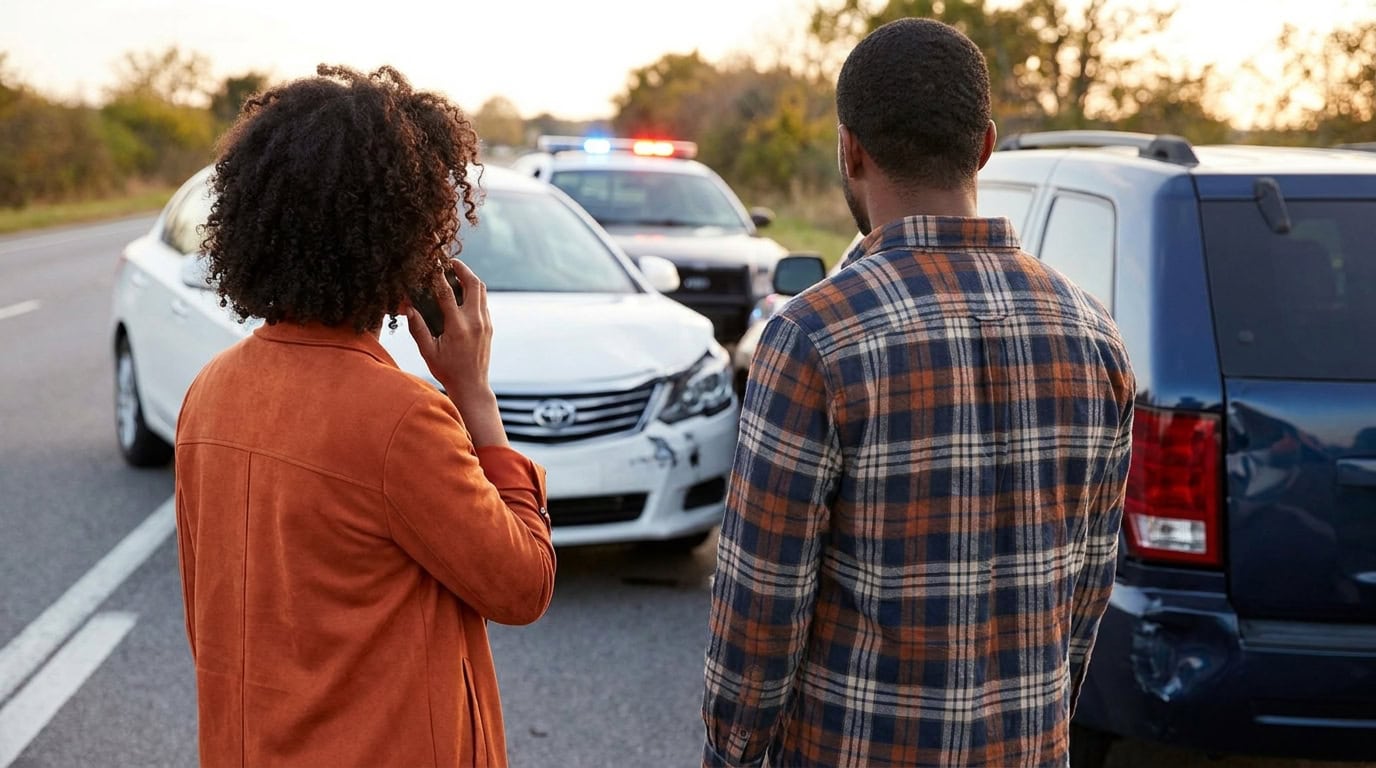
Understanding Florida's 10-Day Crash Reporting Law (Florida Statute § 316.066)
Florida Statute § 316.066 outlines the legal requirements for documenting a traffic collision in the state. This law establishes a formal framework that drivers must follow to ensure the state maintains accurate records of road safety incidents. Reporting a crash is a strict statutory mandate that carries specific legal consequences for those who ignore these obligations.
When Are You Required to Report a Car Accident in Florida?
- Apparent damage to a vehicle or other property of at least $2,000 (raised from $500 effective October 1, 2026) means notifying law enforcement right away, under Florida Statute 316.065.
- Injury or death also means calling police immediately under Florida Statute 316.065.
- A crash involving a complaint of pain, a DUI or leaving-the-scene violation, a vehicle that needs a wrecker, or a commercial motor vehicle requires a law-enforcement report under Florida Statute 316.066(1)(a), whatever the damage looks like.
- If the crash damaged a vehicle or other property and law enforcement did not investigate it, or a law-enforcement report was not required, the driver files a written report with the state within 10 days, under Florida Statute 316.066(1)(e).
The Florida Department of Highway Safety and Motor Vehicles maintains the official Traffic and Criminal Software database. Florida drivers across the entire state, including those in Broward, Palm Beach, and Orange counties, can file these reports through the official FLHSMV portal or by mail to remain compliant. This digital record serves as the primary source of truth for insurers and state agencies.
When is an Immediate Police Report Mandatory?
Florida Statute § 316.065 requires immediate notification of an accident to law enforcement under several statutorily defined conditions. Any crash that results in bodily injury, death, or complaints of pain must be reported by the quickest means of communication available. Reporting usually involves calling 911 or contacting the nearest local police department or county sheriff's office.
Drivers must notify law enforcement immediately when apparent damage to a vehicle or other property is at least $2,000, effective October 1, 2026, under chapter 2026-39. Until that date the threshold is $500. A law-enforcement report is also required under Florida Statute 316.066(1)(a) if a vehicle is damaged to the extent that it requires a wrecker to remove it from the scene. These requirements ensure that a neutral officer can document the environment before evidence is moved or destroyed.
If a commercial motor vehicle is involved, Florida Statute 316.066(1)(a) requires a law-enforcement report regardless of the perceived level of damage. Calling for emergency assistance immediately satisfies this legal obligation and ensures that an officer creates an official Florida Traffic Crash Report.
Florida's 10-Day Self-Reporting Mandate for Minor Property Damage
When law enforcement does not investigate a crash, or a law-enforcement report is not required, the responsibility for reporting shifts to the drivers. Under Florida Statute 316.066(1)(e), if the crash damaged a vehicle or other property and no law-enforcement report is required, each driver has to submit a written report to the department within 10 days, the self-report FLHSMV describes as covering a crash not investigated by law enforcement. Florida Statute 316.066(1)(a) is what decides whether a law-enforcement report is required: it is required when the crash involved death, injury or a complaint of pain, a violation of Florida Statute 316.061(1) or 316.193, a vehicle that needed a wrecker, or a commercial motor vehicle. There is no dollar floor on the driver's duty: the $2,000 figure in Florida Statute 316.065 (raised from $500 effective October 1, 2026) governs when you must call police from the scene, not when you must file the written report. This document is the Driver Report of Traffic Crash and must be filed with the FLHSMV.
Many motorists believe they're exempt from reporting duties if the police do not arrive at the scene to investigate. This is an incorrect assumption that often leads to unexpected legal complications and insurance denials. Even if the damage seems minor, the state requires an electronic or mailed submission to track public safety data.
Failing to comply with this 10-day self-reporting rule is a noncriminal traffic infraction under Florida law. Florida courts typically treat the violation as a non-moving infraction, which can result in fines and a mark on a driving record. More importantly, the lack of this report provides insurance companies with a technicality to use against a claimant.
| Scenario / Criteria | Immediate Police Report Required? | 10-Day Driver Self-Report Allowed? | Legal Authority |
| Death or Bodily Injury | Yes (Call 911 immediately) | No | Florida Statute Section 316.065 |
| Vehicle requiring a tow truck | Yes (Call 911 immediately) | No | Florida Statute Section 316.066(1)(a) |
| Commercial motor vehicle involved | Yes (Call 911 immediately) | No | Florida Statute Section 316.066(1)(a) |
| Apparent damage to a vehicle or other property of at least $2,000 (No injuries, no tow needed; $500 until October 1, 2026) | Yes (Call 911 immediately) | Yes, required within 10 days when law enforcement does not investigate or a report is not required under Florida Statute 316.066(1)(a) | Florida Statute Sections 316.065 and 316.066 |
| Apparent damage under $2,000 (No injuries, all vehicles operable; under $500 until October 1, 2026) | No | Yes (Required within 10 days when law enforcement does not investigate or a report is not required) | Florida Statute Section 316.066(1)(e) |
How Insurance Adjusters Use a Missing Police Report Car Accident Insurance Technicality to Deny Claims
When you file an insurance claim, the insurance carrier reviews the details with a focus on risk and liability management. Insurance adjusters are trained to evaluate claims thoroughly and identify any evidentiary gaps, such as a missing or delayed police report, to minimize the insurer's financial exposure or justify a formal denial.
Meeting the crash report requirement is often the first hurdle in a claims investigation. Adjusters will use the absence of this document to pause all benefit payments until the event is verified. This delay puts significant pressure on the victim to accept a lower settlement just to cover immediate costs.
The Fabricated Accident Defense
Insurance adjusters frequently use the absence of a timely crash report to suggest that the collision never happened. Without a contemporaneous government record, the insurer can argue that the claimant is attempting to commit fraud. They may suggest that the vehicle damage was sustained in a completely different incident before the claim.
The lack of an official report places the entire burden of proof on the individual filing the claim. The burden of proof always sat with the claimant, but a crash report at least gives an adjuster a neutral account to check the story against. This tactic allows the insurer to cast doubt on the location of the impact or on the vehicles' speed.
By questioning the existence of the accident, the insurer forces the claimant to produce a high volume of secondary evidence. They know that without a police report, many claimants will struggle to provide definitive proof of the date and time. This defense is a powerful tool for insurers to avoid paying for legitimate property damage.
Alternative Causes and Stalled Investigations
Adjusters frequently argue that conditions like whiplash resulted from a completely separate event (such as a recent slip-and-fall or a sports injury) rather than from the motor vehicle accident. They look closely at any gap in time between the collision and your official report to challenge causation, operating under the assumption that a severely injured driver would have demanded a police response at the scene.
When medical records don't align with a prompt accident report, insurers label the physical therapy and long-term treatment claims as suspicious. Soft-tissue injuries don't always show up on X-rays right away, giving adjusters an easy excuse to dismiss your pain. On top of that, your insurance policy is a binding contract that requires prompt notice. If you wait past the 10-day window, the insurer will likely argue you've prejudiced their ability to investigate. Skid marks wash away, vehicle debris gets swept up, and witness memories fade. Under Bankers Insurance Co. v. Macias, 475 So. 2d 1216 (Fla. 1985), late notice is presumed to have prejudiced the insurer and the burden shifts to you to show that it did not. If you cannot rebut that presumption, the insurer can deny the claim.
The Deadline Convergence: The 10-Day Reporting Rule and Florida's 14-Day PIP Rule
Florida operates under a unique no-fault insurance system that involves multiple overlapping statutory deadlines. These rules are designed to process claims quickly, but they often trap drivers who are not familiar with the timelines. Missing a single deadline can trigger a chain reaction that results in the denial of all available insurance benefits.
The 10-day reporting rule and the 14-day medical rule create a very narrow window for victims to secure their rights. If you fail to document the crash within 10 days, the insurer can use the delay to cast doubt on medical treatment. This convergence of deadlines often results in a complete loss of financial protection during a crisis.
What is the 14-Day Florida Personal Injury Protection Medical Rule?
Florida Statute § 627.736(1)(a) establishes a strict 14-day window for victims to seek medical treatment following a car accident. To qualify for PIP benefits, an individual must receive initial care from a licensed provider within this timeframe. If the first medical visit occurs on or after the 15th day, the insurer is not required to reimburse the costs.
The PIP system also uses a tiered structure to determine the maximum coverage available to an injured person. If a qualified medical professional determines that the patient suffered from an Emergency Medical Condition, the policy provides up to $10,000. This determination is fundamental for those facing significant medical bills or needing specialized diagnostic testing.
In cases where no Emergency Medical Condition is formally diagnosed, your PIP medical benefits are capped at $2,500. This lower limit rarely covers the cost of a single emergency room visit or diagnostic scan. To secure the full $10,000 PIP limit, a medical doctor, osteopathic physician, dentist, physician assistant, or advanced practice registered nurse must specifically document that you suffered an EMC. Because insurance companies actively audit these medical records, your attorney must ensure that your initial treating physicians clearly write this diagnosis in your medical chart within the statutory window.
How a Delayed Crash Report Validates a PIP Claim Denial
Insurance companies frequently compare the date of the first medical evaluation with the date on a delayed crash report. If there is a significant discrepancy, the insurer may issue a PIP claim denial police report. They argue that the medical treatment was not necessitated by the accident because the accident was not documented promptly.
The insurance carrier may assert that the claim is unrelated to the crash or that the services were not medically necessary. Because PIP benefits are due only upon receipt of reasonable proof of loss, the insurer uses the missing report as evidence that the loss has not been verified. This leaves the victim personally responsible for the thousands of dollars in debt generated by medical providers.
A delayed report essentially gives the insurance company a reason to scrutinize every detail of the medical claim with skepticism. They may use the lack of a police report to justify a more intrusive investigation into the claimant's prior medical history. This process often delays payments for months, causing financial strain for families struggling with the aftermath of a collision.
Reporting Accidents on Private Property
A common misconception among Florida drivers is that traffic laws and reporting requirements do not apply on private property. This includes accidents occurring in shopping center parking lots, apartment complexes, and gated communities. While police may not always issue citations for lane violations on private land, the statutory duty to report a crash remains.
If an accident on private property causes injuries or apparent damage to a vehicle or other property of at least $2,000 ($500 until October 1, 2026), notify the authorities anyway. Officers may decline to write a full report for a private lot, but they should still get the drivers exchanging information. You then file your own 10-day report with the FLHSMV to protect the claim.
Insurance companies often scrutinize private property claims more heavily because there is rarely an official long-form report. They may argue that the speeds involved were too low to cause the reported injuries or vehicle damage. Filing the 10-day report provides a formal date and timestamp that prevents the insurer from later claiming the event was fabricated.
In gated communities, the lack of police presence can lead drivers to believe they can settle matters privately. You should resist this urge, as many injuries and mechanical issues do not manifest for several days. Without an official report, you have no leverage if the other driver later denies the accident ever occurred.
The Role of the Driver Exchange of Information Form vs. Formal Crash Reports
At the scene of many minor accidents, an officer will provide a Driver Exchange of Information form rather than a long-form report. This document contains the names, addresses, and insurance details of the parties involved, but it lacks a narrative or a diagram of the crash. The exchange form is not a substitute for the 10-day reporting requirement.
The Driver Exchange of Information form serves as a temporary record to facilitate communication between the drivers and their insurers. However, it does not satisfy the state's data collection needs under Florida Statute § 316.066. You must still use the information on that form to complete a formal electronic report through the FLHSMV website.
Insurers treat an information exchange form as neutral, but it carries none of the detail an officer's long-form report would. If the other driver changes their story, the exchange form provides no proof of how the accident actually occurred. Completing the 10-day report puts your account of the facts on file with the state while the details are fresh.
If an officer refuses to write a report, you should note their name and badge number on the exchange form. This information is useful if your attorney needs to contact the agency later to verify why a formal investigation was not conducted. Keeping a copy of every document provided at the scene is necessary for building a strong evidentiary file.
How Missing Police Reports Affect Bodily Injury and Uninsured Motorist Claims
While PIP covers initial medical expenses regardless of fault, other claims depend on establishing liability. To recover compensation for pain and suffering, a victim must prove that another party was at fault. This process becomes significantly more difficult when there is no official record of the accident from a law enforcement agency.
Liability claims involve proving that the defendant breached a duty of care and that the breach directly caused the claimant's injuries. Without an officer's observations or citations, the case often devolves into one person's word against another's. The lack of a report allows the defense to invent alternative versions of the event that favor their policyholder.
Proving Liability Without a Neutral Third-Party Record
A bodily injury liability claim is much harder without a police report, because the responding officer's long-form report is usually the only neutral account of who caused the crash. This report includes critical data, such as the names of all parties and witnesses involved in the crash.
Without this official document, the case often becomes a dispute over who committed the negligent act. The at-fault driver's insurer will likely deny liability, claiming that its policyholder did not cause the crash. They may even argue that the claimant initiated the collision through careless driving.
The absence of a report means there is no record of the officer's observations on the vehicles' positions. This lack of data makes it harder for accident reconstruction experts to provide a definitive analysis of the event. Victims often find themselves unable to secure a settlement offer that reflects the true value of their damages.
Uninsured Motorist Claim Complications and the Physical Contact Rule
In hit-and-run scenarios involving an unidentified (phantom) vehicle, some uninsured motorist policies say coverage applies only if the phantom vehicle made physical contact with yours. In Florida that clause is not enforceable. The Florida Supreme Court held in Brown v. Progressive Mutual Insurance Co., 249 So. 2d 429 (Fla. 1971), that a claimant who proves the accident happened recovers whether or not there was contact. What you still need is evidence that the phantom vehicle existed and caused the crash, such as an independent eyewitness, scene debris, or paint transfer. Without an immediate police report noting scene debris, paint transfer, or witness statements, the insurer will likely deny the claim and argue that the driver lost control alone and invented the phantom vehicle afterwards.
Documenting the event in a formal report is the only way to meet the policy's notification requirements. Failing to report the incident within 10 days may give the insurance company grounds to deny your uninsured motorist benefits, which leaves you without access to the only source of funding for your long-term recovery and lost wages.
What to Do If You Missed the 10-Day Reporting Deadline
Realizing that the 10-day window for reporting an accident has passed can be a source of significant stress. While the situation is serious, there are still proactive steps you can take to protect your legal rights. A strategic approach to gathering evidence can help salvage an insurance claim that might otherwise be denied.
You must shift your focus toward creating an alternative paper trail that the insurance company cannot ignore. Documenting the accident and your injuries through third-party records provides the foundation your attorney needs to challenge an adjuster's technical denial.
Step 1: Immediately File a Delayed Self-Report
If you have missed the initial 10-day deadline, the most important step is to file a Driver Self-Report of Traffic Crash as soon as possible. Having an official submission on file is far better than having no record at all for the insurance company. It puts your signed account of the event on file with the state and creates a paper trail for the insurer.
You can access the necessary forms through the FLHSMV website for electronic submission. You must provide accurate details about the crash date and the other driver's contact information. Be sure to save a copy of the confirmation or the completed form for your personal records and for your attorney.
If you need to file a report after the 10-day window, you should first contact the local police agency where the crash occurred. Explain that you need to file a delayed report for insurance purposes and ask for the records department. Some agencies allow you to come in person to speak with an officer, while others direct you to their online portal.
When filing a late report, you should bring all available evidence, including photos of the damage and witness information. You should be prepared to explain the reason for the delay, such as hospitalization or unawareness of the 10-day requirement.
Once the agency accepts the report, it will be assigned a case number that you can provide to your insurance adjuster. Even a late report can trigger the insurance company's duty to investigate the claim more thoroughly. This step is how you get past the initial hurdle of a missing police report when a car accident insurance denial is at issue.
Step 2: Seek Immediate Medical Evaluation and Document Everything
If you are still within the 14-day window for PIP benefits, prioritize an evaluation with an approved medical professional immediately. Even if the 10-day crash-reporting window has passed, a clinical record created shortly after the collision provides objective evidence linking your physical symptoms to the impact. You can seek this initial treatment at an emergency room, an urgent care center, or from your primary care physician.
During your appointment, you must be extremely detailed when describing how the accident occurred and what physical symptoms you're experiencing. Tell the doctor about the force of the impact and any immediate pain or disorientation you felt at the scene. These medical notes serve as powerful alternative evidence linking your injuries directly to the collision.
The medical record provides timestamped verification of your health status that can counter an insurer's claim of an alternative cause of injury. Ensure that the doctor performs a comprehensive exam and documents even minor aches that might worsen over time. Consistency between your report to the doctor and your eventual insurance claim is fundamental for maintaining credibility.
Step 3: Gather Alternative Evidence of the Accident's Occurrence
When a formal police report is missing, you must take the initiative to build your own evidentiary record of the event. This involves looking for any external data points that can verify that the collision occurred at the specific time and place you claim. You should start by gathering any items you took from the scene, such as photos or handwritten notes.
You should also look for documentation from third parties, such as towing receipts or body shop repair estimates. These financial records demonstrate that your vehicle required professional attention and establish a timeline for evaluating the damage. If you spoke to anyone immediately after the crash, their testimony may also help corroborate your story.
Collecting this evidence quickly is necessary because many records, like surveillance footage, are often deleted within a few days. By creating a folder of all related documents, you provide your legal team with the tools they need to challenge a denial. Every piece of secondary evidence helps fill the gap left by the missing police documentation.
Essential Alternative Evidence to Overcome a Missing Police Report
When you are tasked with proving an accident occurred without a police report, the case rests on the quality of your alternative evidence. It has to hold up under scrutiny from insurance company lawyers and adjusters. The following types of evidence are the most effective for establishing the facts and securing the compensation you deserve.
Your goal is to provide an objective account that mimics the data an officer would have collected at the scene. By being thorough, you can overcome the insurance company's skepticism and force them to evaluate the claim on its merits. This proactive approach is often the only way to salvage a claim after a reporting delay.
Dashcam and Surveillance Video Footage
Video evidence is one of the most persuasive tools in a personal injury claim because it provides an objective view of the event. If you have a personal dashcam, the footage can reveal vehicle speeds and the exact moment of impact. This visual record makes it nearly impossible for an adjuster to argue about who was at fault.
If you don't have a dashcam, you should immediately canvass the area where the accident occurred for other cameras. Many businesses have security systems that capture the surrounding streets, and homeowners often use smart doorbells. Municipalities also maintain traffic cameras at many major intersections that may have recorded the collision or the vehicles involved.
Securing this footage often requires swift action or assistance from a legal professional who can issue a preservation letter. Once obtained, video footage can completely neutralize any arguments regarding delayed reporting or lack of evidence. It serves as a digital eyewitness, providing a clear and undeniable account of the crash dynamics.
Witness Statements and Contact Information
The testimony of a neutral third party can be just as influential as a police report in the eyes of an insurance supervisor. Witnesses with no financial interest in the outcome of the case provide credibility that drivers cannot offer. They can confirm the weather conditions, driver behavior, and the severity of the impact.
If you collected the names and phone numbers of bystanders at the scene, you should provide this information to your attorney right away. A lawyer can contact these individuals to obtain written or recorded statements while their memories are still relatively fresh. These statements can be used to reconstruct the accident and verify the timeline of events you provided.
Witnesses can also testify to your physical state immediately following the collision, such as whether you appeared dazed or in pain. This information is particularly helpful when the insurance company tries to argue that your injuries were sustained at a later date. Building a network of corroborating voices is an effective way to overcome the absence of an official record.
Physical Damage, Repair Estimates, and Towing Receipts
The physical condition of the vehicles provides concrete proof of the force and location of the collision. You should obtain a detailed repair estimate from a certified auto body shop that itemizes all the damage to your car. These professionals can often distinguish between fresh accident damage and older wear, which helps prove the validity of your claim.
If your vehicle had to be towed from the scene, the towing company's invoice is critical evidence. It shows the date and time of the tow and the location from which the vehicle was removed. Storage receipts and mechanical inspections further contribute to the paper trail that proves the accident rendered the car inoperable.
Insurance adjusters find it very difficult to claim that an accident was fabricated when there are thousands of dollars in documented repair costs. The mechanical data from the vehicle's onboard computer may also provide information about speed and braking before the impact. These physical and financial records act as a substitute for the observations an officer would have made.
Smartphone Photos, Geo-Tagged Videos, and Preserving Metadata
Most people carry a powerful evidence-collection tool in their pockets: a smartphone. Photos taken at the scene of the accident are incredibly valuable because they contain embedded metadata. This digital fingerprint provides a level of authentication that a delayed report cannot match.
You should take wide-angle shots of the entire scene, including traffic signs, road markings, and the final positions of the vehicles. Close-up photos of the damage to all cars, license plates, and any visible injuries on your body are also required. Even photos of skid marks or debris on the road can help an expert determine the vehicles' speed and direction.
It is necessary to understand the role of metadata when using smartphone evidence in a legal setting. A screenshot of a photo is less valuable than the original file because the original contains EXIF data, such as GPS coordinates and timestamps. This metadata serves as a digital signature, proving the photo was taken at the exact time and place of the crash.
Speak To Weinstein Legal Team About Your Car Accident Claim Today
Failing to report a crash within the 10-day window creates significant administrative and legal obstacles for any Florida driver. However, this oversight does not have to be an automatic grounds for denial if you take strategic action immediately. By filing a late report and gathering alternative evidence, such as CCTV footage and medical records, you can still construct an evidence-based claim supported by third-party documentation.
Weinstein Legal Team serves as advocates for personal injury victims in Fort Lauderdale, West Palm Beach, Orlando, and across the state of Florida. Our goal is to ensure that your financial security and legal rights remain intact as you focus on your physical recovery. Contact us for a free, confidential case evaluation and we will tell you where your claim stands.